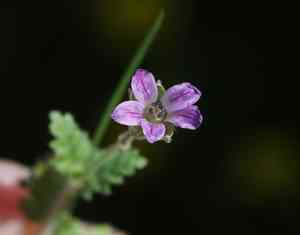
Shortfruit stork's bill (Erodium brachycarpum)
Also known as: Hairy-pitted stork's-bill
A plant that fits your description is the shortfruit stork's bill. This resilient, low-growing herbaceous plant is noted for its fuzzy, lobed leaves and characteristically long, straight fruit capsules. It thrives in arid conditions, thanks to its deep taproot that allows it to tap into limited water supplies. In the spring, it produces delicate pink to purple flowers with five petals, which attract pollinators and contrast beautifully with its grey-green foliage.
In This Article
Attributes of Shortfruit stork's bill
Lifespan
Annual
Plant Type
Herb
Plant Height
10-25 cm
Spread
N/A
Leaf Color
Green
Flower Size
0.5-1 cm
Flower Color
Pink to purple
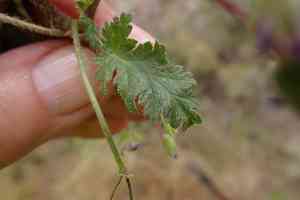
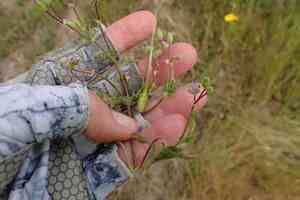
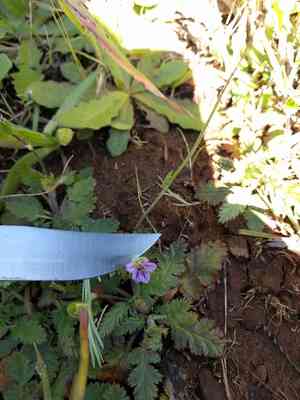
Images of Shortfruit stork's bill
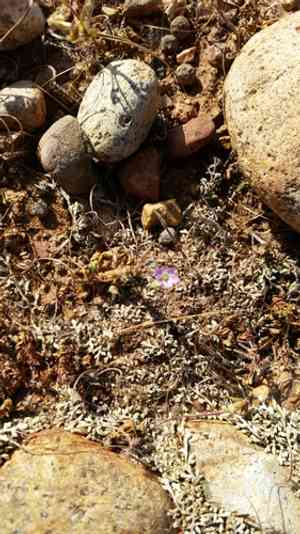
Quickly Identify Shortfruit stork's bill
1
Identify Erodium brachycarpum by its deeply lobed, finely divided leaves and small pink to purple flowers. The fruit, which resembles a stork’s bill, is a distinctive feature. The plant is generally low-growing and can be found in open, sunny areas.
Scientific Classification of Shortfruit stork's bill
Phylum
Vascular plants
Class
Dicotyledons
Order
Geraniales
Family
Geranium
Genus
Filarees
Species
Shortfruit stork's bill
Planting and Growing of Shortfruit stork's bill
Care Difficulty
Moderate
Watering Schedule
Every 4 days
Sunlight Requirements
Full sun
Sunshine Duration
4-8 hours
Ideal Temperature
60-75℉
Soil Type
Potting Mix, Peat Mix
Soil pH
6.5-7.5
Fertilizer Type
Balanced
Pruning Season
Spring, Summer
Pruning Area
Branches, Leaves
Pruning Frequency
2 times a year
Repotting Season
Spring
Pot Type
Plastic, Terracotta
 How to Water Shortfruit stork's bill?
For Erodium brachycarpum, apply around 200mL of water per session to ensure the soil is evenly moist but not soggy. Water until the liquid begins to drain from the bottom of the container, indicating the entire root zone has been reached.
What are the symptoms of an underwatered Shortfruit stork's bill?
›
What should I do if my Shortfruit stork's bill is not getting enough water?
›
What are the symptoms of an overwatered Shortfruit stork's bill?
›
How to save an overwatered Shortfruit stork's bill?
›
 What Are the Sunlight Requirements for Shortfruit stork's bill?
Erodium brachycarpum flourishes in environments that offer full sun to partial sun. Ideal light conditions stimulate robust growth, vibrant blooms, and keep the foliage lush and healthy, contributing to a successful growing season.
What is the ideal light condition?
›
How can you achieve this ideal lighting?
›
What are the benefits of ideal lighting?
›
 What Is the Ideal Temperature Range for Shortfruit stork's bill?
Maintaining the ideal temperature range for Erodium brachycarpum, between 60°F and 75°F, is crucial for optimal growth. In this range, the plant can efficiently photosynthesize and grow at a healthy rate without being stressed by temperature extremes.
 What Soil is Best for Shortfruit stork's bill?
Erodium brachycarpum thrives in well-drained soils. This condition ensures that excess water does not sit around the roots, preventing root rot and other waterlogged soil issues. Well-drained soil also facilitates proper aeration, promoting healthy root growth and nutrient uptake. This plant prefers soil with moderate fertility, containing sufficient nutrients to support growth without causing excessive foliage at the expense of flowering. Balancing nutrients in the soil helps maintain a healthy plant capable of producing vibrant blooms. Erodium brachycarpum does best in neutral to slightly alkaline soils. This pH range allows for optimal absorption of essential nutrients while avoiding nutrient lockout, ensuring the plant receives what it needs to flourish.
 How to Fertilize Shortfruit stork's bill?
Erodium brachycarpum thrives with minimal fertilizer. When using liquid feed, dilute it to half or quarter strength, applying no more than 300 ml per application. Slow-release fertilizers should be limited to one tablespoon per plant each year. This ensures that the plant receives the necessary nutrients without risk of over-fertilization or nutrient burn.
 How to Prune Shortfruit stork's bill?
When pruning Erodium brachycarpum, it's essential to have sharp and clean tools. Use a pair of garden shears or scissors that can provide a precise cut without causing damage to the plant tissue, ensuring smooth healing and regrowth. Focus on removing any dead or diseased foliage first. Then, trim back any excessively long or leggy stems to encourage a bushier growth habit. Look for natural nodes on the plant where new growth can occur and make your cuts just above these points.
More About Pruning Techniques→
 How to Propagate Shortfruit stork's bill plant?
1
Before planting, soak the seeds of Erodium brachycarpum in lukewarm water for about 24 hours. This helps to soften the seed coat and enhances germination rates.
2
Sow the seeds in seed trays filled with a sterile potting mix. Cover them lightly with a thin layer of soil or vermiculite to protect them while allowing light penetration for germination.
3
Keep the soil consistently moist but not waterlogged. This can be achieved using a spray bottle to lightly mist the soil surface without disturbing the seeds.
 How to Repot Shortfruit stork's bill plant?
1
Repot when you notice that Erodium brachycarpum is outgrowing its container or when roots begin to peek through drainage holes. Another sign is the soil drying out too quickly after watering. These are signals that the plant has outgrown its current home and needs more space to thrive.
2
Select a pot that's one size larger than the current one and has good drainage holes. A slightly larger pot allows for root expansion without overwhelming the plant. This ensures optimal growth space while avoiding excess soil that can retain too much moisture and cause root rot.
3
Opt for a well-draining potting mix with a proportion of sand or perlite. Such a mix prevents waterlogging and promotes healthy root aeration. It creates an environment similar to the native habitat of Erodium brachycarpum, which helps maintain root health and overall plant vitality.
Learn More About Shortfruit stork's bill Diseases
Anthracnose
Bacterial Leaf Spot
Bacterial Wilt
Crown Gall
Cyst Nematode
Damping-off
Downy Mildew
Drought Stress
Fusarium Wilt
Gray Mold
Leaf Curl
Leaf Spot
Mosaic
Nutrient Deficiency
Nutrient Toxicity
Powdery Mildew
Root Rot
Root-knot Nematode
Rusts
Sooty Mold
Spider Mites
Temperature Stress
Thrips Damage
White Mold


