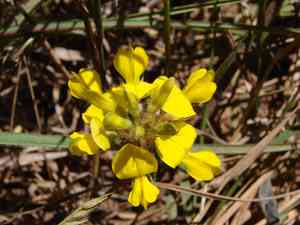
Sand pea (Eriosema) (Eriosema)
Also known as: Eriosperm, False Indigo
There are more than 150 recognized species in this category.
In This Article
Attributes of Sand pea (Eriosema)
Lifespan
Perennial
Plant Height
0.3 to 1.2 meters
Spread
0.3 to 0.6 meters
Leaf Color
Green
Flower Size
1 to 2 cm
Flower Color
Yellow, Orange
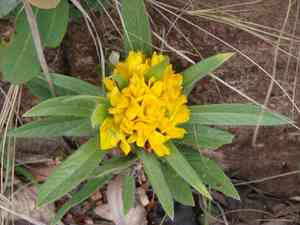
Images of Sand pea (Eriosema)
Quickly Identify Sand pea (Eriosema)
1
Eriosema can be identified by its elliptic leaves, typically arranged in pairs, and vibrant yellow or orange flowers. The stems are often hairy, and the plant produces pod-like fruits.
Scientific Classification of Sand pea (Eriosema)
Phylum
Magnoliophyta
Class
Magnoliopsida
Order
Fabales
Family
Fabaceae
Genus
Eriosema
Planting and Growing of Sand pea (Eriosema)
Care Difficulty
Moderate
Watering Schedule
Every 2 days
Sunlight Requirements
Full sun
Sunshine Duration
4-8 hours
Ideal Temperature
68-77℉
Soil Type
Potting Mix, Peat Mix
Soil pH
5.5-7.5
Fertilizer Type
Balanced
Pruning Season
Spring, Summer
Pruning Area
Branches, Leaves
Pruning Frequency
2 times a year
Repotting Season
Spring
Pot Type
Plastic, Ceramic
 How to Water Sand pea (Eriosema)?
When watering Eriosema, aim to thoroughly moisten the soil without waterlogging it. The goal is to allow the entire root zone to absorb moisture, ensuring that the soil is damp to a depth of at least several inches. Always check that excess water can drain away effectively.
What are the symptoms of an underwatered Sand pea (Eriosema)?
›
What should I do if my Sand pea (Eriosema) is not getting enough water?
›
What are the symptoms of an overwatered Sand pea (Eriosema)?
›
How to save an overwatered Sand pea (Eriosema)?
›
 What Are the Sunlight Requirements for Sand pea (Eriosema)?
Eriosema prefers at least partial sun, ideally thriving in 6 to 8 hours of sun, which supports healthy growth and vibrant foliage.
What amount of light does Eriosema need?
›
How can I achieve ideal lighting for Eriosema?
›
What benefits does ideal lighting have on Eriosema?
›
 What Is the Ideal Temperature Range for Sand pea (Eriosema)?
For optimal growth, Eriosema thrives best within a temperature range of 68°F to 77°F. This range provides the perfect balance of warmth to support photosynthesis and other metabolic processes.
 What Soil is Best for Sand pea (Eriosema)?
Eriosema thrives in soils that are rich in organic matter. Providing compost or well-rotted manure can help ensure robust growth. Nutrient-rich soil supports healthy root development and overall plant vigor. Eriosema plants prefer soils that drain well to prevent waterlogging, which can lead to root rot. Ensuring adequate drainage keeps the root zone healthy and prevents stress on the plant. While Eriosema can tolerate some drought, it prefers consistent moisture levels. Maintaining moderate soil moisture helps sustain healthy growth and flowering.
 How to Fertilize Sand pea (Eriosema)?
For Eriosema, the ideal fertilizer amount involves using a balanced liquid fertilizer diluted to a quarter strength. This ensures that the plant receives adequate nutrients without overwhelming its roots. It's essential to measure accurately, with approximately 150 ml of this diluted solution per application.
 How to Prune Sand pea (Eriosema)?
Start by removing any dead or diseased branches to prevent disease spread. Cut back the stems by about one-third to shape the plant and encourage denser growth. Always use sharp and clean tools to make precise cuts just above a node or leaf joint to encourage new shoots. To maintain a nice, rounded shape, find an outward-facing bud or node and cut just above it. This encourages the plant to grow in a more structured form, making it aesthetically pleasing and ensuring even light distribution through the foliage.
 How to Propagate Sand pea (Eriosema) plant?
1
Start by selecting healthy and viable seeds. Soak them in warm water for 24 hours before sowing to improve germination rates. Prepare seed trays with quality seed starting mix and sow seeds about 1 cm deep.
2
Choose healthy, non-flowering stems and cut at an angle just below a node. Remove lower leaves and dip the cut end in rooting hormone. Plant the cutting in a pot filled with a mixture of sand and peat moss.
3
Carefully lift the parent plant from the soil to avoid root damage. Use a sharp knife to divide the root ball into smaller clumps, each with several growing points. Replant immediately in well-prepared soil.
 How to Repot Sand pea (Eriosema) plant?
1
Repot Eriosema when you notice roots poking through the drainage holes, or if the plant's growth has noticeably slowed. Spring or summer is the ideal time as the plant is actively growing and can recover more quickly. Look out for yellowing leaves or a compacted root system as signals for repotting.
2
Choose a pot that is 1-2 inches larger in diameter than the old one, with ample drainage holes. The larger size allows the roots to expand, promoting healthy growth. Excellent drainage prevents waterlogging, a common pitfall in Eriosema care, ensuring the plant's roots remain healthy and rot-free.
3
Opt for a well-draining loamy mix enriched with organic matter. This type of soil aids in retaining just the right amount of moisture while allowing excess water to escape, minimizing the risk of root rot. The organic matter enhances nutrient availability, helping Eriosema to flourish post repotting.
Learn More About Sand pea (Eriosema) Diseases
Anthracnose
Bacterial Leaf Spot
Bacterial Wilt
Crown Gall
Cyst Nematode
Damping-off
Downy Mildew
Drought Stress
Fusarium Wilt
Gray Mold
Leaf Spot
Mosaic
Nutrient Deficiency
Nutrient Toxicity
Powdery Mildew
Root Rot
Root-knot Nematode
Rusts
Sooty Mold
Spider Mites
Temperature Stress
Thrips Damage
White Mold

