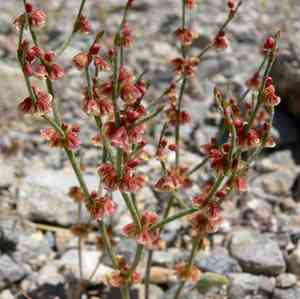
Birdnest buckwheat (Eriogonum nidularium)
Also known as: Nests Eriogonum
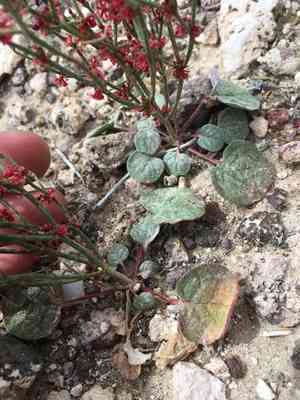
Birdnest buckwheat (Eriogonum fasciculatum) is a hardy perennial that thrives in rocky, challenging environments. Its low, cushion-like growth form helps it withstand harsh conditions, while its blue-green leaves form a dense mat that conserves moisture. The plant produces clusters of pale pink to white flowers, which are surrounded by woolly bracts, giving it a distinctive bird's-nest appearance. This unique structure not only attracts native pollinators but also provides additional protection for the flowers.
In This Article
Attributes of Birdnest buckwheat
Lifespan
Perennial
Plant Type
Herb
Plant Height
15-30 cm (6-12 inches)
Spread
30-45 cm (12-18 inches)
Leaf Color
Gray-green
Flower Size
0.5-1 cm (0.2-0.4 inches)
Flower Color
Pink, White
Images of Birdnest buckwheat
Quickly Identify Birdnest buckwheat
1
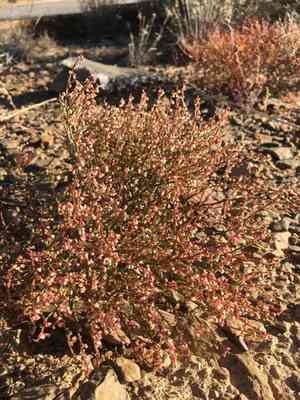
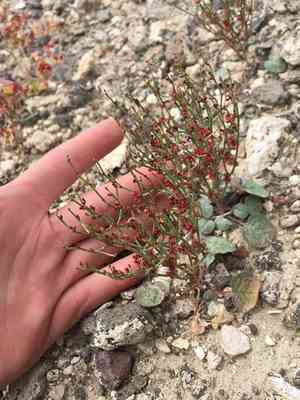
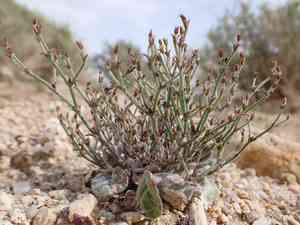
Eriogonum nidularium can be identified by its dense, cushion-like growth form and small clusters of flowers. The leaves are typically small and woolly. The plant’s overall appearance is compact and low-growing.
Scientific Classification of Birdnest buckwheat
Phylum
Vascular plants
Class
Dicotyledons
Order
Caryophyllales
Family
Buckwheat
Genus
Wild Buckwheat
Species
Birdnest buckwheat
Planting and Growing of Birdnest buckwheat
Care Difficulty
Moderate
Watering Schedule
Every 2 days
Sunlight Requirements
Full sun
Sunshine Duration
4-8 hours
Ideal Temperature
55-75℉
Soil Type
Potting Mix, Peat Mix
Soil pH
6.5-7.5
Fertilizer Type
Balanced
Pruning Season
Spring, Summer
Pruning Area
Branches, Leaves
Pruning Frequency
2 times a year
Repotting Season
Spring
Pot Type
Plastic, Ceramic
 How to Water Birdnest buckwheat?
Eriogonum nidularium requires a modest watering regime. Approximately 200 milliliters of water per session ensures the soil is moist but not drenched. The plant thrives when the topsoil is allowed to dry slightly between waterings, emulating its natural arid habitat.
What are the symptoms of an underwatered Birdnest buckwheat?
›
What should I do if my Birdnest buckwheat is not getting enough water?
›
What are the symptoms of an overwatered Birdnest buckwheat?
›
How to save an overwatered Birdnest buckwheat?
›
 What Are the Sunlight Requirements for Birdnest buckwheat?
Eriogonum nidularium does best under full sun conditions. Optimal exposure to sunlight enhances the plant's photosynthesis, fostering growth, bloom production, and long-term vitality, crucial for maintaining its ecological niche.
How much sunlight does Eriogonum nidularium need?
›
What are the best conditions to provide ideal light?
›
What happens under ideal light conditions?
›
 What Is the Ideal Temperature Range for Birdnest buckwheat?
For optimal growth, Eriogonum nidularium thrives best in a temperature range of 55°F to 75°F. This range replicates its native environment and supports proper physiological and metabolic functions.
 What Soil is Best for Birdnest buckwheat?
Eriogonum nidularium thrives in well-drained soil conditions that prevent waterlogging. Ensuring good drainage is crucial as this plant is accustomed to arid climates where water drains quickly, reducing the risk of root rot and providing a healthy growth environment. This species does well in nutrient-poor substrates typical of desert regions. High fertility is unnecessary and can actually harm, as the plant is adapted to extract necessary nutrients from sparse soil resources, fostering natural resilience. A light, gritty soil texture supports root aeration and efficient nutrient uptake. Such texture mimics the natural habitat of Eriogonum nidularium, facilitating healthy aeration and rapid root expansion, essential for its survival and growth.
 How to Fertilize Birdnest buckwheat?
Eriogonum nidularium requires moderate fertilization. A balanced liquid fertilizer, diluted to half strength, should be applied to ensure adequate nutrient uptake without overwhelming the plant. For slow-release fertilizers, a small, spoon-sized amount around the base of the plant is sufficient.
 How to Prune Birdnest buckwheat?
Start by carefully inspecting the plant for any dead or diseased growth. These are the first sections to remove, as they detract energy from healthier parts of the plant. Follow the natural growth pattern of the plant, trimming back long stems to encourage a more rounded and tidy appearance. This helps the plant maintain its characteristic shape. After pruning, gather all clippings and dead material from around the base. This reduces the chance of fungal disease and keeps your garden neat.
More About Pruning Techniques→
 How to Propagate Birdnest buckwheat plant?
1
Gather mature seeds from healthy plants. Ensure the seeds are dry and free from disease, storing them in a paper bag until you are ready to plant.
2
Select healthy, non-flowering stems for cuttings. Make a clean cut below a node, ensuring the cutting is about 2-3 inches long.
3
Fill seed trays with a seed-starting mix, sow the seeds evenly, and lightly cover with a thin layer of soil. Keep the soil moist but not waterlogged.
 How to Repot Birdnest buckwheat plant?
1
Eriogonum nidularium shows signs it needs repotting when its roots begin to emerge from the drainage holes or encircle tightly in the pot. If the plant looks stunted or loses vitality, it's time to provide more space and fresh soil.
2
Choose a pot that's 1-2 inches wider in diameter than the current one. Opt for a pot with multiple drainage holes to prevent water stagnation. Well-fitted pots ensure root growth without causing waterlogging, which enhances the plant's overall health.
3
A well-draining soil mix, ideally cactus or succulent mix, with added perlite or sand ensures proper aeration and prevents root rot. This type of soil mimics the plant's natural habitat, promoting strong root development and healthier growth.



