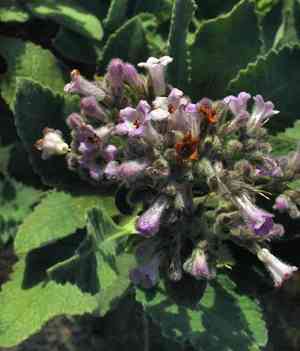
Thickleaf Yerba Santa (Eriodictyon crassifolium)
Also known as: Thick-Leaved Yerba Santa
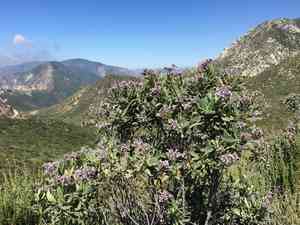
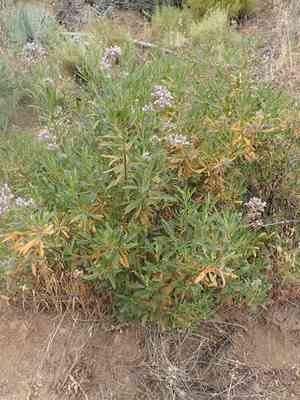
Thickleaf Yerba Santa (Eriodictyon crassifolium) is an evergreen shrub indigenous to California, thriving in chaparral and coastal sage scrub environments. This plant can reach heights of up to 3.5 meters. In spring, it produces fragrant lavender flowers that draw in pollinators such as bees, butterflies, and hummingbirds. Notably, its flowers also serve as a critical food source for the Variable Checkerspot butterfly.
In This Article
Attributes of Thickleaf Yerba Santa
Lifespan
Perennial
Plant Type
Shrub
Plant Height
91 cm to 1.8 m
Spread
90 cm to 1.8 m
Leaf Color
Dark Green
Flower Size
2.5 cm
Flower Color
Purple
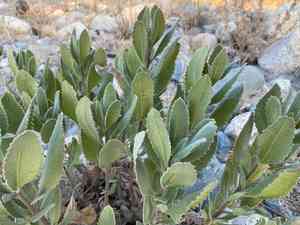
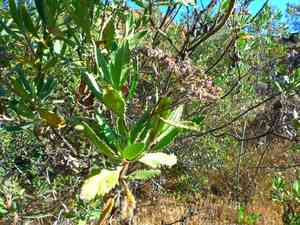
Images of Thickleaf Yerba Santa
Quickly Identify Thickleaf Yerba Santa
1
This plant can be identified by its thick, sticky, and aromatic leaves which are lance-shaped and dark green. It produces clusters of small white to lavender flowers.
Scientific Classification of Thickleaf Yerba Santa
Phylum
Vascular plants
Class
Dicotyledons
Order
Boraginales
Family
Waterleaf
Genus
Yerba Santa
Species
Thickleaf Yerba Santa
Planting and Growing of Thickleaf Yerba Santa
Care Difficulty
Easy
Watering Schedule
Every 3 days
Sunlight Requirements
Full sun
Sunshine Duration
4-8 hours
Ideal Temperature
65-75℉
Soil Type
Potting Mix, Peat Mix
Soil pH
6.5-7.5
Fertilizer Type
Balanced
Pruning Season
Spring, Summer
Pruning Area
Branches, Leaves
Pruning Frequency
Once a year
Repotting Season
Spring
Pot Type
Plastic, Ceramic
 How to Water Thickleaf Yerba Santa?
Eriodictyon crassifolium, commonly known as thick-leaf yerba santa, thrives best when watered with approximately 500 ml of water per session. This amount ensures that the soil is moist but not waterlogged, promoting healthy root growth without risking root rot. It's best to water deeply so that the entire root zone receives moisture, allowing the plant to absorb water efficiently.
What are the symptoms of an underwatered Thickleaf Yerba Santa?
›
What should I do if my Thickleaf Yerba Santa is not getting enough water?
›
What are the symptoms of an overwatered Thickleaf Yerba Santa?
›
How to save an overwatered Thickleaf Yerba Santa?
›
 What Are the Sunlight Requirements for Thickleaf Yerba Santa?
Eriodictyon crassifolium thrives with 6 to 8 hours of sun, ideally in full to partial sunlight. This range promotes vigorous growth and vibrant leaf coloration.
More About Sunlight Requirements Techniques→
What is the ideal lighting for Eriodictyon crassifolium?
›
How can one ensure Eriodictyon crassifolium receives ideal lighting?
›
What are the benefits of ideal lighting for Eriodictyon crassifolium?
›
 What Is the Ideal Temperature Range for Thickleaf Yerba Santa?
The ideal temperature range for cultivating Eriodictyon crassifolium is between 65°F and 75°F. This range provides optimal conditions for growth, allowing the plant to thrive without experiencing heat stress or cold damage. Maintaining temperatures within this range ensures vital processes such as photosynthesis and nutrient absorption function efficiently, leading to healthier and more robust plant development.
 What Soil is Best for Thickleaf Yerba Santa?
Eriodictyon crassifolium thrives in well-drained soil, which allows efficient water movement and prevents root rot. This condition is essential as it replicates their native dry and rocky environments, ensuring the roots have adequate oxygen. Such soil provides the right balance of nutrients without overwhelming the plant. Eriodictyon crassifolium benefits from moderate nutrient levels as it promotes healthy growth without encouraging excessive shoot production that can weaken the plant. A pH range between 6.5 and 7.5 supports nutrient availability in the soil, fostering optimal absorption. It is crucial for Eriodictyon crassifolium as it ensures that the plant can access essential minerals, thus maintaining its health and vigor.
 How to Fertilize Thickleaf Yerba Santa?
For Eriodictyon crassifolium, a modest amount of fertilizer works best. Use approximately one tablespoon of slow-release fertilizer or one-quarter strength liquid fertilizer per monthly application to avoid nutrient burn.
 How to Prune Thickleaf Yerba Santa?
Use sharp, clean pruning shears to make cuts. Clean tools prevent disease transmission. It's best to sterilize your shears with alcohol before starting. Wear gloves to protect your hands from irritants. Start by removing any dead or dying branches, cutting back to healthy green wood. Next, trim long, wayward stems to maintain the desired shape and size. Focus on thinning out the interior to allow light to reach all parts of the plant. After shaping the plant's exterior, take a step back to assess its symmetry and structure. Make additional cuts as necessary to balance its appearance. Remember to dispose of all pruned material to keep the area clean.
More About Pruning Techniques→
 How to Propagate Thickleaf Yerba Santa plant?
1
Collect seeds from mature Eriodictyon crassifolium plants in the late summer. Ensure that the seeds are dry and free from fungus or pest damage. Store them in a cool, dry place until they are ready to be planted.
2
Choose healthy stems from the parent plant. Cuttings should be around 4-6 inches long, taken just below a leaf node. Remove any leaves from the lower part of the cutting to facilitate rooting.
3
Place seeds on the surface of a seedling tray filled with a sterile seed-starting mix. Lightly cover the seeds with a thin layer of soil. Water gently to avoid displacing the seeds.
 How to Repot Thickleaf Yerba Santa plant?
1
Repot Eriodictyon crassifolium when you notice roots growing out of the drainage holes, the pot being excessively dry, or if the plant appears top-heavy. Spring and autumn are ideal, allowing the plant to recover swiftly and establish roots before extreme temperatures.
2
Select a pot that is 2 inches larger than the current one, with ample drainage holes to prevent root rot. A terracotta pot is an excellent choice as it breathes well, allowing excess moisture to evaporate and thus reducing the chances of overwatering.
3
Choose a well-draining, sandy soil mix to mimic the plant's natural habitat. A mix specifically designed for cacti and succulents is ideal, as it prevents water retention and promotes healthy root growth with adequate aeration.
Learn More About Thickleaf Yerba Santa Diseases
Anthracnose
Bacterial Leaf Spot
Bacterial Soft Rot
Bacterial Wilt
Black Spot
Chemical Injury
Crown Gall
Cyst Nematode
Damping-off
Downy Mildew
Drought Stress
Fusarium Wilt
Gray Mold
Leaf Curl
Leaf Spot
Mosaic
Nutrient Deficiency
Nutrient Toxicity
Powdery Mildew
Root Rot
Root-knot Nematode
Rusts
Sooty Mold
Spider Mites
Temperature Stress
Thrips Damage
White Mold



