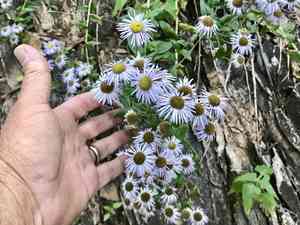
Vreeland's erigeron (Erigeron vreelandii)
Also known as: Vreeland's fleabane
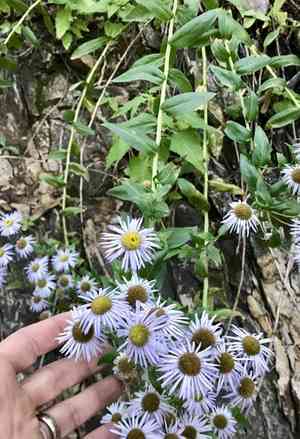
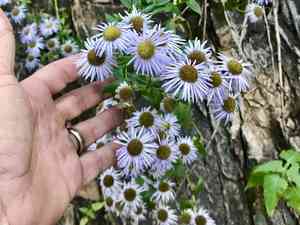
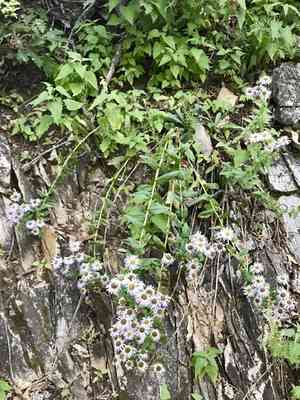
Erigeron vreelandii, also known as Vreeland's fleabane, typically thrives on rocky slopes within open woodlands and forests, often dominated by pine, oak, or fir trees. It is a perennial herb that can grow up to 80 cm (31 inches) in height. The plant features rhizomes and a branching woody caudex. Each stem generally bears between 1 and 22 flower heads. These flower heads consist of 75–150 blue or lavender ray florets encircling numerous yellow disc florets.
In This Article
Attributes of Vreeland's erigeron
Lifespan
Perennial
Plant Type
Herb
Plant Height
Approximately 20-50 cm (8-20 inches)
Spread
Approximately 30 cm (12 inches)
Leaf Color
Green to grayish-green
Flower Size
1.5-2.5 cm (0.6-1 inch)
Flower Color
White, pink, or lavender with a yellow center
Images of Vreeland's erigeron
Quickly Identify Vreeland's erigeron
1
Look for its narrow, lance-shaped leaves and its small, daisy-like flowers with white, pink, or lavender rays and a yellow center. The stems are typically erect and somewhat hairy.
Scientific Classification of Vreeland's erigeron
Phylum
Vascular plants
Class
Dicotyledons
Order
Asterales
Family
Daisy
Genus
Fleabanes
Species
Vreeland's erigeron
Planting and Growing of Vreeland's erigeron
Care Difficulty
Moderate
Watering Schedule
Every 3 days
Sunlight Requirements
Full sun
Sunshine Duration
6-10 hours
Ideal Temperature
60-75℉
Soil Type
Potting Mix, Peat Mix
Soil pH
6.5-7.5
Fertilizer Type
Balanced
Pruning Season
Spring, Summer
Pruning Area
Branches, Leaves
Pruning Frequency
2 times a year
Repotting Season
Spring
Pot Type
Plastic, Terracotta
 How to Water Vreeland's erigeron?
When watering Erigeron vreelandii, it's crucial to provide around 200 ml per session, ensuring the soil is thoroughly moist, yet not oversaturated. This plant prefers soil that retains slight moisture but dries out moderately between watering intervals. Overwatering should be avoided as it can lead to root problems.
What are the symptoms of an underwatered Vreeland's erigeron?
›
What should I do if my Vreeland's erigeron is not getting enough water?
›
What are the symptoms of an overwatered Vreeland's erigeron?
›
How to save an overwatered Vreeland's erigeron?
›
 What Are the Sunlight Requirements for Vreeland's erigeron?
The optimal range for Erigeron vreelandii is full sun to partial sun. Ideal lighting ensures robust growth, better flower production, and resilience against environmental stressors.
What is the ideal lighting for Erigeron vreelandii?
›
Solutions for achieving ideal light conditions for Erigeron vreelandii
›
Effects of ideal lighting on Erigeron vreelandii
›
 What Is the Ideal Temperature Range for Vreeland's erigeron?
Erigeron vreelandii grows best within a temperature range of 60°F to 75°F. This range supports optimal photosynthesis and metabolism, which translates to healthy growth and bloom. Maintaining this temperature range minimizes stress on the plant and supports vigorous development.
 What Soil is Best for Vreeland's erigeron?
Erigeron vreelandii thrives best in well-drained soils. It ensures that the roots do not become waterlogged, which can lead to root rot and other fungal diseases. Drained soil provides aeration, allowing nutrients to be more accessible to the roots. This plant prefers soils with moderate fertility. Excess nutrients can lead to excessive foliage growth with reduced blooms, so balanced nutrition is important for optimal flowering and health. A pH range of 6.5 to 7.5 is ideal for Erigeron vreelandii. It allows for the efficient absorption of nutrients while reducing the potential for toxic metal availability which can occur in more acidic soils.
 How to Fertilize Vreeland's erigeron?
For Erigeron vreelandii, a conservative approach to fertilization is key. Employ a balanced liquid fertilizer diluted to half the recommended strength every time you water. Ensure the soil is moist before applying the fertilizer to avoid root burn.
 How to Prune Vreeland's erigeron?
Begin by identifying flowers that have finished blooming. Using your pruning shears, trim these off just above the new leaf growth. This encourages the plant to put energy into new blooms rather than trying to maintain old flowers. If you notice stems growing too long or out of place, trim them back to maintain the bushy shape of the plant. Cut just above a leaf node to encourage branching and prevent the plant from looking untidy or uneven. Inspect the base of the plant and identify any stems that appear weak, diseased, or damaged. Removing these helps to prevent disease spread and allows the plant to focus resources on healthier growth. Make clean cuts close to the base of these stems.
More About Pruning Techniques→
 How to Propagate Vreeland's erigeron plant?
1
Start by filling seed trays with a seed-starting mix and lightly firm the surface. Sow the seeds evenly on top, then cover them with a thin layer of vermiculite. Mist the surface to ensure the seeds have enough moisture without waterlogging the soil.
2
In the early morning or late afternoon, use a sterile cutting tool to take cuttings from a healthy parent plant. Choose non-flowering shoots and take cuttings about 5 to 10 cm long, removing any leaves from the lower half of the cutting.
3
Gently dig up the parent plant in spring and separate the roots and shoots into smaller sections. Each section should contain several roots and at least one shoot. Replant the divisions immediately into prepared soil beds, ensuring good soil contact and adequate watering.
 How to Repot Vreeland's erigeron plant?
1
Recognizing the right time to repot Erigeron vreelandii involves observing certain signs. If the plant shows stunted growth or roots protrude from the drainage holes, it's a clear signal that repotting is due. Ideally, perform repotting in early spring as the plant exits dormancy and begins active growth, ensuring it establishes well in the new pot.
2
The selection of an appropriate pot is crucial for the healthy growth of Erigeron vreelandii. Choose a pot that is one size larger than the current one, with adequate drainage holes to prevent waterlogging. A well-ventilated container will promote root health, discourage rot, and allow the plant to thrive by ensuring adequate oxygen circulation in the root zone.
3
Erigeron vreelandii favors a well-draining organic soil mix to mimic its natural environment. A blend with equal parts potting soil, perlite, and compost works well, ensuring the roots receive ample nutrients while preventing water retention. Such a mix supports robust root development, contributing to the overall vigor and resilience of the plant.
Learn More About Vreeland's erigeron Diseases
Bacterial Leaf Spot
Bacterial Soft Rot
Bacterial Wilt
Black Spot
Chemical Injury
Crown Gall
Cyst Nematode
Damping-off
Downy Mildew
Drought Stress
Fusarium Wilt
Gray Mold
Leaf Spot
Mosaic
Nutrient Deficiency
Nutrient Toxicity
Powdery Mildew
Root Rot
Root-knot Nematode
Rusts
Sooty Mold
Spider Mites
Temperature Stress
Thrips Damage
White Mold



