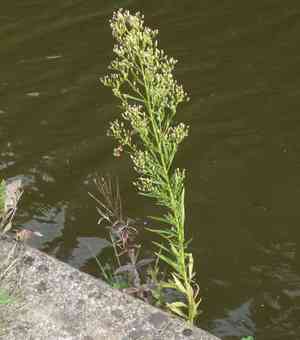
Horseweed(Erigeron canadensis)

Horseweed (Erigeron canadensis)

Also known as: Canadian fleabane, Marestail

Mullein is an herbaceous biennial plant with a hairy stem, numerous pointed leaves, and a tall, waxy flower spike. Originally from Europe and Asia, it has become naturalized in parts of Eurasia and Australia. In survival situations, mullein is particularly useful for starting friction fires due to its dry, fibrous stalk.

Attributes of Horseweed

Lifespan
Annual, Biennial
Plant Type
Herb
Plant Height
50 cm to 1.5 m
Spread
50 cm
Leaf Color
Green
Flower Size
1 cm
Flower Color
White Yellow

PlantJoy - Identify plants with a snap

Identify and diagnose plants, get toxicity alerts, and explore safety guides for all types of fungi.

Try for Free

Images of Horseweed

Horseweed(Erigeron canadensis)

Quickly Identify Horseweed

1
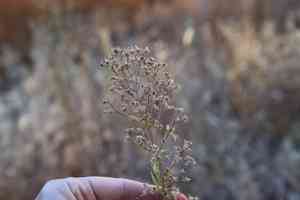
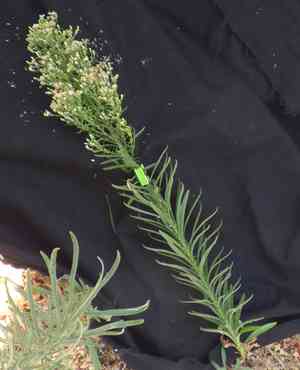
Rosette of hairy leaves in winter transitioning to slender upright form in spring.
2
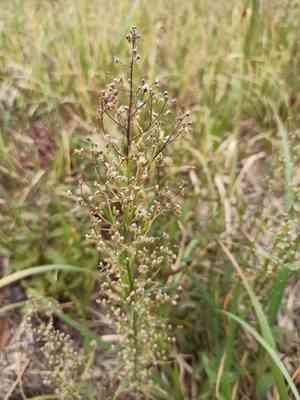
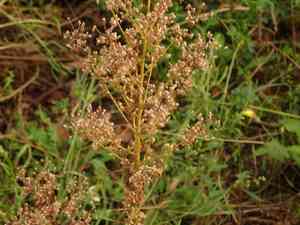
Small white flowers with yellow disk centers in inconspicuous clusters along stems.
3
One-seeded achenes with yellow-gray color and fluffy white hairs for wind dispersal.
4
Linear green leaves with smooth or toothed margins, averaging 2-3.5 inches in length.
5
Light green angular stem with fine white hairs, unbranched except near flower formations.

Scientific Classification of Horseweed

Phylum
Vascular plants
Class
Dicotyledons
Order
Asters bellflowers fanflowers and allies
Family
Daisy
Genus
Fleabanes
Species
Horseweed

Planting and Growing of Horseweed

Care Difficulty
Easy
Watering Schedule
Every 2 days
Sunlight Requirements
Full sun
Sunshine Duration
6-10 hours
Ideal Temperature
60-75℉
Soil Type
Potting Mix, Peat Mix
Soil pH
6.5-7.5
Fertilizer Type
Balanced
Pruning Season
Spring, Summer
Pruning Area
Branches, Leaves
Pruning Frequency
2 times a year
Repotting Season
Spring
Pot Type
Plastic, Terracotta

water icon How to Water Horseweed?

Erigeron canadensis prefers a moderate amount of water, around 250 ml per session. Ensure that the soil is partially dry between waterings. Overwatering can lead to root rot, so it's essential to let the top inch of soil dry out before re-watering.
What are the symptoms of an underwatered Horseweed?
What should I do if my Horseweed is not getting enough water?
What are the symptoms of an overwatered Horseweed?
How to save an overwatered Horseweed?

sunlight icon What Are the Sunlight Requirements for Horseweed?

Sunlight Requirements: Full sun, Partial sun
Duration of light: 6 to 8 hours
Erigeron canadensis can adapt to full sun but benefits most from partial sun conditions. Ideal lighting promotes lush foliage and blooming, enhancing ornamental features and resilience.
What is the best location for Erigeron canadensis?
How can I simulate ideal sunlight conditions for Erigeron canadensis indoors?
What are the benefits of ideal lighting for Erigeron canadensis?

temperature icon What Is the Ideal Temperature Range for Horseweed?

Ideal Temperature: 60 ~ 75℉
The ideal temperature range for growing Erigeron canadensis, commonly known as Conyza canadensis or Canadian Horseweed, is between 60°F to 75°F. Within this range, the plant thrives and shows optimal growth and development. This temperature range supports the plant's metabolic processes, promoting healthy foliage and flowering.

soil icon What Soil is Best for Horseweed?

Soil type: Sandy soil, Loam, Sandy loam
Soil PH: 6.5 ~ 7.5
Erigeron canadensis thrives in well-draining soil as this prevents waterlogging, which can lead to root rot. This type of soil ensures adequate oxygen reaches the roots, promoting healthy growth and establishment. Moderate soil fertility is ideal, as overly rich soils can promote excessive foliage growth at the expense of flowering. The balance in nutrients supports vigorous plant development while enhancing its natural resilience. Preferring soils with sunlit exposure, this plant benefits from ample sunlight which aids in photosynthesis, resulting in robust growth and the prolific production of blooms.

fertilize icon How to Fertilize Horseweed?

Fertilizer type: Balanced
For Erigeron canadensis, a balanced approach to fertilization is crucial. Using a lower-concentration liquid fertilizer, around half the recommended label dose, is often sufficient once per month during the growing season. Solid granules should be a slow-release variant applied at a rate of 1-2 pounds per 100 square feet annually.

prune icon How to Prune Horseweed?

Pruning Time: Spring, Summer
Begin by identifying any dead or diseased stems that need removal. Cut these down to the base of the plant or to the point of healthy tissue. Look for overly large or unruly stems that disrupt the plant's natural shape. Trim back the longest branches to maintain a balanced shape and improve airflow through the plant. This not only enhances the plant's aesthetic appeal but also helps reduce the risk of fungal diseases by preventing stagnant air pockets. After pruning, water the plant thoroughly to help it recover. You may also consider applying a balanced fertilizer to encourage fresh growth. Mulching around the base can help retain moisture and suppress weeds.

propagate icon How to Propagate Horseweed plant?

Propagate Time: Spring, Summer
1
To propagate Erigeron canadensis, sow the seeds on the surface of a moist potting mix. Do not cover the seeds with soil as they require light for germination. Mist the surface lightly with water to ensure the seeds remain moist.
2
Place the seed trays in a warm location with indirect sunlight. Maintain a temperature of 20-22°C (68-72°F) to encourage germination. Use a plastic dome or clear plastic wrap to retain humidity, but ensure there's adequate ventilation to prevent fungal growth.
3
Once the seedlings have developed two true leaves, transplant them into individual pots filled with potting mix. Be gentle to avoid damaging the delicate root systems. Gradually acclimate the young plants to outdoor conditions before planting them in the garden.

repot icon How to Repot Horseweed plant?

Repotting frequency: Annually or biennially
1
Keep an eye on Erigeron canadensis for signs like roots growing through drainage holes, slow growth, or soil that dries out too quickly. These indicators suggest that it's time to consider repotting. Usually, early Spring or Summer is ideal when the plant resumes active growth.
2
Select a pot that's one size larger than the current one, ensuring it has good drainage holes. A slight increase in size prevents over-watering while allowing room for root expansion, fostering healthier growth and reducing the risk of root rot.
3
Opt for a well-draining potting mix with a mild nutrient profile. This type of soil facilitates aeration, ensures proper root development, and prevents water retention, which could otherwise lead to root diseases.

PlantJoy - Identify plants with a snap

Find the best spots for them to optimize their health, simply using your phone.

Try for Free

Toxicity of Horseweed

Is Horseweed toxic to cat?

Horseweed is recognized as toxic to felines. When cats accidentally ingest parts of this plant, especially the leaves, they may experience poisoning. Contact with horseweed can result in cats exhibiting symptoms of physical discomfort, although the exact signs can differ. Due to the health hazards linked to its consumption, prompt veterinary assistance is essential for the proper care of any cat that has ingested horseweed. Preventing cats from accessing horseweed, both indoors and outdoors, is vital to avoid inadvertent poisoning and to enhance pet safety.

Is Horseweed toxic to dog?

Horseweed is recognized as toxic to dogs. Canine poisoning usually occurs when dogs inadvertently consume various parts of the plant, specifically the leaves, which are known to be harmful. If a dog consumes horseweed, it may display symptoms that suggest poisoning has occurred. Thus, it is crucial for dog owners to remain alert and deter their pets from wandering into regions where horseweed is present. In the event a dog ingests any part of horseweed, particularly the leaves, it is vital to seek prompt veterinary assistance to secure the best possible recovery for the affected dog.

Identify toxic plants for your safety

Learn which plants are harmful to you and your pets, and make informed choices for a safer home!

Try for Free
WARNING
The judgment on toxicity and danger is for reference only. We DO NOT GUARANTEE any accuracy of such judgment. Therefore, you SHALL NOT rely on such judgment. It is IMPORTANT TO SEEK PROFESSIONAL ADVICE in advance when necessary.
More About Toxic Techniques