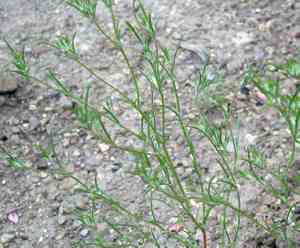
Wilcox's woollystar (Eriastrum wilcoxii)
Also known as: Wilcox's woollystar
The Desert Bluebell is a petite wildflower that flourishes in the dry conditions of desert scrub and rocky terrains. It features delicate blue to violet flowers that sit atop slender, woolly stems, complemented by narrow, grey-green leaves designed to retain moisture. Blooming mainly from late spring to early summer, these flowers add vibrant color to otherwise barren landscapes. Despite its delicate look, the Desert Bluebell is well-adapted to poor soils and serves as an essential attractant for pollinators in harsh environments.
In This Article
Attributes of Wilcox's woollystar
Lifespan
Annual
Plant Height
Around 10-30 cm
Spread
Approximately 15-25 cm
Leaf Color
Green with fine hairs
Flower Size
Approximately 1-2 cm
Flower Color
Blue
Images of Wilcox's woollystar
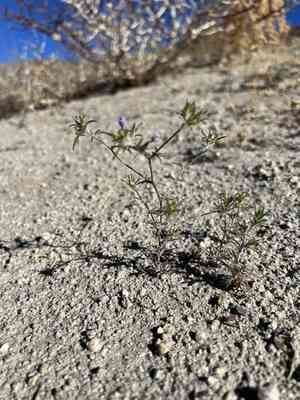
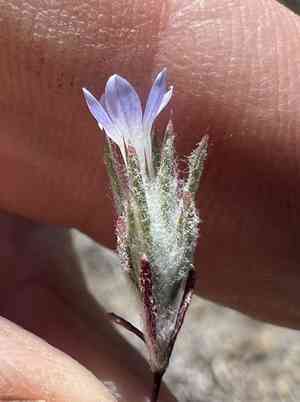
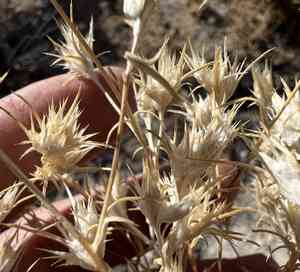
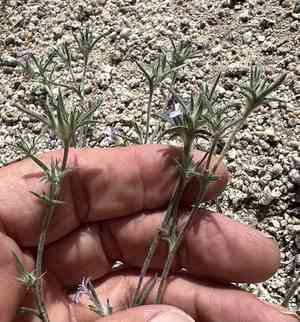
Quickly Identify Wilcox's woollystar
1
Eriastrum wilcoxii can be identified by its delicate, thread-like leaves, generally covered in fine hairs, and its small, blue, star-shaped flowers with five lobes. The plant typically forms a low, bushy growth habit.
Scientific Classification of Wilcox's woollystar
Phylum
Tracheophyta
Class
Magnoliopsida
Order
Ericales
Family
Polemoniaceae
Genus
Eriastrum
Planting and Growing of Wilcox's woollystar
Care Difficulty
Hard
Watering Schedule
Every 2 days
Sunlight Requirements
Full sun
Sunshine Duration
6-10 hours
Ideal Temperature
68-77℉
Soil Type
Potting Mix, Peat Mix
Soil pH
6.5-7.5
Fertilizer Type
Balanced
Pruning Season
Spring, Summer
Pruning Area
Branches, Leaves
Pruning Frequency
2 times a year
Repotting Season
Spring
Pot Type
Ceramic, Plastic
 How to Water Wilcox's woollystar?
Eriastrum wilcoxii thrives with a moderate watering schedule. Aim to provide approximately 250 milliliters of water per session, ensuring the soil is moist but not waterlogged. Use the 'finger test' to check the top inch of soil for dryness before watering again.
What are the symptoms of an underwatered Wilcox's woollystar?
›
What should I do if my Wilcox's woollystar is not getting enough water?
›
What are the symptoms of an overwatered Wilcox's woollystar?
›
How to save an overwatered Wilcox's woollystar?
›
 What Are the Sunlight Requirements for Wilcox's woollystar?
Eriastrum wilcoxii ideally thrives in full sun to partial sun environments, enhancing photosynthesis efficiency, boosting healthy growth, flowering, and fortifying against environmental stresses.
How much sun should Eriastrum wilcoxii receive?
›
Can it tolerate partial sun?
›
What happens with ideal lighting?
›
 What Is the Ideal Temperature Range for Wilcox's woollystar?
For optimal growth of Eriastrum wilcoxii, keeping the temperature between 68°F to 77°F is crucial. This range provides the best environmental conditions for photosynthesis and nutrient absorption, ensuring healthy development.
 What Soil is Best for Wilcox's woollystar?
Eriastrum wilcoxii thrives in well-draining soil. Proper drainage prevents root rot and ensures the plant receives adequate oxygen. This is particularly beneficial in preventing waterlogged conditions that can be detrimental to its health. This plant prefers soil with moderate nutrient levels. While not heavy feeders, a balanced soil nutrient composition supports healthy growth and vibrant flowering without overwhelming the plant with excessive fertilization. Having loose and aerated soil allows for optimal root expansion and improves nutrient uptake. This is crucial for Eriastrum wilcoxii as it ensures that roots can easily access the water and nutrients they need from the surrounding environment.
 How to Fertilize Wilcox's woollystar?
Eriastrum wilcoxii is a delicate wildflower that requires minimal fertilization. For liquid fertilizers, use a diluted mix of half the recommended strength. This will provide enough nutrients without overwhelming the plant's sensitive roots. For slow-release options, a small pellet application every four months is adequate.
 How to Prune Wilcox's woollystar?
First, inspect the plant for any dead, diseased, or damaged stems and leaves. Use your pruning shears to carefully remove these parts to enhance the plant's airflow and sunlight penetration. Next, evaluate the overall shape of the plant. Trim excess growth to keep the plant compact and promote a more balanced form, ensuring the center is less crowded.
More About Pruning Techniques→
 How to Propagate Wilcox's woollystar plant?
1
Collect seeds from mature Eriastrum wilcoxii plants by gathering seed pods once they dry on the plant. Ensure seeds are fully matured to increase germination success rates.
2
Prepare well-draining soil by mixing sand and peat moss. This type of soil replicates the natural growing conditions, promoting better seedling establishment.
3
Plant seeds in small pots or trays, sowing them lightly into the soil. Cover the seeds with a thin layer of soil and mist them gently with water to maintain moisture.
 How to Repot Wilcox's woollystar plant?
1
Eriastrum wilcoxii shows signs for repotting when it becomes root-bound, or growth appears stunted. These are signals that it needs more space to thrive. Another indicator is soil depletion, which reflects visually in poor foliage color and reduced flowering. The best moment for repotting is early in the growing season, ensuring the plant has ample time to establish in its new pot.
2
Choose a pot with drainage holes and slightly larger in diameter than the current one. A terracotta pot is excellent as it allows moisture to evaporate, reducing the risk of root rot. Ensure the new pot provides sufficient space for future growth, but avoid pots that are too large, as they may retain excess moisture.
3
A well-draining sandy mix is ideal for Eriastrum wilcoxii. The mix should be slightly acidic and nutrient-rich to support optimal growth. Such soil ensures that water drains efficiently, preventing waterlogging and offering aeration for healthy root development. Incorporating perlite or coarse sand can aid in improving drainage.
Learn More About Wilcox's woollystar Diseases
Anthracnose
Bacterial Leaf Spot
Bacterial Soft Rot
Bacterial Wilt
Chemical Injury
Damping-off
Downy Mildew
Drought Stress
Fusarium Wilt
Gray Mold
Leaf Curl
Leaf Spot
Mosaic
Nutrient Deficiency
Nutrient Toxicity
Powdery Mildew
Root Rot
Root-knot Nematode
Rusts
Sooty Mold
Spider Mites
Temperature Stress
Thrips Damage
White Mold


