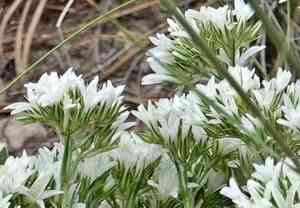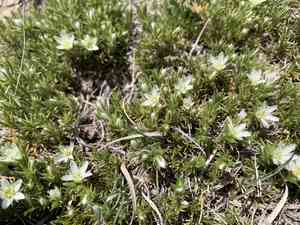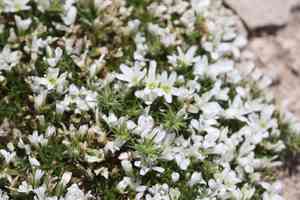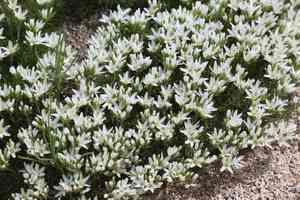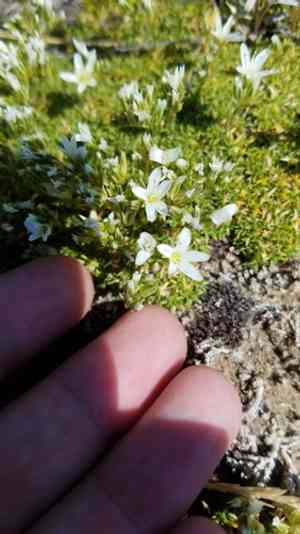
Eremogone hookeri(Eremogone hookeri)

Eremogone hookeri (Eremogone hookeri)

Also known as: Hooker's Sandwort

Eremogone hookeri, known as Hooker's sandwort, is a resilient perennial herb that thrives in alpine and subalpine rocky environments. Its key features include:

1. **Tufted Growth Form**: This compact, cushion-like growth helps conserve moisture and provides resistance against harsh winds.
2. **White Flowers**: These delicate blooms, arranged in open clusters, emerge on slender, upright stems, optimizing pollination during the short growing season.
3. **Needle-Like Leaves**: The dense mats of needle-like leaves reduce water loss and protect against cold temperatures.
4. **Cold and Drought Tolerance**: Its compact structure and drought-resistant foliage are crucial for survival in extreme conditions.

These adaptations collectively enable Eremogone hookeri to flourish in challenging alpine and subalpine terrains.

Attributes of Eremogone hookeri

Lifespan
Perennial
Plant Type
Herb
Plant Height
10-30 cm
Spread
20-40 cm
Leaf Color
Green
Flower Size
1-1.5 cm
Flower Color
White

ForwardPlant - Identify plants with a snap

Identify and diagnose plants, get toxicity alerts, and explore safety guides for all types of fungi.

Try for Free

Images of Eremogone hookeri

Eremogone hookeri(Eremogone hookeri)

Quickly Identify Eremogone hookeri

1
Eremogone hookeri can be identified by its slender, grass-like leaves and small, white, star-shaped flowers. The flowers are typically borne in loose clusters at the ends of wiry stems.

Scientific Classification of Eremogone hookeri

Phylum
Vascular plants
Class
Dicotyledons
Order
Caryophyllales
Family
Pink
Genus
Eremogone
Species
Eremogone hookeri

Planting and Growing of Eremogone hookeri

Care Difficulty
Moderate
Watering Schedule
Every 2 days
Sunlight Requirements
Full sun
Sunshine Duration
6-8 hours
Ideal Temperature
60-75℉
Soil Type
Potting Mix, Peat Mix
Soil pH
6.5-7.5
Fertilizer Type
Balanced
Pruning Season
Spring, Summer
Pruning Area
Branches, Leaves
Pruning Frequency
2 times a year
Repotting Season
Spring
Pot Type
Plastic, Ceramic

water icon How to Water Eremogone hookeri?

Eremogone hookeri requires a delicate balance when it comes to watering. Each session should deliver about 250 milliliters, ensuring the soil is adequately moist yet not saturated. This amount is optimal to mimic the plant's natural arid habitat, allowing the soil to partially dry between watering sessions.
What are the symptoms of an underwatered Eremogone hookeri?
What should I do if my Eremogone hookeri is not getting enough water?
What are the symptoms of an overwatered Eremogone hookeri?
How to save an overwatered Eremogone hookeri?

sunlight icon What Are the Sunlight Requirements for Eremogone hookeri?

Sunlight Requirements: Full sun
Duration of light: 6 to 8 hours daily
Full sun exposure for at least 6 to 8 hours daily is ideal for Eremogone hookeri. This ensures optimal growth rates, lush foliage, and vibrant, plentiful blooms, capitalizing on the plant's natural hardiness and beauty.
Optimal Time of Day
Solution for Shaded Areas
Effectiveness of Proper Light

temperature icon What Is the Ideal Temperature Range for Eremogone hookeri?

Ideal Temperature: 60 ~ 75℉
The ideal temperature range for Eremogone hookeri is between 60°F and 75°F. This range provides optimal conditions for growth and maintenance of healthy physiological processes, allowing the plant to thrive and produce vibrant foliage and flowers.

soil icon What Soil is Best for Eremogone hookeri?

Soil type: Sandy soil, Loam, Sandy loam
Soil PH: 6.5 ~ 7.5
Eremogone hookeri thrives in well-draining soil, as it prevents waterlogging and root rot. Ensuring good drainage keeps the roots healthy and supports strong plant growth. This plant needs moderately fertile soil to provide essential nutrients without overwhelming it. Balanced fertility supports steady growth and vibrant foliage. Eremogone hookeri prefers soils with low salinity to avoid root damage. Low-salinity conditions support healthy root function and nutrient uptake.

fertilize icon How to Fertilize Eremogone hookeri?

Fertilizer type: Balanced
Eremogone hookeri, known as Hooker's sandwort, requires a balanced approach to fertilization. Use a balanced liquid fertilizer diluted to half strength, about 0.5 ounces per gallon of water to avoid nutrient overload which could damage the plant.

prune icon How to Prune Eremogone hookeri?

Pruning Time: Spring, Summer
Begin by inspecting the plant thoroughly. Identify parts of the plant that appear damaged, diseased, or dead. This stage sets the groundwork for effective pruning by ensuring you focus on areas that require attention. Make cuts just above a healthy bud or side shoot to encourage branching and new growth. Ensure each cut is deliberate and clean for optimal plant recovery and bloom stimulation. After pruning, clear away all cut debris to ensure there’s no lingering material that can harbor pests or diseases. A tidy garden contributes to the overall health of your Eremogone hookeri. More About Pruning Techniques

propagate icon How to Propagate Eremogone hookeri plant?

Propagate Time: Spring, Early spring, Late spring
1
Gather seeds from mature Eremogone hookeri plants once the seed heads have dried out. Use a paper envelope for storage in a cool, dark place until ready for planting.
2
Choose healthy, non-flowering stems for cuttings. Cut 4-6 inch sections just below a node and remove the lower leaves before placing them in water or rooting medium.
3
Gently lift mature plants from the ground and separate the roots by hand or with a sharp knife. Replant immediately in prepared soil, watering thoroughly to eliminate air pockets.
More About Propagating Techniques

repot icon How to Repot Eremogone hookeri plant?

Repotting frequency: Every 2 to 3 years
1
Eremogone hookeri thrives best when repotted during its active growing seasons, typically in spring and summer. Look for signs like roots crowding at the surface or poking out of drainage holes. These indicators mean it's time to provide more room for root expansion.
2
Select a pot that's one to two inches larger in diameter than the current one, to accommodate growing roots without excessive soil retention. A pot with good drainage is critical to prevent waterlogging, which can lead to root rot and other plant health issues.
3
Eremogone hookeri prefers a well-draining sandy soil mix. This ensures air circulation to the roots and prevents the soil from retaining too much moisture. Good drainage also supports overall plant health, reducing the risk of disease.

ForwardPlant - Identify plants with a snap

Find the best spots for them to optimize their health, simply using your phone.

Try for Free