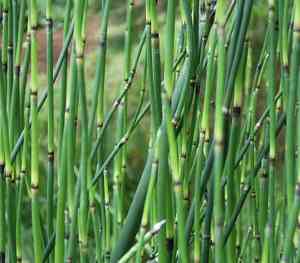
Giant horsetail (Equisetum giganteum)
Also known as: Giant horsetail, Southern giant horsetail
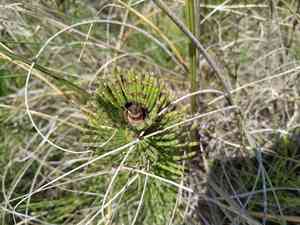
Giant horsetail, also known as Equisetum giganteum, features tall, hollow stems that can grow up to 5 meters, resembling bamboo. Its reed-like structure, characterized by whorled branches and the absence of true leaves, reflects its ancient lineage. Flourishing in wet habitats, giant horsetail spreads efficiently through its grooved, segmented stems, enabling it to form dense, extensive colonies reminiscent of prehistoric times.
In This Article
Attributes of Giant horsetail
Lifespan
Perennial
Plant Type
Fern
Plant Height
2-5 meters (6-16 feet)
Spread
N/A
Leaf Color
Green (though true leaves are reduced to scales)
Flower Size
N/A (Reproduces via spores, not flowers)
Flower Color
N/A
Images of Giant horsetail
Quickly Identify Giant horsetail
1
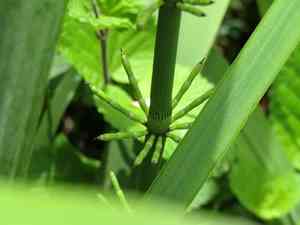
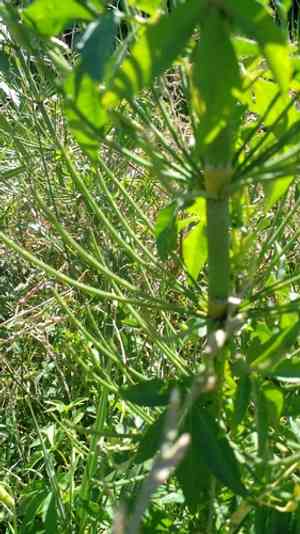
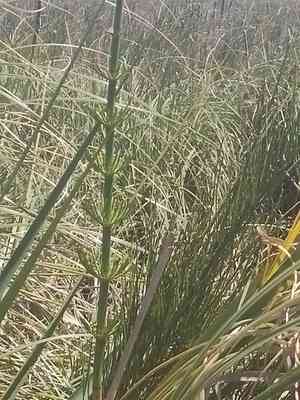
Look for tall, hollow stems with distinct joints and rings of tiny scale-like leaves at the nodes. The stems are green and can grow to several meters in height. The lack of true leaves and the unusual segmented appearance are characteristic of this species.
Scientific Classification of Giant horsetail
Phylum
Vascular plants
Class
Equisetopsida
Order
Equisetales
Family
Horsetail
Genus
Horsetails
Species
Giant horsetail
Planting and Growing of Giant horsetail
Care Difficulty
Moderate
Watering Schedule
Every 4 days
Sunlight Requirements
Partial sun
Sunshine Duration
4-8 hours
Ideal Temperature
72-86℉
Soil Type
Potting Mix, Peat Mix
Soil pH
6-8
Fertilizer Type
Balanced
Pruning Season
Spring, Summer
Pruning Area
Branches, Leaves
Pruning Frequency
2 times a year
Repotting Season
Spring
Pot Type
Plastic, Ceramic
 How to Water Giant horsetail?
Equisetum giganteum, commonly known as the giant horsetail, thrives in moist environments. When watering, aim to keep the soil consistently damp without making it soggy. A general principle is to water thoroughly until you see excess water draining from the bottom. This habit ensures the entire root system receives adequate hydration while preventing root rot.
What are the symptoms of an underwatered Giant horsetail?
›
What should I do if my Giant horsetail is not getting enough water?
›
What are the symptoms of an overwatered Giant horsetail?
›
How to save an overwatered Giant horsetail?
›
 What Are the Sunlight Requirements for Giant horsetail?
Partial sunlight is ideal; it replicates the Equisetum giganteum's natural environment, boosting its photosynthetic activity, hence its growth and structural development. It maintains its unique segmented structure and promotes robust health.
What is the optimal lighting solution for Equisetum giganteum?
›
How can you ensure Equisetum giganteum receives ideal light exposure?
›
What are the benefits of providing ideal light conditions to Equisetum giganteum?
›
 What Is the Ideal Temperature Range for Giant horsetail?
Equisetum giganteum thrives best in environments where the temperature remains consistently between 72°F to 86°F. This range ensures that the plant's physiological processes occur unimpeded, contributing to optimal growth and development. Maintaining these temperatures can maximize photosynthesis and nutrient uptake.
 What Soil is Best for Giant horsetail?
Equisetum giganteum thrives best in soils that have good moisture retention properties. Ensuring the soil is consistently moist will facilitate the plant's robust growth and keep its foliage lush. This plant does better in soils rich in organic matter. Adding compost or organic fertilizers can substantially improve the soil's nutrient content, promoting healthier and faster growth. While Equisetum giganteum loves moisture, ensuring proper soil aeration is crucial to prevent root rot. Incorporating materials like sand or perlite can enhance aeration, keeping roots healthy.
 How to Fertilize Giant horsetail?
Equisetum giganteum requires modest fertilization. When employing liquid fertilizer, use a diluted solution, typically one-fourth of the recommended dosage on the product label. Slow-release granular formulas should be applied sparingly, ensuring that nutrients are gradually absorbed without overwhelming the plant.
 How to Prune Giant horsetail?
Begin by identifying any dead, damaged, or diseased stems. These should be your first priority for removal, as they can sap energy from the plant and create entry points for pests or disease. Select stems that need thinning and cut them close to the base. Ensure cuts are clean and angled slightly to allow water to run off, preventing rot. Focus on removing older stems to encourage new growth. While pruning, maintain the desired shape and height of your Equisetum. This often means cutting back taller stems to encourage a fuller, bushier form. Regularly stepping back to assess the plant helps achieve an even look.
 How to Propagate Giant horsetail plant?
1
Begin by thoroughly watering the plant a few days before division to ensure the roots are hydrated. Identify healthy sections of the plant with visible rhizomes. Trim away any dead or diseased parts to promote healthy growth after division.
2
Carefully dig around the plant to expose the root system. Using a sharp knife or spade, cut sections of the rhizomes with at least two or three nodes. Ensure each divided piece has a healthy shoot emerging from it to increase the chances of successful propagation.
3
Plant each divided section in a container filled with well-draining potting soil. Place the rhizomes horizontally and cover them with soil, ensuring the shoots are visible above the surface. Water the divisions lightly but regularly to maintain soil moisture.
 How to Repot Giant horsetail plant?
1
The right signals for repotting Equisetum giganteum are roots that start to circle the pot or emerge from the drainage holes, indicating they have outgrown their space. Another key time to consider repotting is when the plant's growth appears stunted despite adequate care, which can mean the soil has become depleted.
2
Select a pot that is approximately 2 inches larger in diameter than the current pot. Make sure the pot has adequate drainage holes to prevent waterlogging, which can lead to root rot. A slightly heavier pot can be beneficial for providing stability to the tall, reed-like structure of Equisetum giganteum.
3
Opt for soil that retains moisture yet allows for sufficient drainage. A mix rich in organic matter such as peat moss or well-rotted compost is ideal as it provides necessary nutrients and fosters vigorous growth. This soil combination is key, as Equisetum giganteum thrives in wet conditions yet requires aeration to keep roots healthy.
Toxicity
Ingestion
WARNING
The judgment on toxicity and danger is for reference only. We DO NOT GUARANTEE any accuracy of such judgment. Therefore, you SHALL NOT rely on such judgment. It is IMPORTANT TO SEEK PROFESSIONAL ADVICE in advance when necessary.



