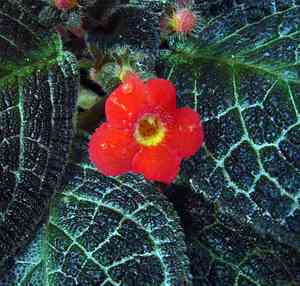
Flame violet (Episcia cupreata)
Also known as: Flame Violet, Red Flower Episcia
A flame violet (Episcia cupreata) is cherished for its vibrant flowers and striking foliage. The name Episcia is derived from a Greek word meaning 'shaded,' indicative of its natural habitat. This plant's trailing nature makes it perfect for hanging baskets, shallow pots, or as ground cover. Ensure it is placed in a warm, humid area with bright, indirect light for optimal growth.
In This Article
Attributes of Flame violet
Lifespan
Perennial
Plant Type
Herb
Plant Height
30 cm to 36 cm
Spread
30 cm to 60 cm
Leaf Color
Green Orange Purple
Flower Size
2.5 cm
Flower Color
Orange Yellow Red Pink Blue Gold
Images of Flame violet
Quickly Identify Flame violet
1
Decussate foliage with pale midribs and purple undersides.
2
Stolons aiding in plant spread, covered with fine hairs.
3
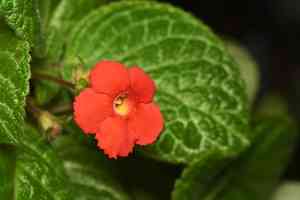
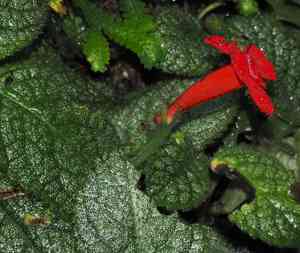
Funnel-shaped flowers in vibrant red to orange hues.
4
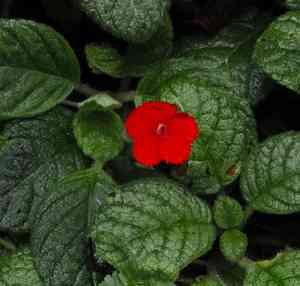
Oval leaves up to 4 inches (10 cm) with bullate texture.
5
Short stems with reddish to green colors, produce stolons for propagation.
Scientific Classification of Flame violet
Phylum
Vascular plants
Class
Dicotyledons
Order
Lamiales
Family
African violet
Genus
Flame violets
Species
Flame violet
Planting and Growing of Flame violet
Care Difficulty
Easy
Watering Schedule
Every 4 days
Sunlight Requirements
Partial sun
Sunshine Duration
4-8 hours
Ideal Temperature
65-75℉
Soil Type
Potting Mix, Peat Mix
Soil pH
6-7.5
Fertilizer Type
Balanced
Pruning Season
Spring, Summer
Pruning Area
Branches, Leaves
Pruning Frequency
2 times a year
Repotting Season
Spring
Pot Type
Plastic, Ceramic
 How to Water Flame violet?
Episcia cupreata thrives in consistently moist soil, though not soggy. You'll want to water until the top inch of soil feels saturated without water pooling at the bottom of the pot.
More About Watering Techniques→
What are the symptoms of an underwatered Flame violet?
›
What should I do if my Flame violet is not getting enough water?
›
What are the symptoms of an overwatered Flame violet?
›
How to save an overwatered Flame violet?
›
 What Are the Sunlight Requirements for Flame violet?
Episcia cupreata prefers partial sun to full shade. Ideal lighting ensures vibrant leaf colors and vigorous growth, enhancing its ornamental appeal and ensuring robust health.
More About Sunlight Requirements Techniques→
Where should I place Episcia cupreata for optimal light?
›
What kind of artificial light can complement natural light?
›
Why is consistent lighting important for Episcia cupreata?
›
 What Is the Ideal Temperature Range for Flame violet?
To achieve the best growth for Episcia cupreata, maintaining an ideal temperature range between 65°F and 75°F is crucial. This range closely mimics the warm and humid conditions of its native habitat, promoting robust foliage and vibrant blooms.
 What Soil is Best for Flame violet?
Episcia cupreata thrives in well-draining soil to prevent root rot. Proper drainage ensures that water doesn't accumulate around the roots, which is essential for the plant's health. While drainage is crucial, the soil should retain some moisture. A balance between moisture retention and aeration helps in keeping the roots hydrated without being waterlogged. This plant benefits from soil that is rich in organic matter. Nutrient-rich soil ensures robust growth and vibrant foliage, contributing to the overall attractiveness of the plant.
More About Soil→
 How to Fertilize Flame violet?
Episcia cupreata benefits from a balanced fertilizer. During the growing season, use a diluted liquid fertilizer at half the recommended strength. Mixing 1/4 teaspoon of fertilizer per gallon of water is a good starting point, but always observe the plant's response and adjust accordingly.
More About Fertilizing Techniques→
 How to Prune Flame violet?
Start by gathering clean, sharp scissors or pruning shears. Having the right tools ensures that you make clean cuts, minimizing damage to the plant and reducing the risk of disease entry. Look for any discolored, wilted, or damaged leaves. These should be removed first, cutting just above the base of the leaf stem, encouraging new and healthy growth from the plant. Find stems that have grown leggy or unruly. Prune them back to a healthy leaf node. This pruning promotes bushier growth and prevents the plant from looking sparse and uneven. Occasionally pinch back the growing tips of healthy stems. This method encourages the plant to branch out more, resulting in a denser and more compact growth habit.
More About Pruning Techniques→
 How to Propagate Flame violet plant?
1
Choose a mature and healthy plant to take your cuttings from. Avoid using a plant that shows signs of disease or stress, as this can reduce the effectiveness of the propagation.
2
Make a clean cut below a leaf node, and ensure the cutting is approximately three to four inches long. Remove any leaves from the bottom one-third of the cutting to leave space for root development.
3
Dip the cut end of the cutting into rooting hormone powder. Insert it into a pot filled with moist potting mix. Keep the soil consistently moist and cover the pot with a plastic bag to maintain humidity.
 How to Repot Flame violet plant?
1
Repotting is necessary when the roots become crowded or grow through the drainage holes. Spring or early summer is the best time, ensuring the plant is not in active bloom. If the soil becomes compacted or drains poorly, it's also a signal to repot.
2
Choose a pot that is only slightly larger than the current one. This prevents overwatering and encourages healthy root growth. Ensure the pot has ample drainage holes to avoid waterlogging, which can lead to root rot.
3
Opt for a light, well-aerated soil mix. A combination of peat, perlite, and vermiculite works well, ensuring adequate drainage and preventing root rot. This mix retains enough moisture while still promoting air circulation around the roots.



