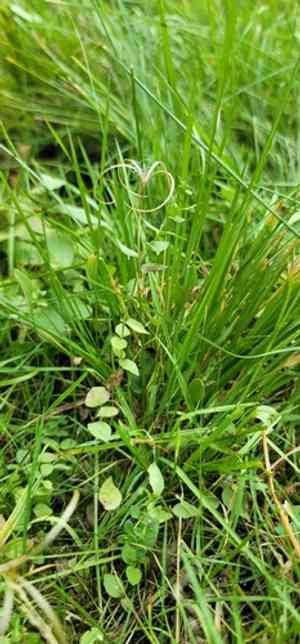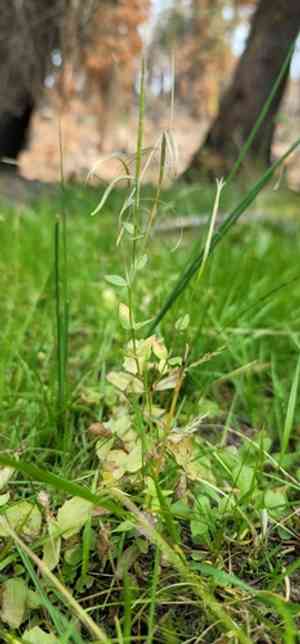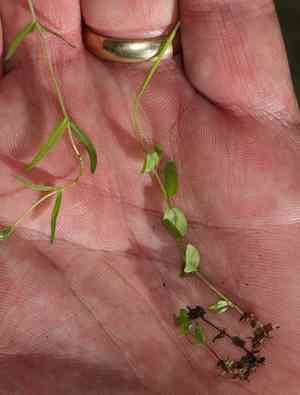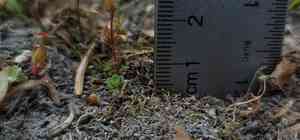
Yuba pass willowherb(Epilobium howellii)

Yuba pass willowherb (Epilobium howellii)

Also known as: None

The Yuba Pass willowherb (Epilobium howellii) is a resilient perennial herb commonly found in moist, high-altitude meadows and along stream banks. It generally forms clumps and has upright stems. Key features include:

- Leaves: Narrow, lance-shaped, often with toothed edges.
- Flowers: Small, typically pink to pale purple, featuring four petals and a distinct elongated floral tube.
- Stems: Erect and may exhibit a reddish tint.

Habitat preferences:
- Elevation: Found primarily between 1,500 to 2,500 meters.
- Environment: Prefers moist, well-drained areas, often thriving in wetlands.
- Light: Grows well in full sun to partial shade.

This plant is well-adapted to its wetland habitat, flourishing where there is ample moisture, particularly in regions with cold, wet winters and dry summers.

Attributes of Yuba pass willowherb

Lifespan
Perennial
Plant Height
Typically 30-50 cm (1-1.6 feet)
Spread
Not applicable
Leaf Color
Green
Flower Size
Approximately 1 cm (0.4 inches)
Flower Color
Pink

ForwardPlant - Identify plants with a snap

Identify and diagnose plants, get toxicity alerts, and explore safety guides for all types of fungi.

Try for Free

Images of Yuba pass willowherb

Yuba pass willowherb(Epilobium howellii)

Quickly Identify Yuba pass willowherb

1
This plant can be identified by its lance-shaped leaves with a smooth edge, small pink flowers with four petals, and its habitation near wetlands or moist areas.

Scientific Classification of Yuba pass willowherb

Phylum
Vascular plants
Class
Dicotyledons
Order
Myrtales
Family
Evening primrose
Genus
Willowherbs
Species
Yuba pass willowherb

Planting and Growing of Yuba pass willowherb

Care Difficulty
Moderate
Watering Schedule
Every 3 days
Sunlight Requirements
Partial sun
Sunshine Duration
4-8 hours
Ideal Temperature
65-75℉
Soil Type
Potting Mix, Peat Mix
Soil pH
6.5-7.5
Fertilizer Type
Balanced
Pruning Season
Spring, Summer
Pruning Area
Branches, Leaves
Pruning Frequency
2 times a year
Repotting Season
Spring
Pot Type
Plastic, Ceramic

water icon How to Water Yuba pass willowherb?

Epilobium howellii thrives when watered moderately, with each session involving approximately 250 milliliters. The soil should be damp, not soggy, to ensure the delicate roots remain healthy without sitting in water.
What are the symptoms of an underwatered Yuba pass willowherb?
What should I do if my Yuba pass willowherb is not getting enough water?
What are the symptoms of an overwatered Yuba pass willowherb?
How to save an overwatered Yuba pass willowherb?

sunlight icon What Are the Sunlight Requirements for Yuba pass willowherb?

Sunlight Requirements: Partial sun
Duration of light: 4 to 6 hours
Epilobium howellii thrives best with partial sun exposure. Ideal lighting ensures balanced growth, vibrant blooms, and robust health, enhancing its ornamental appeal.
What is the ideal lighting condition for Epilobium howellii?
What solutions can achieve these ideal conditions?
What are the benefits of achieving ideal lighting?

temperature icon What Is the Ideal Temperature Range for Yuba pass willowherb?

Ideal Temperature: 65 ~ 75℉
The ideal temperature range for Epilobium howellii is crucial as it mimics its natural habitat conditions. Maintaining temperatures between 65°F and 75°F can ensure optimal growth and flowering. This range supports metabolic activities and energy production, which are vital for the plant's development and survival.

soil icon What Soil is Best for Yuba pass willowherb?

Soil type: Loam, Sandy loam
Soil PH: 6.5 ~ 7.5
Epilobium howellii thrives in well-draining soil to prevent root rot. Good drainage ensures that the roots have optimal oxygen access, reducing the risk of fungal diseases. A nutrient-rich soil supports the robust growth of Epilobium howellii, providing essential minerals that improve plant health and flowering activity. Soil with moderate moisture retention helps stabilize the plant's hydration levels, allowing it to endure short periods of drought without significant stress.

fertilize icon How to Fertilize Yuba pass willowherb?

Fertilizer type: Balanced
For Epilobium howellii, it's essential to apply fertilizer sparingly, as over-fertilization may harm the plant. A quarter-strength balanced liquid fertilizer is suitable, using about 5 ml per liter of water. Make sure to adjust according to the plant's response.

prune icon How to Prune Yuba pass willowherb?

Pruning Time: Spring, Summer
Prune your Epilobium howellii during spring and summer when growth is active. Avoid cutting back too much at once, as this can stress the plant. Focus on removing spent flowers and unwanted foliage to direct energy to new growth. It's crucial not to remove more than one-third of the total plant foliage at a single time. Over-pruning can lead to shock, making the plant susceptible to diseases and weakening its overall vitality. After pruning, monitor the plant closely to see how it responds. Healthy new growth should appear within a few weeks. If you notice any signs of distress, ensure the plant is receiving adequate water and nutrients. More About Pruning Techniques

propagate icon How to Propagate Yuba pass willowherb plant?

Propagate Time: Early spring, Late spring, Early summer
1
Start with a well-draining seed starting mix. Moisten it lightly before filling seed trays or pots. The medium should be damp but not soggy to provide the optimal environment for seed germination or rooting of cuttings.
2
Scatter the seeds over the surface of the moistened medium, covering them lightly with a thin layer of soil. Maintain a consistent temperature around 70°F to encourage germination, and cover with a plastic dome to retain humidity.
3
Select healthy, non-flowering stems and cut about 4-6 inches with sterilized shears. Remove the lower leaves and dip the cut end in rooting hormone powder. Insert the cutting into the pre-moistened growing medium and firm the soil around it.
More About Propagating Techniques

repot icon How to Repot Yuba pass willowherb plant?

Repotting frequency: Every 2-3 years
1
Epilobium howellii shows it needs repotting when its roots start growing out of the drainage holes, or water is not adequately absorbed. Ideally, repot in early spring or early autumn for best acclimation to new soil and pot.
2
Opt for a pot that is one size larger than the current one, ensuring it has ample drainage holes. A slightly bigger pot provides room for root growth and minimizes the risk of root rot, keeping the plant healthy.
3
Use a light, well-draining soil mix to prevent waterlogging. A mix that includes perlite or coarse sand is ideal, as it promotes good air circulation and reduces the risk of root rot.

ForwardPlant - Identify plants with a snap

Find the best spots for them to optimize their health, simply using your phone.

Try for Free