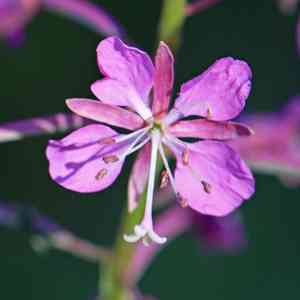
Fireweed (Epilobium angustifolium)
Also known as: Fireweed, Rosebay Willowherb, Great Willowherb
Fireweed (Epilobium angustifolium) is a resilient perennial wildflower characterized by its striking pink to purple petals. Aptly named, it is among the initial flora to sprout following a wildfire, capitalizing on the newly enriched soil. While it can spread vigorously under favorable conditions, its seeds are capable of lying dormant for years, awaiting the perfect environment to grow. Fireweed typically blooms from summer through fall.
In This Article
Attributes of Fireweed
Lifespan
Perennial
Plant Type
Herb
Plant Height
50 cm to 2.5 m
Spread
30 cm to 90 cm
Leaf Color
Green
Flower Size
2 cm to 3 cm
Flower Color
White Pink Purple
Images of Fireweed
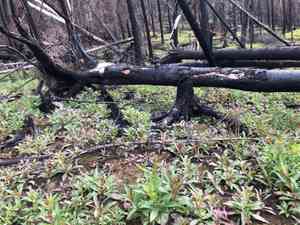
Quickly Identify Fireweed
1
Narrow, willow-like leaves measuring 4-6 inches (10-15 cm) long.
2
Tall, spiky clusters of vivid purplish-pink flowers reaching 5 feet (1.5 meters).
3
Deep pink to magenta-purple saucer-shaped flowers, 1-1.5 inches (2.5-3.8 cm) across.
4
Slender reddish-brown seed pods with distinctive silky-haired seeds for wind dispersal.
5
Smooth reddish-green unbranched stem, 2-5 feet (60-150 cm) in height.
Scientific Classification of Fireweed
Phylum
Vascular plants
Class
Dicotyledons
Order
Myrtales
Family
Evening primrose
Genus
Willowherbs
Species
Fireweed
Planting and Growing of Fireweed
Care Difficulty
Easy
Watering Schedule
Every 6 days
Sunlight Requirements
Full sun
Sunshine Duration
6-10 hours
Ideal Temperature
60-70℉
Soil Type
Potting Mix, Peat Mix
Soil pH
5.5-7
Fertilizer Type
Balanced
Pruning Season
Spring, Summer
Pruning Area
Branches, Leaves
Pruning Frequency
2 times a year
Repotting Season
Spring
Pot Type
Plastic, Ceramic
 How to Water Fireweed?
The recommended watering amount for Epilobium angustifolium is about 500 milliliters per session. This amount ensures that the plant's root system is adequately hydrated, without oversaturating the soil. The goal is to moisten the soil evenly, reaching all roots but avoiding waterlogging. Check for soil dryness around 2 inches below the surface; if it's dry, watering is required.
What are the symptoms of an underwatered Fireweed?
›
What should I do if my Fireweed is not getting enough water?
›
What are the symptoms of an overwatered Fireweed?
›
How to save an overwatered Fireweed?
›
 What Are the Sunlight Requirements for Fireweed?
Epilobium angustifolium performs best in environments with full sun to partial sun exposure, ideally receiving 4-6 hours of light daily. Proper light promotes robust growth, vibrant foliage, and a prolific bloom cycle.
More About Sunlight Requirements Techniques→
How much sunlight is ideal for Epilobium angustifolium?
›
What solution helps to achieve ideal lighting for this plant?
›
What are the benefits of providing ideal lighting to Epilobium angustifolium?
›
 What Is the Ideal Temperature Range for Fireweed?
The ideal temperature range for cultivating Epilobium angustifolium, commonly known as fireweed, is between 60 and 70 degrees Fahrenheit. This range provides optimal conditions for growth and flowering, ensuring the plant receives enough warmth without overheating. Temperatures within this range support active photosynthesis and nutrient uptake, contributing to healthy plant development.
 What Soil is Best for Fireweed?
Epilobium angustifolium requires well-drained soil to thrive. Proper drainage prevents root rot and promotes healthy root development, aiding in nutrient absorption. The soil should be rich in organic matter to support its growth. Organic matter improves soil structure, enhances moisture retention, and provides essential nutrients. A slightly acidic to neutral pH range (5.5 to 7.0) is ideal for Epilobium angustifolium. This pH range facilitates the availability of nutrients crucial for plant health.
 How to Fertilize Fireweed?
Epilobium angustifolium, known as fireweed, thrives on minimal fertilizer. A balanced 10-10-10 liquid fertilizer diluted to half-strength is ideal. Apply about 1/4 cup per plant monthly during the growing season to promote healthy growth without overwhelming the plant.
 How to Prune Fireweed?
Begin by examining the plant for any dead, damaged, or diseased stems. Use sharp, clean pruners to make clean cuts at a slight angle. Remove any faded flowers to encourage further blooming and to prevent seed formation. Always ensure to cut at a node or just above leaf joints to promote healthy regrowth. To maintain an appealing shape, trim back any long, overgrown stems. Cutting back to a lateral shoot or just above a set of leaves encourages the plant to develop a fuller shape. Focus on maintaining an even canopy to balance light exposure across the plant. Once every few years, you might want to perform a hard prune to rejuvenate the plant. This involves cutting the plant back to about one-third of its size in early Spring. This drastic measure stimulates new, vigorous growth and can significantly improve the plant's overall structure and health.
More About Pruning Techniques→
 How to Propagate Fireweed plant?
1
Begin by filling a seed tray with a well-draining potting mix. Moisten the soil mixture to create a conducive environment for seed germination.
2
Sprinkle the Epilobium angustifolium seeds evenly across the soil surface, lightly covering them with a thin layer of soil or vermiculite.
3
Keep the seed tray in a warm, bright location, maintaining consistent moisture by gently misting the surface with water whenever it appears dry.
 How to Repot Fireweed plant?
1
Signs that Epilobium angustifolium needs repotting include roots growing out of the drainage holes, a noticeable slowdown in growth, and the soil seems to dry out rapidly after watering. Ideally, repot during Spring or Autumn, as this is when the plant is in active growth but not under extreme environmental stress.
2
Select a pot that is one size larger than its current one, preferably made of breathable materials like terracotta. The new pot should have drainage holes to prevent waterlogging, ensuring that the roots do not sit in water, which can lead to root rot.
3
The soil should be well-draining yet rich in organic matter to provide the necessary nutrients post repotting. Consider mixing regular potting soil with perlite or sand for better drainage, ensuring the plant doesn’t sit in water, which can cause roots to rot.



