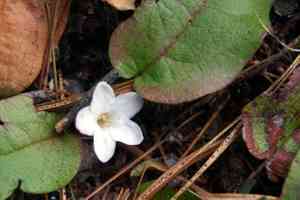
Trailing arbutus (Epigaea) (Epigaea)
Also known as: Trailing Arbutus, Mayflower
The plant you're referring to is the Trailing Arbutus (Epigaea). This group of creeping plants features fragrant, evergreen broad leaves, and scented pink or white flowers. They thrive in pine or wooded forests and are a popular choice for rock gardens. These plants typically bloom early in the spring.
In This Article
Attributes of Trailing arbutus (Epigaea)
Lifespan
Perennial
Plant Height
Up to 10 cm (4 inches)
Spread
Up to 30 cm (12 inches)
Leaf Color
Dark green
Flower Size
Approximately 1 cm (0.4 inches)
Flower Color
Pink or white
Images of Trailing arbutus (Epigaea)
Quickly Identify Trailing arbutus (Epigaea)
1
To identify Epigaea, look for its prostrate growth habit, leathery evergreen leaves, and clusters of small, fragrant pink or white flowers that bloom in early spring.
Scientific Classification of Trailing arbutus (Epigaea)
Phylum
Magnoliophyta
Class
Magnoliopsida
Order
Ericales
Family
Ericaceae
Genus
Epigaea
Planting and Growing of Trailing arbutus (Epigaea)
Care Difficulty
Moderate
Watering Schedule
Every 3 days
Sunlight Requirements
Partial sun
Sunshine Duration
4-8 hours
Ideal Temperature
50-68℉
Soil Type
Potting Mix, Peat Mix
Soil pH
4.5-6
Fertilizer Type
Balanced
Pruning Season
Spring, Summer
Pruning Area
Branches, Leaves
Pruning Frequency
Once a year
Repotting Season
Spring
Pot Type
Plastic, Terracotta
 How to Water Trailing arbutus (Epigaea)?
When watering Epigaea, ensure the soil is moistened deeply but not flooded. Use about 200 ml of water, allowing it to permeate the soil evenly. This ensures that the roots have ample moisture without becoming waterlogged.
What are the symptoms of an underwatered Trailing arbutus (Epigaea)?
›
What should I do if my Trailing arbutus (Epigaea) is not getting enough water?
›
What are the symptoms of an overwatered Trailing arbutus (Epigaea)?
›
How to save an overwatered Trailing arbutus (Epigaea)?
›
 What Are the Sunlight Requirements for Trailing arbutus (Epigaea)?
Epigaea prefers partial sun to full shade, replicating dappled light found in woodlands. Such conditions promote optimal leaf health and flowering, ensuring the plant's thriving presence.
What is the best lighting situation for Epigaea?
›
How do I position Epigaea for optimal light exposure?
›
Why is the right light important for Epigaea?
›
 What Is the Ideal Temperature Range for Trailing arbutus (Epigaea)?
The ideal temperature range for the growth of Epigaea is between 50°F and 68°F. These temperatures provide a suitable environment for optimal physiological and metabolic activities, ensuring healthy growth and flowering. This temperature range mimics the natural habitat of Epigaea, allowing it to thrive without significant stress from thermal extremes.
 What Soil is Best for Trailing arbutus (Epigaea)?
Epigaea thrives in soil that retains moisture well, similar to its natural forest undergrowth habitat. A rich loamy soil mixed with peat helps in maintaining consistent moisture, which is essential for its health, aiding in nutrient absorption and robust growth. The plant prefers nutrient-rich soil that mimics the organic matter found on forest floors. Adding organic compost can increase soil fertility, providing essential nutrients that boost bloom growth and improve foliage color. This plant favors slightly acidic soils with a pH ranging from 4.5 to 6.0. Maintaining this pH range ensures optimal nutrient uptake, reducing the risk of mineral deficiencies and keeping the plant vibrant and healthy.
 How to Fertilize Trailing arbutus (Epigaea)?
Epigaea plants generally require a balanced approach to fertilization. Use liquid fertilizers at a rate of half-strength compared to the recommendation on the label. Solid fertilizers should be used sparingly, about a tablespoon per plant, ensuring it's distributed evenly around the base but not directly touching the stem.
 How to Prune Trailing arbutus (Epigaea)?
First, inspect the plant for any dead or diseased branches. Remove these branches completely to prevent the spread of disease. Trim the outer edges of the plant to maintain a neat, rounded shape. This encourages bushier growth and maintains an aesthetically pleasing appearance. After flowering, remove any old flower heads to direct the plant’s energy into new growth. This can lead to more prolific flowering next season.
 How to Propagate Trailing arbutus (Epigaea) plant?
1
Collect ripe seeds from the plant in early autumn. Clean and dry the seeds properly before storing them in a cool, dry place for winter sowing in early spring.
2
Select healthy stems for cuttings in late spring. Cut below a node and remove the lower leaves to expose the stem for rooting. Ensure the soil is moist for proper growth.
3
Layering should be done in early spring. Bend a low-growing branch to the ground, cover the middle section with soil, and leave the tip exposed. Roots will develop over the season.
 How to Repot Trailing arbutus (Epigaea) plant?
1
Epigaea, commonly known as trailing arbutus, shows signs of needing a repot when its roots start getting crowded or growing out of drainage holes. Other indicators include reduced growth and water retention issues. Spring and autumn provide ideal conditions for repotting, allowing the plant to recover and establish roots without the extreme temperature stress of summer or winter.
2
Select a pot that is only one size larger than the current one; too large a pot will hold excess moisture, which can lead to root rot. Ensure it has good drainage capabilities — clay pots are often a good choice as they provide breathability and help prevent overwatering by allowing moisture to evaporate gradually.
3
For Epigaea, a well-draining, acidic soil mix is crucial as it mirrors its natural forest floor habitat, rich in organic matter but quick to drain. This kind of soil prevents waterlogging, which is vital for the plant's health, and supports the growth of healthy, white roots necessary for nutrient uptake.

