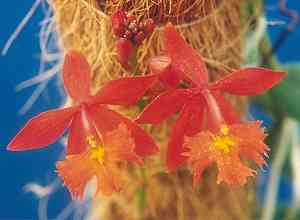
Fire-star orchid (Epidendrum radicans)
Also known as: Reed-stem epidendrum, Spanish flag orchid
The flowering plant you're describing is the Fire-star orchid, scientifically known as Epidendrum radicans. This species is notable for its vibrant orange, star-shaped flowers that resemble flames. Commonly found in Central America, it often grows along roadsides and in disturbed areas.
In This Article
Attributes of Fire-star orchid
Lifespan
Perennial
Plant Type
Herb
Plant Height
1.5 m
Spread
25 cm
Leaf Color
Green
Flower Size
2 cm to 3 cm
Flower Color
Yellow Red Orange Pink Purple
Images of Fire-star orchid
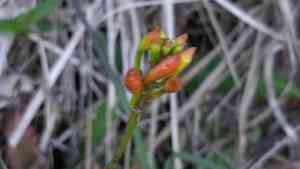
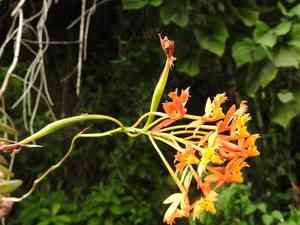

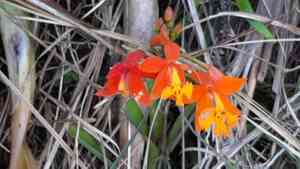
Quickly Identify Fire-star orchid
1
Look for reed-like stems and clusters of bright, showy flowers typically ranging from red to orange. The lip of the flower is three-lobed, and the leaves are linear and leathery.
Scientific Classification of Fire-star orchid
Phylum
Vascular plants
Class
Monocotyledons
Order
Asparagales
Family
Orchid
Genus
Orchid
Species
Fire-star orchid
Planting and Growing of Fire-star orchid
Care Difficulty
Easy
Watering Schedule
Every 4 days
Sunlight Requirements
Full sun
Sunshine Duration
4-8 hours
Ideal Temperature
65-75℉
Soil Type
Potting Mix, Peat Mix
Soil pH
6.5-7.5
Fertilizer Type
Balanced
Pruning Season
Spring, Summer
Pruning Area
Branches, Leaves
Pruning Frequency
2 times a year
Repotting Season
Spring
Pot Type
Plastic, Terracotta
 How to Water Fire-star orchid?
Epidendrum radicans should be watered with around 200 milliliters per session. The aim is to keep the medium moist, but not soggy. Ensure that water drains freely from the pot to prevent root rot, mimicking a gentle tropical rain shower. Always check the topsoil and ensure it has partially dried out before you water again.
More About Watering Techniques→
What are the symptoms of an underwatered Fire-star orchid?
›
What should I do if my Fire-star orchid is not getting enough water?
›
What are the symptoms of an overwatered Fire-star orchid?
›
How to save an overwatered Fire-star orchid?
›
 What Are the Sunlight Requirements for Fire-star orchid?
Epidendrum radicans typically thrives in a range of full sun to partial sun. Adequate sunlight is crucial for robust growth and copious flowering.
More About Sunlight Requirements Techniques→
Optimal sunlight exposure
›
Balancing light and shade
›
Solutions for ideal light
›
 What Is the Ideal Temperature Range for Fire-star orchid?
The ideal temperature range for growing Epidendrum radicans is between 65°F and 75°F. This range provides a stable environment that simulates the moderate conditions found in its natural habitat, promoting optimal growth and blooming.
 What Soil is Best for Fire-star orchid?
Epidendrum radicans thrives best in well-draining soil as it prevents water-logging which can lead to root rot. Ensuring good drainage helps the plant absorb necessary nutrients without risk of excessive moisture retention. While drainage is crucial, the soil should retain enough moisture to support this orchid's needs. Ideal moisture levels facilitate healthy growth and bloom in Epidendrum radicans by maintaining a balanced hydration state. A nutrient-rich loam provides the essential minerals and organic matter needed for optimal growth. This supports the robust growth of stems and flowers, enhancing the plant's overall health and resilience.
More About Soil→
 How to Fertilize Fire-star orchid?
Epidendrum radicans benefits from modest fertilization. Apply approximately 1/4 teaspoon of a balanced orchid fertilizer per gallon of water as a liquid feed. Ensure the solution is well diluted to avoid salt buildup, which can harm the delicate roots of the orchid.
More About Fertilizing Techniques→
 How to Prune Fire-star orchid?
Begin by spotting dead or damaged stems. These should be cut back to the base, removing all unhealthy portions. This not only improves appearance but redirects energy to healthy growth. After blooms have faded, trim these stems back to promote new growth. Make sure to cut just above a node to encourage fresh shoots and future blooms for a continuous floral display. To keep your Epidendrum radicans in top shape, regularly trim any unruly stems. Focus on creating a balanced plant form while ensuring sunlight can reach all parts for uniform growth.
More About Pruning Techniques→
 How to Propagate Fire-star orchid plant?
1
Choose healthy, disease-free shoots from the parent plant. The cuttings should be about 4-6 inches long and have at least two sets of leaves. By selecting robust cuttings, you increase the chances of successful rooting and growth.
2
Remove the lower leaves from the cutting, leaving at least one leaf at the top. Dip the cut end in rooting hormone to encourage root development before planting it in a potting mix. Ensure the cuttings are inserted about 1-2 inches deep into the substrate.
3
Place the cuttings in a warm, humid environment with indirect sunlight. Keep the substrate slightly moist but not soaked, as excessive water can lead to rot. Ideal temperatures for rooting range from 75°F to 85°F, supporting faster and healthier growth.
 How to Repot Fire-star orchid plant?
1
Observe your Epidendrum radicans for signs of overgrown roots, such as roots extending beyond the current pot or struggling to absorb water quickly. Repotting is ideally done in spring or summer when the plant is actively growing. New growth indicates that the plant is ready for a bigger home. If you notice the potting mix breaking down and turning mushy, it's a sign to refresh the substrate.
2
Select a pot that is just one size larger than the current one, ensuring it has adequate drainage holes to avoid water retention. A pot that is too large can lead to overwatering and root rot. Clear or white pots can help monitor root health and moisture levels, essential for orchids. A slightly snug fit encourages the orchid to bloom more profusely.
3
Opt for a well-draining orchid mix composed of bark, perlite, and charcoal. This mix mimics the natural epiphytic environment and ensures adequate air circulation around the roots. Good aeration prevents root rot and promotes healthier growth, allowing the roots to anchor firmly while absorbing necessary nutrients.



