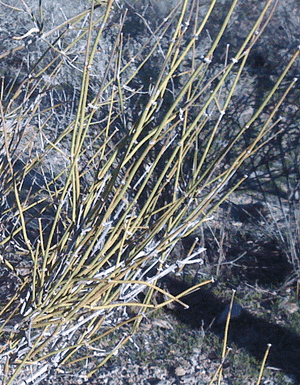
Desert mormon tea (Ephedra fasciculata)
Also known as: desert Mormon tea, Arizona tea
Ephedra fasciculata, belonging to the Ephedraceae family, is commonly known as Arizona ephedra, Arizona jointfir, and desert Mormon-tea.
In This Article
Attributes of Desert mormon tea
Lifespan
Perennial
Plant Type
Shrub
Plant Height
0.3 to 1 meter
Spread
0.5 to 1 meter
Leaf Color
Green (scale-like leaves)
Flower Size
Small, usually less than 1 cm
Flower Color
Yellow or greenish
Images of Desert mormon tea
Quickly Identify Desert mormon tea
1
Ephedra fasciculata can be identified by its green, jointed, and photosynthetic stems that resemble straws. The plant typically lacks prominent leaves, and it produces small, inconspicuous flowers. Its overall appearance is characteristically wiry and sparse.
Scientific Classification of Desert mormon tea
Phylum
Vascular plants
Class
Gnetophytes
Order
Ephedrales
Family
Mormon-tea
Genus
Joint-pines
Species
Desert mormon tea
Planting and Growing of Desert mormon tea
Care Difficulty
Moderate
Watering Schedule
Every 2 days
Sunlight Requirements
Full sun
Sunshine Duration
4-8 hours
Ideal Temperature
60-77℉
Soil Type
Potting Mix, Peat Mix
Soil pH
6.5-7.5
Fertilizer Type
Balanced
Pruning Season
Spring, Summer
Pruning Area
Branches, Leaves
Pruning Frequency
2 times a year
Repotting Season
Spring
Pot Type
Plastic, Ceramic
 How to Water Desert mormon tea?
Ensure that you water Ephedra fasciculata with about 200 ml of water each time. The key is to water until the soil is moistened but not saturated, imitating the desert’s occasional rain that moistens but doesn’t drown the roots.
What are the symptoms of an underwatered Desert mormon tea?
›
What should I do if my Desert mormon tea is not getting enough water?
›
What are the symptoms of an overwatered Desert mormon tea?
›
How to save an overwatered Desert mormon tea?
›
 What Are the Sunlight Requirements for Desert mormon tea?
Ephedra fasciculata thrives in full sun conditions. Full sun exposure ensures hardy growth, optimal health, and an increased capacity to withstand environmental stresses.
How can Ephedra fasciculata achieve ideal lighting?
›
What is the solution to provide ideal light conditions?
›
What are the benefits of receiving ideal lighting for Ephedra fasciculata?
›
 What Is the Ideal Temperature Range for Desert mormon tea?
Ephedra fasciculata thrives best within a temperature range of 60°F to 77°F. These conditions mimic the natural habitat found in warm regions, allowing for optimal photosynthesis and metabolic processes that are crucial for growth and development.
 What Soil is Best for Desert mormon tea?
Ephedra fasciculata thrives in well-drained soil, which prevents root rot and other moisture-related issues. Ensuring quick drainage replicates the plant's natural environment, enhancing its growth and health. This plant prospers in soils with low nutrient levels, as it has adapted to thrive in less fertile conditions. Providing a low-nutrient environment ensures natural growth patterns and reduces the risk of nutrient-related imbalances. Maintaining a soil pH between 6.5 and 7.5 is ideal for Ephedra fasciculata, as it matches the plant's native habitat and supports optimal nutrient absorption. This pH range prevents nutrient lockout and enhances overall plant vigor.
 How to Fertilize Desert mormon tea?
For Ephedra fasciculata, the amount of fertilizer should be modest due to its adaptation to nutrient-poor desert soils. Use approximately one-third to half the recommended amount on the fertilizer label, as over-fertilizing can damage this plant.
 How to Prune Desert mormon tea?
Start by identifying any dead, damaged, or diseased stems. Using a pair of sharp pruning shears, trim these stems back to a point where live, healthy tissue is visible. Aim to make cuts at a 45-degree angle to prevent moisture from accumulating and to promote new growth. Prune the Ephedra fasciculata to maintain a desirable shape, ensuring that air can flow freely through the branches, which helps to prevent mildew issues. Cut back any overly long or wayward stems to align with the general outline of the plant.
 How to Propagate Desert mormon tea plant?
1
To start with seed propagation, collect seeds from mature Ephedra fasciculata plants. Ensure seeds are dry and viable for better germination rates.
2
Select healthy stems for cuttings, each around 4-6 inches long. Use sterilized pruning shears to make clean cuts, and remove lower leaves to leave just a few at the top.
3
Sow seeds or plant cuttings in well-drained soil. Water the soil adequately, ensuring it remains moist but not waterlogged during the initial growing period.
 How to Repot Desert mormon tea plant?
1
Ephedra fasciculata typically shows signs of needing a repot when its roots begin to outgrow the container or when growth appears stunted. Look for roots emerging from drainage holes or soil that dries out quickly, indicating it's time to move it to a larger pot to allow for continued healthy growth.
2
Choose a pot that is one size larger than the current one, ensuring it has ample drainage holes to prevent water accumulation. A terracotta pot is ideal as it allows for breathability and prevents root rot, promoting a healthy growing environment for your plant.
3
Use a well-draining sandy mix soil that mimics the plant's natural desert habitat. This type of soil ensures proper moisture management, preventing waterlogging and providing essential conditions for root health and growth, crucial for this desert-adapted plant.
Toxicity
Ingestion
WARNING
The judgment on toxicity and danger is for reference only. We DO NOT GUARANTEE any accuracy of such judgment. Therefore, you SHALL NOT rely on such judgment. It is IMPORTANT TO SEEK PROFESSIONAL ADVICE in advance when necessary.
Learn More About Desert mormon tea Diseases
Anthracnose
Bacterial Leaf Spot
Bacterial Soft Rot
Chemical Injury
Crown Gall
Cyst Nematode
Damping-off
Drought Stress
Fusarium Wilt
Gray Mold
Leaf Spot
Nutrient Deficiency
Nutrient Toxicity
Powdery Mildew
Root Rot
Root-knot Nematode
Rusts
Sooty Mold
Spider Mites
Temperature Stress
Thrips Damage
White Mold



