
Chinese new year flower (Enkianthus quinqueflorus)
Also known as: Hanging bells
The Chinese New Year flower (Enkianthus quinqueflorus) is a deciduous shrub known for its attractive pink blossoms. The term "quinqueflorus" refers to its characteristic five-tipped petal cleavages. This plant holds cultural significance and is commonly used as an ornamental decoration during Chinese New Year festivities, symbolizing good fortune and happiness.
In This Article
Attributes of Chinese new year flower
Lifespan
Perennial
Plant Type
Tree, Shrub
Plant Height
1 m to 7 m
Spread
2 m
Leaf Color
Green
Flower Size
1 cm
Flower Color
Pink White Red
Images of Chinese new year flower
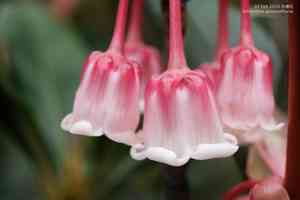
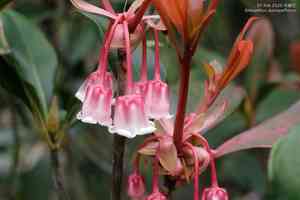
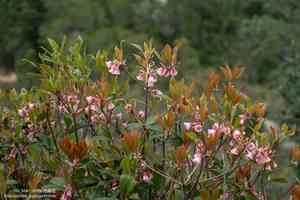
Quickly Identify Chinese new year flower
1
Identify Enkianthus quinqueflorus by its bell-shaped, pink flowers, which grow in clusters at the end of branches. The leaves are green, broad, and elliptic.
Scientific Classification of Chinese new year flower
Phylum
Vascular plants
Class
Dicotyledons
Order
Heathers and allies
Family
Heath
Genus
Enkianthus
Species
Chinese new year flower
Planting and Growing of Chinese new year flower
Care Difficulty
Easy
Watering Schedule
Every 3 days
Sunlight Requirements
Partial sun
Sunshine Duration
6-10 hours
Ideal Temperature
60-75℉
Soil Type
Potting Mix, Peat Mix
Soil pH
5.5-6.5
Fertilizer Type
Balanced
Pruning Season
Spring, Summer
Pruning Area
Branches, Leaves
Pruning Frequency
2 times a year
Repotting Season
Spring
Pot Type
Plastic, Ceramic
 How to Water Chinese new year flower?
For Enkianthus quinqueflorus, watering should be thorough, allowing water to soak into the soil until it drains from the bottom of the pot. This typically means applying about 250 ml per session, depending on pot size and soil type.
What are the symptoms of an underwatered Chinese new year flower?
›
What should I do if my Chinese new year flower is not getting enough water?
›
What are the symptoms of an overwatered Chinese new year flower?
›
How to save an overwatered Chinese new year flower?
›
 What Are the Sunlight Requirements for Chinese new year flower?
Enkianthus quinqueflorus thrives in partial sun, with an ideal light range of 3 to 6 hours of sunlight a day. This light range promotes healthy blooms and foliage while preventing the adverse effects of excessive or insufficient light exposure.
More About Sunlight Requirements Techniques→
What is the best light condition for Enkianthus quinqueflorus?
›
How can I ensure Enkianthus quinqueflorus receives ideal lighting?
›
What are the benefits of ideal light conditions for Enkianthus quinqueflorus?
›
 What Is the Ideal Temperature Range for Chinese new year flower?
Enkianthus quinqueflorus thrives in a warm environment where the temperature ranges from 60 to 75°F. At this range, the plant maintains optimal metabolic processes, ensuring robust growth and vibrant flowering. Providing these conditions encourages healthy development and enhances the plant's overall aesthetic value.
 What Soil is Best for Chinese new year flower?
Enkianthus quinqueflorus thrives in well-drained soils which prevent waterlogging, thereby protecting its roots from rot. This ensures a healthy root system which is vital for the plant's overall vigor. The soil should have good moisture retention to keep the plant hydrated, especially during dry periods. Consistent moisture helps in the healthy development of flower buds, allowing the plant to thrive. Rich, organic soils provide essential nutrients required for the robust growth of Enkianthus quinqueflorus. A nutrient-rich soil ensures lush foliage and abundant flowering, enhancing the plant's aesthetic appeal.
 How to Fertilize Chinese new year flower?
Enkianthus quinqueflorus should be fertilized with a moderate amount to avoid over-application. Liquid fertilizers are applied at a dilution rate of 1:1000, while granular forms should be spread at 20 grams per plant, ensuring even distribution.
 How to Prune Chinese new year flower?
When pruning Enkianthus quinqueflorus, always start by removing any dead or diseased branches. Use clean and sharp pruning shears to make precise cuts at a 45-degree angle. This encourages new growth and prevents disease spread. Focus on thinning out overcrowded areas to increase air circulation and light penetration. To shape your Enkianthus quinqueflorus, selectively trim the branches that disrupt the desired form. Ensure that the cuts are near a bud or pair of leaves to promote healthy regrowth. Gradual shaping over several seasons is often preferable to drastic pruning which can stress the plant.
More About Pruning Techniques→
 How to Propagate Chinese new year flower plant?
1
Start by collecting mature seeds from the plant, and sow them in a well-draining soil mix. Maintain consistent moisture levels and provide bright, indirect sunlight to encourage germination.
2
Take cuttings from young, healthy stems about 4-6 inches long. Dip the cut end into rooting hormone and plant in a moist, sterile potting mix. Keep in a warm, humid environment.
3
Select a low-growing branch of the plant, and gently wound it. Bury the wounded section in soil, still attached to the parent plant, until roots develop and then sever from the main plant.
 How to Repot Chinese new year flower plant?
1
Enkianthus quinqueflorus shows signs of needing a new pot when you notice roots emerging from the drainage holes or poor water retention in the soil. These signals indicate that the plant has outgrown its current container and is ready for more space and fresh nutrients.
2
Select a pot that is one size larger than the current one, with adequate drainage holes to prevent waterlogging. A slightly larger pot allows room for root expansion, promoting healthier growth without causing the plant to expend all its energy on root development.
3
Opt for a well-draining, acidic soil mix rich in organic matter, as it complements the natural habitat of Enkianthus quinqueflorus. This choice enhances root health, supports nutrient uptake, and maintains optimal moisture levels.



