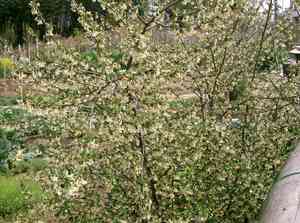
Cherry silverberry (Elaeagnus multiflora)
Also known as: Cherry oleaster, Elaeagnus
Mahonia is a versatile shrub that thrives in light woodland settings, on slopes, and among dense foliage. It forms a symbiotic relationship with soil bacteria, aiding in nitrogen fixation. Mahonia's fragrant, yellow blossoms are highly attractive to bees, making it an excellent choice for gardens with dappled shade or for use as hedging.
In This Article
Attributes of Cherry silverberry
Lifespan
Perennial
Plant Type
Shrub
Plant Height
1.8 m to 3 m
Spread
1.8 m to 3 m
Leaf Color
Green
Flower Size
2.5 cm
Flower Color
White Yellow
Images of Cherry silverberry
Quickly Identify Cherry silverberry
1
Dark brown bark with brown scales
2
Ovate leaves with silver underside
3
Yellowish-white flowers in mid-spring
4
Edible, bright red cherry-like fruits
5
Can grow up to 9 feet (2.74 meters) tall
Scientific Classification of Cherry silverberry
Phylum
Vascular plants
Class
Dicotyledons
Order
Roses, elms, figs, and allies
Family
Oleaster
Genus
Silverberries
Species
Cherry silverberry
Planting and Growing of Cherry silverberry
Care Difficulty
Easy
Watering Schedule
Every 5 days
Sunlight Requirements
Full sun
Sunshine Duration
6-10 hours
Ideal Temperature
60-75℉
Soil Type
Potting Mix, Peat Mix
Soil pH
6.5-7.5
Fertilizer Type
Balanced
Pruning Season
Spring, Summer
Pruning Area
Branches, Leaves
Pruning Frequency
Once a year
Repotting Season
Spring
Pot Type
Plastic, Ceramic
 How to Water Cherry silverberry?
For Elaeagnus multiflora, it is essential to ensure that the soil is thoroughly moist but not waterlogged. Watering should be done until the top layer of the soil is visibly wet, and excess water begins to drain from the bottom of the pot. This method helps to ensure that the roots get enough water without becoming overly saturated.
What are the symptoms of an underwatered Cherry silverberry?
›
What should I do if my Cherry silverberry is not getting enough water?
›
What are the symptoms of an overwatered Cherry silverberry?
›
How to save an overwatered Cherry silverberry?
›
 What Are the Sunlight Requirements for Cherry silverberry?
Elaeagnus multiflora benefits from full to partial sunlight. Ideal light supports fruit setting, bolsters plant health, and enhances overall growth patterns.
More About Sunlight Requirements Techniques→
What is the optimal light condition?
›
How can I create the optimal lighting conditions?
›
What are the benefits of ideal lighting?
›
 What Is the Ideal Temperature Range for Cherry silverberry?
Elaeagnus multiflora, also known as Goumi, thrives best in temperatures ranging from 60°F to 75°F. This range provides optimal conditions for photosynthesis, ensuring the plant grows healthily. Maintaining temperatures in this range encourages lush foliage and prolific fruiting. Deviations can stress the plant, impacting health and productivity.
 What Soil is Best for Cherry silverberry?
Elaeagnus multiflora thrives in well-drained soil as it prevents water-logging, which could rot the roots. Well-draining soils allow roots to receive sufficient oxygen, fostering healthy growth. Nutrient-rich soil is essential for Elaeagnus multiflora to ensure it receives enough minerals and nutrients to produce lush foliage and fruitful yields. The nutrients support strong cellular growth and fruit production. Soil that retains a moderate amount of moisture benefits Elaeagnus multiflora by preventing drought stress, ensuring the roots stay hydrated while avoiding the excessive moisture that hinders aeration.
 How to Fertilize Cherry silverberry?
For Elaeagnus multiflora, apply 20-30 grams of balanced fertilizer in granular form per plant per application. Liquid fertilizers should be mixed at a concentration of approximately 10-10-10 (N-P-K) per gallon of water.
 How to Prune Cherry silverberry?
Begin by removing any dead or diseased branches from your Elaeagnus multiflora. This not only improves aesthetic appearance but also prevents the spread of disease. Next, trim back any overly long branches to maintain a tidy shape. For optimal growth, thin out the plant by cutting away some branches to increase air circulation and sun penetration. Always make cuts just above a bud or branch junction to promote healing and growth. Elaeagnus multiflora can be shaped into a shrub or small tree. For a shrub-like appearance, prune lightly to encourage a fuller, bushier growth. For a tree-like shape, trim the lower branches to develop a more defined trunk while keeping the upper branches in check to maintain an overall balanced appearance. Shaping should be gradual to avoid shocking the plant.
More About Pruning Techniques→
 How to Propagate Cherry silverberry plant?
1
For seed propagation, collect the seeds from mature fruits in autumn. Clean the seeds thoroughly to remove any pulp and debris, as this can attract fungi and pests that may hamper germination.
2
Select healthy stems and cut them into several pieces, each approximately 15 cm long. Remove the leaves from the lower half of each cutting to reduce water loss and enhance rooting potential.
3
For grafting, select a strong rootstock and a compatible scion. Cut the rootstock and scion with matching cuts, then join and secure them together. Place the graft in a warm, humid area to promote successful union and growth.
 How to Repot Cherry silverberry plant?
1
Elaeagnus multiflora should be repotted when you notice reduced growth, roots outgrowing the container, or soil compacted and unable to retain moisture effectively. These are clear signs it's time for a larger home.
2
Choose a pot with adequate drainage holes and proportionally larger than the previous one to allow room for growth. A new pot encourages root expansion and prevents water logging, ensuring the plant's health.
3
Opt for a well-draining loamy mix that retains minor moisture without becoming waterlogged. The right soil mix ensures better aeration and provides essential nutrients, promoting healthy growth.



