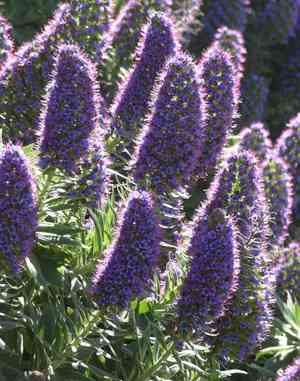
Viper's-buglosses (Echium) (Echium)
Also known as: Viper's bugloss, Blueweed
Viper's-buglosses, part of the borage family, thrive in warm climates native to the Mediterranean and North Africa. Known for their fragrant flowers that attract pollinators, their Latin name "Echium" derives from the Greek word "echis," meaning "viper."
In This Article
Attributes of Viper's-buglosses (Echium)
Lifespan
Biennial
Plant Height
0.5 to 3 meters
Spread
0.3 to 1 meter
Leaf Color
Green
Flower Size
1 to 2 cm
Flower Color
Blue, Purple, Pink
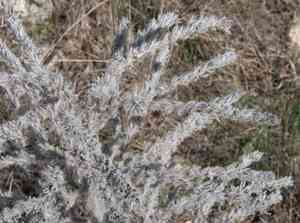
Images of Viper's-buglosses (Echium)
Quickly Identify Viper's-buglosses (Echium)
1
Echium plants can be identified by their tall, spiky inflorescences and rough, hairy leaves. The flowers are typically vibrant blue or purple and arranged in dense clusters.
Scientific Classification of Viper's-buglosses (Echium)
Phylum
Magnoliophyta
Class
Magnoliopsida
Order
Boraginales
Family
Boraginaceae
Genus
Echium
Planting and Growing of Viper's-buglosses (Echium)
Care Difficulty
Moderate
Watering Schedule
Every 2 days
Sunlight Requirements
Full sun
Sunshine Duration
6-10 hours
Ideal Temperature
65-75℉
Soil Type
Potting Mix, Peat Mix
Soil pH
6.5-7.5
Fertilizer Type
Balanced
Pruning Season
Spring, Summer
Pruning Area
Branches, Leaves
Pruning Frequency
2 times a year
Repotting Season
Spring
Pot Type
Plastic, Ceramic
 How to Water Viper's-buglosses (Echium)?
Echium plants prefer moderate watering. It's essential to ensure that the soil is thoroughly moistened to a depth of about 5 to 10 cm, without making it soggy. Overwatering can lead to root rot, so it's crucial to allow the soil to dry out between waterings.
What are the symptoms of an underwatered Viper's-buglosses (Echium)?
›
What should I do if my Viper's-buglosses (Echium) is not getting enough water?
›
What are the symptoms of an overwatered Viper's-buglosses (Echium)?
›
How to save an overwatered Viper's-buglosses (Echium)?
›
 What Are the Sunlight Requirements for Viper's-buglosses (Echium)?
Echium prefers a light range of full sun to partial sun, making it an ideal candidate for garden beds with ample direct sunlight. Benefits include vibrant flowering and healthy foliage that enhance outdoor aesthetics and contribute to ecological stability.
What is the ideal lighting condition for Echium?
›
How can I provide ideal lighting for Echium indoors?
›
What benefits does Echium gain from ideal light conditions?
›
 What Is the Ideal Temperature Range for Viper's-buglosses (Echium)?
The ideal temperature range for Echium plants is typically between 65°F and 75°F. This range provides the optimal environment for growth, ensuring that the plant's physiological processes occur at peak efficiency. Within this temperature bracket, Echium can thrive, producing vibrant flowers and maintaining healthy foliage.
 What Soil is Best for Viper's-buglosses (Echium)?
Echium thrives in well-drained soils. Proper drainage prevents root rot, allowing roots to access vital nutrients and air, promoting healthy growth. This plant prefers soils with moderate fertility. Excess nutrients can lead to excessive foliage growth at the expense of blooms, so a balanced approach is key. While good drainage is essential, Echium benefits from soil that retains some moisture, ensuring access to water during dry periods, enhancing resilience.
 How to Fertilize Viper's-buglosses (Echium)?
For Echium plants, the fertilizer amount should be moderate yet adequate. Typically, the liquid fertilizer should be diluted to half the recommended strength on the package. This ensures the plant receives nutrients without risk of over-fertilization. On the other hand, granular fertilizers should be used according to the manufacturer's instructions, usually around 1 to 2 tablespoons for medium-sized plants.
 How to Prune Viper's-buglosses (Echium)?
Begin by inspecting your Echium for any damaged or dead stems, as these should be your first target for removal. Use sharp, clean pruning shears to cut these stems back to the base. For general shaping, look for any particularly long or unruly stems that disrupt the plant’s overall form, and trim these back to a node or pair of leaves. This will help maintain a compact shape and encourage more bushy growth with increased flowering potential. To promote an abundance of flowers, consider deadheading spent blooms. By removing these faded flowers, you'll redirect the plant's energy away from seed production and back into forming more blooms. This can significantly enhance the flowering season, ensuring your Echium remains vibrant and colorful for a longer period.
 How to Propagate Viper's-buglosses (Echium) plant?
1
Harvest seeds from mature Echium plants when the seed heads are dry. Shake the dried heads over a container to collect seeds, ensuring they are fully mature to promote better germination rates.
2
Select non-flowering shoots that are healthy and about 10cm long for cuttings. Remove the lower leaves and dip the cut end into rooting hormone to encourage root formation.
3
For both seeds and cuttings, use a well-draining potting mix. Plant seeds about 1 cm deep and firm down the soil. Plant cuttings halfway into the soil and water lightly.
 How to Repot Viper's-buglosses (Echium) plant?
1
Look out for signs like roots emerging from drainage holes or soil that dries out rapidly after watering. These indicate that Echium has outgrown its pot and is in need of repotting. The ideal time to repot is during Spring or Summer, when the plant is actively growing.
2
Opt for a pot that is one size larger than the current one. Ensure it has drainage holes to prevent waterlogging. A pot that allows aeration mimics the plant’s natural environment, promoting root health and preventing root rot.
3
Use well-draining sandy soil, which mimics Echium's natural habitat and prevents overwatering. A good soil blend helps retain some moisture while allowing excess water to drain away, ensuring a perfect balance for the plant’s roots.
Toxicity
Ingestion
WARNING
The judgment on toxicity and danger is for reference only. We DO NOT GUARANTEE any accuracy of such judgment. Therefore, you SHALL NOT rely on such judgment. It is IMPORTANT TO SEEK PROFESSIONAL ADVICE in advance when necessary.
Learn More About Viper's-buglosses (Echium) Diseases
Anthracnose
Bacterial Leaf Spot
Bacterial Soft Rot
Crown Gall
Cyst Nematode
Damping-off
Downy Mildew
Drought Stress
Fusarium Wilt
Gray Mold
Leaf Spot
Mosaic
Nutrient Deficiency
Nutrient Toxicity
Powdery Mildew
Root Rot
Root-knot Nematode
Rusts
Sooty Mold
Spider Mites
Temperature Stress
Thrips Damage
White Mold
Chemical Injury

