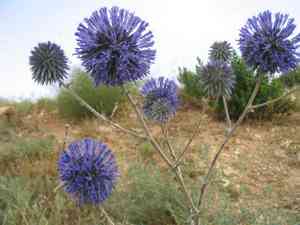
Globe thistles (Echinops) (Echinops)
Also known as: Globe Thistle
Globe thistles, with over 100 distinct species, are favored in ornamental gardens for their eye-catching blue or white blooms that appear in late summer. Their spiky green foliage adds texture, while their late flowering period extends garden interest. Native to Eurasia and tropical Africa, these plants are also appreciated for their hardiness and ability to attract pollinators.
In This Article
Attributes of Globe thistles (Echinops)
Lifespan
Perennial
Plant Height
1.5 m
Spread
1 m
Leaf Color
Green to silvery-green
Flower Size
3 to 5 cm
Flower Color
Blue, white
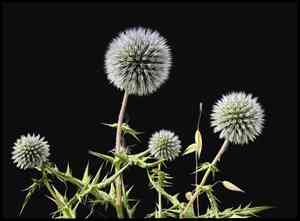
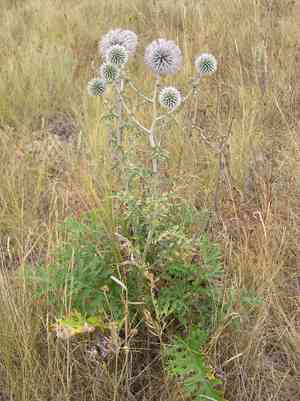
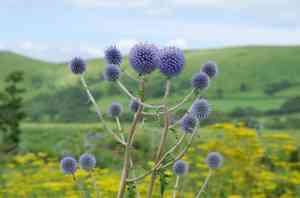
Images of Globe thistles (Echinops)
Quickly Identify Globe thistles (Echinops)
1
Look for spherical flower heads with spiny bracts, often blue or white. The leaves are typically lobed and spiny.
Scientific Classification of Globe thistles (Echinops)
Phylum
Magnoliophyta
Class
Magnoliopsida
Order
Asterales
Family
Asteraceae
Genus
Echinops
Planting and Growing of Globe thistles (Echinops)
Care Difficulty
Easy
Watering Schedule
Every 2 days
Sunlight Requirements
Full sun
Sunshine Duration
6-10 hours
Ideal Temperature
65-75℉
Soil Type
Potting Mix, Peat Mix
Soil pH
6.5-7.5
Fertilizer Type
Balanced
Pruning Season
Spring, Summer
Pruning Area
Branches, Leaves
Pruning Frequency
2 times a year
Repotting Season
Spring
Pot Type
Plastic, Ceramic
 How to Water Globe thistles (Echinops)?
Echinops plants thrive best when watered moderately. It's essential to let the soil dry out between waterings to mimic their natural habitat. Water thoroughly until you see excess draining out of the pot to ensure all roots receive moisture, but do not allow the plant to sit in water.
What are the symptoms of an underwatered Globe thistles (Echinops)?
›
What should I do if my Globe thistles (Echinops) is not getting enough water?
›
What are the symptoms of an overwatered Globe thistles (Echinops)?
›
How to save an overwatered Globe thistles (Echinops)?
›
 What Are the Sunlight Requirements for Globe thistles (Echinops)?
The ideal light range for Echinops is full sun to partial sun. Receiving ample sunlight promotes vigorous growth, enhances flower development, and minimizes the likelihood of pests and diseases.
What are the ideal light conditions for Echinops?
›
How can I achieve the ideal lighting for Echinops?
›
What benefits do ideal lighting conditions provide Echinops?
›
 What Is the Ideal Temperature Range for Globe thistles (Echinops)?
The ideal temperature range for growing Echinops is between 65°F and 75°F. This range allows for optimal photosynthesis and growth, providing the plant with the right conditions for energy and nutrient absorption. Maintaining this temperature range will encourage robust flowering and vibrant health.
 What Soil is Best for Globe thistles (Echinops)?
Echinops thrives in well-drained soil because it allows excess water to escape, preventing root rot. This type of soil structure encourages healthy root growth and ensures the plant receives adequate nutrients. While Echinops can tolerate poor soil conditions, a moderately fertile soil will enhance its growth. Such soil provides essential nutrients that support vigorous blooming and robust plant health. Although Echinops prefers well-drained soil, a certain level of moisture retention is beneficial to keep the plant hydrated during dry spells. This balance helps maintain consistent plant health without over-saturation.
 How to Fertilize Globe thistles (Echinops)?
Echinops plants are not heavy feeders. A light application of a balanced liquid fertilizer diluted to half the recommended strength is adequate. Use approximately one tablespoon per gallon of water. Carefully avoid over-fertilization to maintain healthy growth.
 How to Prune Globe thistles (Echinops)?
Echinops, commonly known as globe thistle, benefits from pruning immediately after its blooming period. Use sharp, clean tools to trim back spent flower spikes to encourage a second bloom. Cut down the flower stalks to the base or to an outward-facing bud to stimulate new growth. This process promotes a tidier appearance and extends the blooming period. When shaping Echinops, keep in mind that these plants naturally have a rounded, spiky appearance. Trim back any overgrown stems that disrupt this form to maintain its striking silhouette. This typically involves cutting back to the nearest junction or set of leaves, which helps to preserve the plant's architectural interest.
 How to Propagate Globe thistles (Echinops) plant?
1
Allow the flower heads to dry on the plant and then collect seeds by shaking or cutting the heads off. Store seeds in a cool, dry place until sowing.
2
Use well-draining soil with a balanced pH. Moisture retention is critical, so consider mixing with compost or perlite to maintain an ideal growing medium.
3
Sow seeds evenly over prepared soil, cover lightly, and water gently. Ensure proper spacing to avoid overcrowding, which can lead to weak growth.
 How to Repot Globe thistles (Echinops) plant?
1
Repotting Echinops primarily revolves around observing key signals such as roots growing out of the drainage holes or visible root mass on the soil surface. Ideally, aim to repot when active growth is visible, generally in spring or early summer. This ensures the plant can establish itself in the new potting mix swiftly.
2
For Echinops, selecting a pot slightly larger than the current one allows ample space for root expansion while preventing waterlogged conditions. Terracotta pots are often preferred as they enhance air circulation and moisture evaporation, beneficial for preventing root rot in well-drained soils.
3
Opt for a well-draining, sandy soil mix, replicating the plant's native habitat and minimizing water retention. This soil type aids in preventing root rot by allowing air to reach the roots and efficiently draining excess water, keeping the plant healthy and thriving.
Learn More About Globe thistles (Echinops) Diseases
Anthracnose
Bacterial Leaf Spot
Bacterial Soft Rot
Chemical Injury
Crown Gall
Cyst Nematode
Damping-off
Downy Mildew
Drought Stress
Fusarium Wilt
Gray Mold
Leaf Spot
Mosaic
Nutrient Deficiency
Nutrient Toxicity
Powdery Mildew
Root Rot
Root-knot Nematode
Rusts
Sooty Mold
Spider Mites
Temperature Stress
Thrips Damage
White Mold

