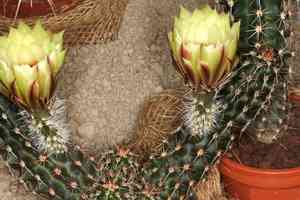
Allicoche hedgehog cactus (Echinocereus papillosus)
Also known as: Papillose Hedgehog Cactus
The allicoche hedgehog cactus is characterized by its green, cylindrical stems adorned with short, white spines, giving it a woolly look. Its small, compact form is advantageous for thriving in arid environments. The cactus blooms with striking magenta flowers in the spring. Additionally, its ribbed stems are designed to store water efficiently, helping it endure extended periods of drought.
In This Article
Attributes of Allicoche hedgehog cactus
Lifespan
Perennial
Plant Type
Succulent
Plant Height
Up to 30 cm
Spread
Up to 10 cm
Leaf Color
N/A (cactus)
Flower Size
Up to 8 cm
Flower Color
Pink to purple
Images of Allicoche hedgehog cactus
Quickly Identify Allicoche hedgehog cactus
1
Identify Echinocereus papillosus by its ribbed stems with pronounced tubercles, vibrant flowers, and spiny appearance.
Scientific Classification of Allicoche hedgehog cactus
Phylum
Vascular plants
Class
Dicotyledons
Order
Caryophyllales
Family
Cactuses
Genus
Hedgehog cactus
Species
Allicoche hedgehog cactus
Planting and Growing of Allicoche hedgehog cactus
Care Difficulty
Easy
Watering Schedule
Every 2 days
Sunlight Requirements
Full sun
Sunshine Duration
6-10 hours
Ideal Temperature
70-85℉
Soil Type
Potting Mix, Peat Mix
Soil pH
6.5-7.5
Fertilizer Type
Balanced
Pruning Season
Spring, Summer
Pruning Area
Branches, Leaves
Pruning Frequency
2 times a year
Repotting Season
Spring
Pot Type
Plastic, Ceramic
 How to Water Allicoche hedgehog cactus?
For Echinocereus papillosus, ensure the soil is thoroughly moistened without becoming waterlogged. 100 ml per watering session is typically sufficient to achieve this balance. The soil should dry out completely between waterings to prevent root rot.
What are the symptoms of an underwatered Allicoche hedgehog cactus?
›
What should I do if my Allicoche hedgehog cactus is not getting enough water?
›
What are the symptoms of an overwatered Allicoche hedgehog cactus?
›
How to save an overwatered Allicoche hedgehog cactus?
›
 What Are the Sunlight Requirements for Allicoche hedgehog cactus?
Echinocereus papillosus thrives in full sun conditions, which significantly benefits its growth and flowering. Ideal light encourages lush, healthy growth and abundant flowering, recreating its natural habitat.
What is the ideal light setting?
›
How to achieve ideal lighting?
›
What benefits from ideal lighting?
›
 What Is the Ideal Temperature Range for Allicoche hedgehog cactus?
Echinocereus papillosus thrives best in temperatures ranging from 70°F to 85°F. This range supports optimal metabolic activities and photosynthesis, ensuring robust growth and development. Within this temperature window, the plant is able to maintain adequate water balance, cellular respiration, and overall health.
 What Soil is Best for Allicoche hedgehog cactus?
Echinocereus papillosus thrives best in well-draining soil, preventing root rot by allowing excess water to flow away quickly. This benefits the cactus by simulating its native arid environment, promoting healthy root development and preventing common fungal issues associated with overwatering. This cactus prefers a nutrient-poor substrate, which mimics the low-nutrient desert soils of its natural habitat. Providing such a substrate ensures the plant doesn't receive excess nutrients that could harm its growth pattern and encourages slow, steady growth for better structural integrity. Echinocereus papillosus requires soil with minimal organic material to recreate the sparse conditions of its desert environment. This type of soil reduces the risk of pests and diseases and ensures that the cactus receives just enough organic matter for basic growth without overwhelming it.
 How to Fertilize Allicoche hedgehog cactus?
Echinocereus papillosus requires a balanced and measured approach to fertilization. In general, a diluted liquid cactus fertilizer should be used, typically at half or even quarter strength of the recommended dosage. Applying about 5ml per plant of liquid fertilizer during the growth season is sufficient.
 How to Prune Allicoche hedgehog cactus?
Begin by cutting away any dead or damaged stems. Use a sterile, sharp knife or scissors to make clean cuts at the base of the problematic areas to promote healthy new growth. To maintain a compact shape, prune any overly long or crowded stems. Cut back to a point where new growth will encourage a more balanced shape and prevent crowding. While pruning, inspect the plant for signs of pests like mealybugs or spider mites. Pruning is a perfect time to take action, as pests are easier to manage when detected early.
More About Pruning Techniques→
 How to Propagate Allicoche hedgehog cactus plant?
1
Collect seeds from mature fruits, clean them to remove any pulp, and allow them to dry before sowing. Sow seeds in a well-draining potting mix at a shallow depth.
2
Use a sterile knife to take cuttings from healthy parent plants. Allow the cut end to callous over for a few days to prevent rot before planting in soil.
3
Once calloused, plant the cuttings in a pot with well-draining soil, ensuring minimal disturbance to the freshly cut surface. Water sparingly until roots establish.
 How to Repot Allicoche hedgehog cactus plant?
1
Echinocereus papillosus shows signs for repotting when you observe roots growing out of drainage holes or the plant appears root-bound within its pot. Another indicator is slowed growth, suggesting the roots need more space to expand.
2
Select a pot that is one size larger than the current one. Ensure it has drainage holes to prevent water accumulation, which can lead to root rot. A clay pot is preferable as it allows for better aeration and keeps the soil from becoming too moist.
3
Opt for a well-draining cactus mix, as such soil allows excess water to escape quickly and prevents moisture from lingering around the roots, which can cause rot. Adding perlite or sand can enhance the drainage and aeration capabilities of the soil.



