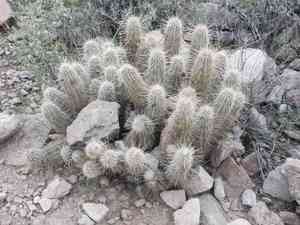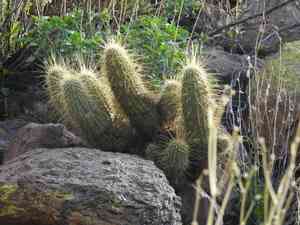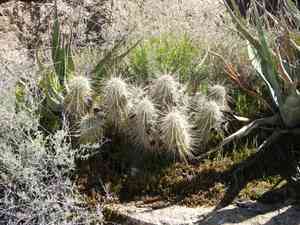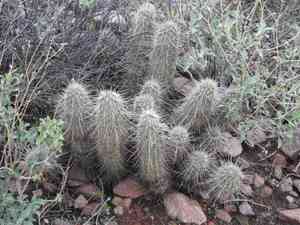
Pinkflower hedgehog cactus(Echinocereus bonkerae)

Pinkflower hedgehog cactus (Echinocereus bonkerae)

Also known as: Bonker's Hedgehog Cactus, Strawberry Cactus

The Pinkflower hedgehog cactus, found in the rocky landscapes of the Southwestern United States, has several adaptations that ensure its survival in such a challenging environment. Its cylindrical, ribbed stems can grow either singly or in clumps, and during spring, it produces vivid pink to purple flowers that attract pollinators, aiding in its reproduction. The cactus is also equipped with stout spines that offer protection from herbivores and provide shade, which helps reduce water loss by minimizing exposure to the intense desert sun. These features together enable the Pinkflower hedgehog cactus to thrive despite the harsh, arid conditions.

Attributes of Pinkflower hedgehog cactus

Lifespan
Perennial
Plant Type
Succulent
Plant Height
10-20 cm
Spread
5-10 cm
Leaf Color
N/A (Cacti typically lack traditional leaves)
Flower Size
4-7 cm
Flower Color
Pink with white centers

ForwardPlant - Identify plants with a snap

Identify and diagnose plants, get toxicity alerts, and explore safety guides for all types of fungi.

Try for Free

Images of Pinkflower hedgehog cactus
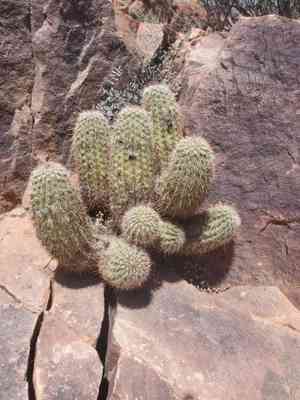
Pinkflower hedgehog cactus(Echinocereus bonkerae)

Quickly Identify Pinkflower hedgehog cactus

1
Identifiable by its small, cylindrical stems that often cluster together, with pronounced ribs and spines. It has large, showy flowers that are typically pink with white centers.

Scientific Classification of Pinkflower hedgehog cactus

Phylum
Vascular plants
Class
Dicotyledons
Order
Caryophyllales
Family
Cactuses
Genus
Hedgehog cactus
Species
Pinkflower hedgehog cactus

Planting and Growing of Pinkflower hedgehog cactus

Care Difficulty
Moderate
Watering Schedule
Every day
Sunlight Requirements
Full sun
Sunshine Duration
4-8 hours
Ideal Temperature
70-85℉
Soil Type
Potting Mix, Peat Mix
Soil pH
6.5-7.5
Fertilizer Type
Balanced
Pruning Season
Spring, Summer
Pruning Area
Branches, Leaves
Pruning Frequency
2 times a year
Repotting Season
Spring
Pot Type
Plastic, Ceramic

water icon How to Water Pinkflower hedgehog cactus?

The watering amount for Echinocereus bonkerae should ensure that the soil is moist but not waterlogged. Water until it begins to slightly seep out of the drainage holes of the pot, approximately 200 milliliters. This ensures deep soil moisture while preventing root rot.
What are the symptoms of an underwatered Pinkflower hedgehog cactus?
What should I do if my Pinkflower hedgehog cactus is not getting enough water?
What are the symptoms of an overwatered Pinkflower hedgehog cactus?
How to save an overwatered Pinkflower hedgehog cactus?

sunlight icon What Are the Sunlight Requirements for Pinkflower hedgehog cactus?

Sunlight Requirements: Full sun, Partial sun
Duration of light: 5 to 8 hours
Echinocereus bonkerae should ideally be exposed to full sun for about 5 to 8 hours daily. This ensures robust growth, encourages more frequent flowering, and keeps the cactus naturally colorful and healthy.
What is the ideal lighting condition for Echinocereus bonkerae?
How can you ensure Echinocereus bonkerae receives ideal lighting?
What benefits does Echinocereus bonkerae gain from ideal lighting?

temperature icon What Is the Ideal Temperature Range for Pinkflower hedgehog cactus?

Ideal Temperature: 70 ~ 85℉
For optimal growth, Echinocereus bonkerae thrives in temperatures between 70°F and 85°F. These conditions simulate the warm, arid environment from which it originates, helping the cactus maintain its metabolic activities and promoting healthy growth.

soil icon What Soil is Best for Pinkflower hedgehog cactus?

Soil type: Sandy soil, Sandy loam
Soil PH: 6.5 ~ 7.5
Echinocereus bonkerae thrives in well-draining soil to prevent waterlogged roots, which could lead to rot. The use of sandy or sandy loam soil ensures quick water passage, crucial for the plant's health and optimal growth. Good drainage also facilitates nutrient availability, promoting vibrant growth. While somewhat tolerant of poor soils, Echinocereus bonkerae benefits from soils with moderate organic matter. This supports its need for essential nutrients without risking poor drainage. Adding a bit of compost could enhance nutrient content without impacting the sandy texture. Incorporating calcareous elements into the soil mimics Echinocereus bonkerae's natural desert conditions. The calcium presence aids in robust structural growth and resistance to environmental stress. This necessity makes the use of limestone chips or gypsum beneficial.

fertilize icon How to Fertilize Pinkflower hedgehog cactus?

Fertilizer type: Balanced
For Echinocereus bonkerae, use a balanced cactus fertilizer diluted to half the recommended strength. Apply about 1 tablespoon per plant via watering to ensure even distribution and prevent burning.

prune icon How to Prune Pinkflower hedgehog cactus?

Pruning Time: Spring, Summer
Prune Echinocereus bonkerae during the growing seasons of spring and summer. These seasons are optimal as the cactus is actively growing, which can support faster recovery from pruning cuts. Use sharp and clean pruning shears to avoid transmitting diseases. For thicker branches, a pruning saw might be more effective. Sterilize your tools with alcohol before use to ensure a clean cut. Gently remove any dead or damaged stems from the base of the cactus. Make clean cuts at a 45-degree angle to encourage healing. For excess growth, trim back to a main branch or stem junction. More About Pruning Techniques

propagate icon How to Propagate Pinkflower hedgehog cactus plant?

Propagate Time: Spring,Early spring,Late spring
1
Start with a well-draining soil mix, ideal for cactus propagation. Prepare the mix by combining equal parts of perlite, sand, and potting soil to ensure adequate drainage and nutrient availability.
2
For seed propagation, evenly scatter the seeds on the soil surface in the prepared trays. Cover them lightly with sand to simulate their natural rocky habitat, and mist the surface to keep it moist.
3
Select healthy stems from the mother plant and use sterile pruning shears to make an angled cut. Allow the cuttings to callous over for several days, reducing the risk of rot when they are planted.
More About Propagating Techniques

repot icon How to Repot Pinkflower hedgehog cactus plant?

Repotting frequency: Once every two years
1
Repot Echinocereus bonkerae when you notice the roots tightly packed in the pot or growing out of drainage holes. Another signal is slowed growth despite proper care. The best time for repotting is during the plant's active growing season in spring or summer, ensuring that the cactus experiences minimal stress.
2
Opt for a pot that is slightly larger than the current one, allowing extra space for root growth. Ensure the pot has ample drainage holes to prevent waterlogging, as this cactus prefers dry, well-drained conditions. A terracotta or clay pot is an excellent choice as it aids in moisture evaporation and prevents root rot.
3
Use a cactus mix enriched with sand or perlite for excellent drainage and aeration. This mix replicates the natural habitat of Echinocereus bonkerae, reducing the risk of overwatering. Good drainage promotes healthy root development and prevents diseases caused by soggy conditions.

ForwardPlant - Identify plants with a snap

Find the best spots for them to optimize their health, simply using your phone.

Try for Free