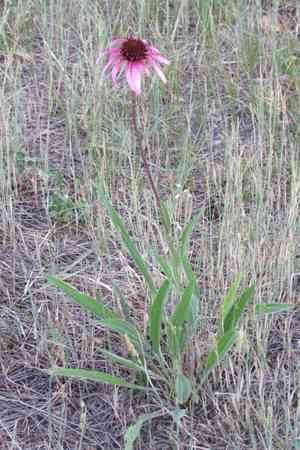
Blacksamson echinacea (Echinacea angustifolia)
Also known as: Coneflower, Purple cornflower
Blacksamson echinacea, also known as Echinacea angustifolia, is a species of purple coneflower in the sunflower family. This native North American wildflower is sometimes cultivated as an ornamental perennial due to its appealing blooms. Cultivated varieties often exhibit more striking aesthetics compared to wild plants, which face competition in their natural habitats. Additionally, Blacksamson echinacea is sometimes grown for its essential oils, valued for their potential health benefits.
In This Article
Attributes of Blacksamson echinacea
Lifespan
Perennial
Plant Type
Herb
Plant Height
40 cm to 70 cm
Spread
25 cm to 45 cm
Leaf Color
Green Blue
Flower Size
7 cm
Flower Color
Pink Purple White Brown Orange
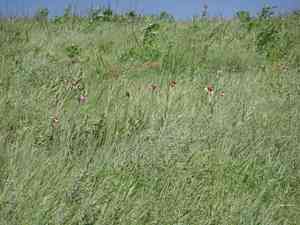
Images of Blacksamson echinacea
Quickly Identify Blacksamson echinacea
1
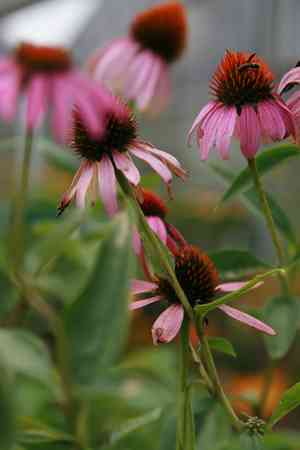
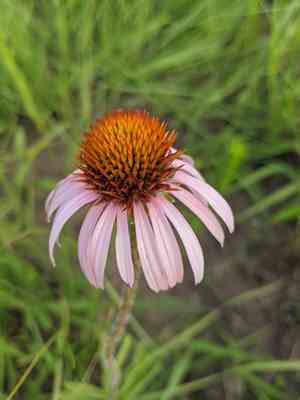
Distinctive daisy-like blossoms with copper-orange central cone and drooping petals in various hues.
2
Flowers have pink, purple, or white ray florets with yellow pollen and reach up to 4 inches (10 cm) in diameter.
3
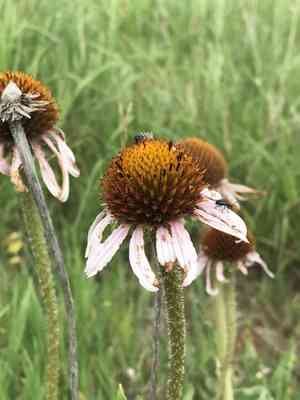
Fruit composed of angular, dark-hued achenes within a dense cone cluster, attracting birds for dispersal.
4
Green stem with prominent ridges, slight roughness, and fine hairs, measuring 0.2-0.4 inches (0.5-1 cm) in diameter.
5
Basally located, lanceolate to ovate, hairy leaves measuring 4-6 inches (10-15 cm) with three distinct veins.
Scientific Classification of Blacksamson echinacea
Phylum
Vascular plants
Class
Dicotyledons
Order
Asters bellflowers fanflowers and allies
Family
Daisy
Genus
Coneflowers
Species
Blacksamson echinacea
Planting and Growing of Blacksamson echinacea
Care Difficulty
Easy
Watering Schedule
Every 3 days
Sunlight Requirements
Full sun
Sunshine Duration
4-6 hours
Ideal Temperature
68-77℉
Soil Type
Potting Mix, Peat Mix
Soil pH
6.5-7.5
Fertilizer Type
Balanced
Pruning Season
Spring, Summer
Pruning Area
Branches, Leaves
Pruning Frequency
2 times a year
Repotting Season
Spring
Pot Type
Plastic, Ceramic
 How to Water Blacksamson echinacea?
To water Echinacea angustifolia properly, aim for about 500 milliliters per session. Ensure that the water soaks the soil deeply but avoid leaving it soggy. This plant prefers well-drained soil, so proper watering involves allowing the top inch of soil to dry out completely between waterings.
What are the symptoms of an underwatered Blacksamson echinacea?
›
What should I do if my Blacksamson echinacea is not getting enough water?
›
What are the symptoms of an overwatered Blacksamson echinacea?
›
How to save an overwatered Blacksamson echinacea?
›
 What Are the Sunlight Requirements for Blacksamson echinacea?
Echinacea angustifolia requires an ideal light range of full sun exposure, about 6 to 8 hours daily. Such conditions facilitate vigorous blooming and foliage development, significantly boosting plant health and stress resilience.
More About Sunlight Requirements Techniques→
What type of light is ideal for Echinacea angustifolia?
›
What solutions can help Echinacea angustifolia achieve ideal lighting?
›
What are the benefits of achieving ideal light conditions for Echinacea angustifolia?
›
 What Is the Ideal Temperature Range for Blacksamson echinacea?
Echinacea angustifolia thrives best in temperatures between 68°F and 77°F. This range allows the plant to carry out photosynthesis efficiently and maintain its vigor. Consistent exposure to these temperatures ensures optimal metabolic processes and growth rates, leading to healthier plants.
 What Soil is Best for Blacksamson echinacea?
Echinacea angustifolia thrives best in soil that is rich in organic matter, which provides the necessary nutrients for healthy growth and vibrant blooms. Incorporating compost into the soil can enhance these nutrient levels and improve soil structure. Good drainage is crucial for this plant, as it helps prevent root rot and other water-related issues. Sandy loam provides excellent drainage, ensuring that the roots have consistent access to oxygen and are protected from waterlogged conditions. While drainage is important, the soil should still retain enough moisture to support the plant’s needs during dry periods. Sandy loam is ideal because it retains sufficient moisture without becoming waterlogged or overly dry.
 How to Fertilize Blacksamson echinacea?
When fertilizing Echinacea angustifolia, use a balanced 10-10-10 liquid fertilizer. In the growing season, apply a diluted solution (half-strength) to avoid over-fertilization. For slow-release fertilizers, apply about one tablespoon per plant annually, evenly distributed around the root zone.
 How to Prune Blacksamson echinacea?
Begin by cutting back any dead or withered flowers down to the first set of healthy leaves. This process, known as deadheading, encourages more blooms throughout the growing season. Remove any brown or dried leaves to direct the plant’s energy into producing healthier new growth. Cut these leaves at the base, ensuring you do not damage the healthy parts of the plant. If the plant becomes too large or misshapen, trim it to maintain its desired form. Aim to keep a uniform shape by cutting back any excessively long stems, ideally just above a leaf node.
More About Pruning Techniques→
 How to Propagate Blacksamson echinacea plant?
1
To propagate Echinacea angustifolia by seed, start by stratifying the seeds. Cold-stratify them by placing them in a refrigerator for 4-6 weeks. This mimics natural winter conditions and is crucial for breaking seed dormancy.
2
After stratification, plant the seeds in well-draining soil, ensuring they are slightly covered with soil. Place the seed tray in a bright location, but out of direct sunlight, and keep the soil consistently moist until germination.
3
Root division involves carefully uprooting an established Echinacea plant and dividing the root clumps. Each division should have a portion of roots and a few stems. Replant these immediately to prevent drying out.
 How to Repot Blacksamson echinacea plant?
1
Repot Echinacea angustifolia when you notice that the roots are beginning to outgrow the current pot, which will often be indicated by roots emerging through the drainage holes. Also, slow growth despite good conditions or soil that dries out excessively quickly are signs that repotting might be necessary. Spring and Summer are ideal because the plant is in its growing phase, allowing it to adapt better to a new pot.
2
Select a pot that is one size larger than the current one, ensuring it has adequate drainage holes to prevent waterlogging. A terracotta or clay pot can also help in maintaining optimal soil moisture, which is beneficial for the plant's roots. The pot should be spacious enough to allow the roots to expand comfortably, promoting healthy growth.
3
Opt for a well-draining mix, ideally a loamy soil that mimics its native prairie environment. This type of soil prevents root rot caused by excessive moisture and provides a balanced structure, ensuring roots can access necessary nutrients. A soil mixed with sand or small gravel can improve drainage further, accommodating the plant's natural growth habit.



