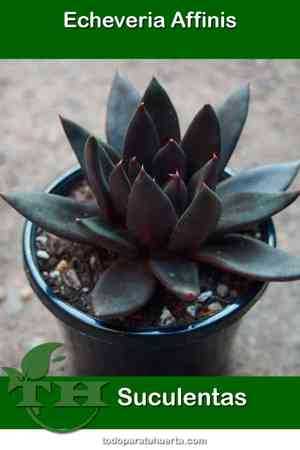
Black echeveria(Echeveria affinis)

Black echeveria (Echeveria affinis)

Also known as: Black Knight, Black Prince

Certainly! Here's a revised version incorporating elements from the reference:

Black Echeveria (Echeveria affinis) is cherished for its unique black and green hues, making it a striking addition to any indoor plant collection. To keep your Black Echeveria healthy:

1. **Light**: Place in bright, indirect sunlight. A few hours of direct morning sunlight can enhance its color, but avoid the intense afternoon sun.

2. **Watering**: Water only when the soil is fully dry. Ensure water does not accumulate in the rosettes to prevent rot.

3. **Soil**: Opt for a cactus or succulent potting mix with excellent drainage.

4. **Temperature**: Maintain temperatures between 65-75°F (18-24°C). Shield from frost and cold drafts.

5. **Humidity**: Prefers low humidity environments. Keep away from overly humid spots.

6. **Fertilizing**: Use a diluted, balanced succulent fertilizer monthly during spring and summer.

7. **Repotting and Pruning**: Repot as needed to refresh the soil and ensure proper growth. Regularly trim away dead or dying leaves.

8. **Pot Choice**: Ensure the pot has drainage holes to prevent waterlogging.

By following these guidelines, your Black Echeveria will thrive and maintain its beautiful appearance.

Attributes of Black echeveria

Lifespan
Perennial
Plant Type
Succulent
Plant Height
15 cm
Spread
20 cm
Leaf Color
Green
Flower Size
2.5 cm
Flower Color
Red

ForwardPlant - Identify plants with a snap

Identify and diagnose plants, get toxicity alerts, and explore safety guides for all types of fungi.

Try for Free

Images of Black echeveria

Black echeveria(Echeveria affinis)

Quickly Identify Black echeveria

1
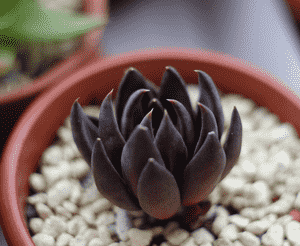
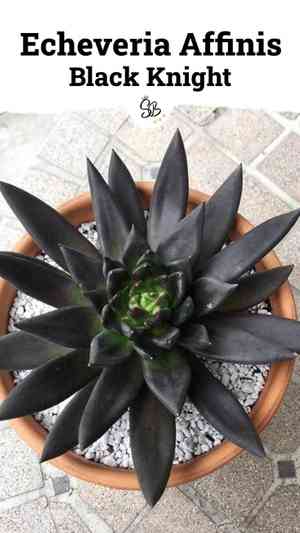
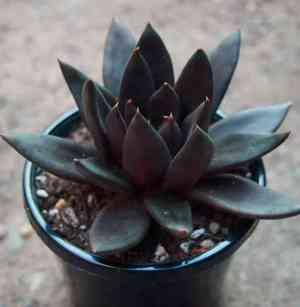
Echeveria affinis can be identified by its dark, nearly black leaves that form around a central point in a rosette shape. The leaves are typically pointed and covered in a thin layer of waxy coating.

Scientific Classification of Black echeveria

Phylum
Vascular plants
Class
Dicotyledons
Order
Saxifrages, stonecrops and allies
Family
Stonecrop
Genus
Echeveria
Species
Black echeveria

Planting and Growing of Black echeveria

Care Difficulty
Easy
Watering Schedule
Every 2 days
Sunlight Requirements
Full sun
Sunshine Duration
6-10 hours
Ideal Temperature
65-75℉
Soil Type
Potting Mix, Peat Mix
Soil pH
6.5-7.5
Fertilizer Type
Balanced
Pruning Season
Spring, Summer
Pruning Area
Branches, Leaves
Pruning Frequency
2 times a year
Repotting Season
Spring
Pot Type
Terracotta, Plastic

water icon How to Water Black echeveria?

For Echeveria affinis, the water amount should be moderate, around 100 ml per watering session. Ensure the soil is moist but not drenched, as overwatering can lead to root rot. Use a soil moisture meter if you're unsure.
What are the symptoms of an underwatered Black echeveria?
What should I do if my Black echeveria is not getting enough water?
What are the symptoms of an overwatered Black echeveria?
How to save an overwatered Black echeveria?

sunlight icon What Are the Sunlight Requirements for Black echeveria?

Sunlight Requirements: Full sun, Partial sun
Duration of light: 6 to 8 hours daily
Echeveria affinis prefers full sun to partial sun environments. Ideal lighting improves leaf color, enhances plant form, and increases resistance to pests and diseases.
What is the ideal light condition?
What solutions can achieve perfect lighting?
What benefits come from ideal light exposure?
More About Sunlight Requirements Techniques

temperature icon What Is the Ideal Temperature Range for Black echeveria?

Ideal Temperature: 65 ~ 75℉
Echeveria affinis thrives best between 65-75°F (18-24°C), providing an optimal environment for growth and development. At this range, the plant maintains efficient photosynthesis and water management, crucial for succulent health.

soil icon What Soil is Best for Black echeveria?

Soil type: Sandy soil, Loam, Sandy loam
Soil PH: 6.5 ~ 7.5
Echeveria affinis requires well-draining soil to prevent root rot. Using a mix with good drainage allows excess water to escape, preventing the roots from sitting in water and enabling the plant to thrive. Although it is a hardy plant, Echeveria affinis benefits from a soil rich in nutrients. Providing a balanced medium helps the plant maintain healthy growth, vibrant foliage, and robust overall health. The soil should have enough aeration to allow roots to breathe. Proper aeration promotes healthy root development, ensuring the plant can absorb necessary nutrients and water efficiently.

fertilize icon How to Fertilize Black echeveria?

Fertilizer type: Balanced
For Echeveria affinis, it's crucial to apply fertilizers with caution as they are not heavy feeders. Use a diluted liquid cactus or succulent fertilizer at a concentration of half the recommended strength. Over-fertilizing can harm the plant, while under-fertilizing is less damaging since Echeverias naturally thrive in nutrient-poor soils.

prune icon How to Prune Black echeveria?

Pruning Time: Spring, Summer
While pruning is beneficial, over-pruning can stress the plant. Always ensure you leave enough healthy leaves to allow for adequate photosynthesis and growth. Abusing the plant can result in sluggish growth or, in extreme cases, plant death. After trimming your Echeveria affinis, place the plant in indirect sunlight and avoid overwatering. This helps it recover efficiently from any stress and reduces the risk of infections in freshly cut areas. More About Pruning Techniques

propagate icon How to Propagate Black echeveria plant?

Propagate Time: Spring,Summer
1
Choose mature leaves from the base of a healthy Echeveria affinis plant. Ensure that the leaves are free from damage and well-hydrated to improve the chances of successful root growth.
2
Using sterile pruning shears, gently remove the chosen leaves or stems from the parent plant. Allow the cuttings to dry and callus over in a shaded area for 1-2 days to prevent rotting upon planting.
3
Place the cut ends of the callused leaves into well-draining soil. Ensure they are upright and secure, lightly pressing them into the soil. Don't water immediately; wait a few days to prevent rot.
More About Propagating Techniques

repot icon How to Repot Black echeveria plant?

Repotting frequency: Every 2-3 years
1
Echeveria affinis should be repotted when you notice that its roots have begun to grow out of the drainage holes, or if the soil retains moisture longer than usual. It is also the time to repot if the plant has overgrown its space, causing a risk of tipping over.
2
Select a pot that is one size larger than the current one, ensuring it has ample drainage holes. This helps prevent root rot by allowing excess water to escape, ensuring that the plant's roots are never sitting in waterlogged soil.
3
Opt for a well-draining cactus or succulent mix to ensure that water flows quickly through the pot. Such soil prevents excess moisture accumulation around the roots, which could otherwise lead to root rot or fungal issues for your Echeveria affinis.

ForwardPlant - Identify plants with a snap

Find the best spots for them to optimize their health, simply using your phone.

Try for Free