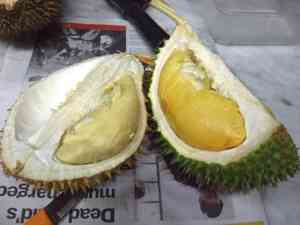
Durian (Durio zibethinus)
Also known as: Durian
The Durian (Durio zibethinus) is a tropical plant native to Southeast Asia, recognized for its sizable, spiky, and edible fruit. This fruit is notable for its strong odor, which elicits a wide range of reactions, from strong affection to intense aversion. Due to its potent smell, durian has been prohibited in some public spaces such as hotels and public transportation.
Attributes of Durian
Images of Durian
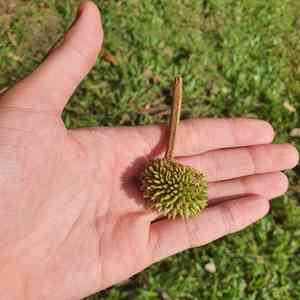
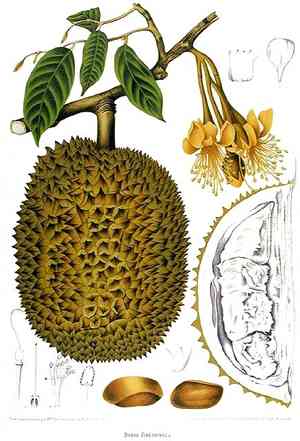
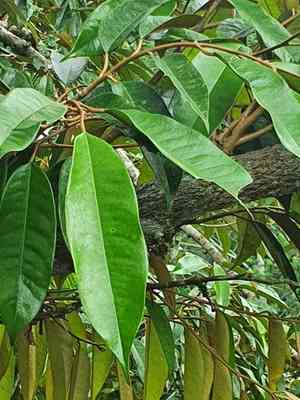
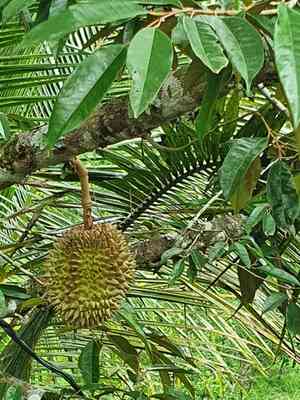
Quickly Identify Durian
Scientific Classification of Durian
Planting and Growing of Durian
 How to Water Durian?
 What Are the Sunlight Requirements for Durian?
 What Is the Ideal Temperature Range for Durian?
 What Soil is Best for Durian?
 How to Fertilize Durian?
 How to Prune Durian?
 How to Propagate Durian plant?
 How to Repot Durian plant?
Toxicity of Durian
Is Durian toxic to humans?
Durian exhibits a moderate level of toxicity in humans, largely due to the presence of cyclopropene fatty acids found in its seeds. Ingesting these seeds in their uncooked state can lead to poisoning. Symptoms associated with durian poisoning can include gastrointestinal issues such as abdominal pain, nausea, vomiting, and diarrhea. Depending on the amount of seeds consumed and the individual's sensitivity, more severe symptoms may occur in certain cases. It is essential for people to refrain from eating the raw seeds of durian to mitigate the risk of poisoning. Although the fruit's flesh is popularly consumed and appreciated for its distinct flavor, one must remain cautious to avoid accidentally consuming the toxic seeds.



