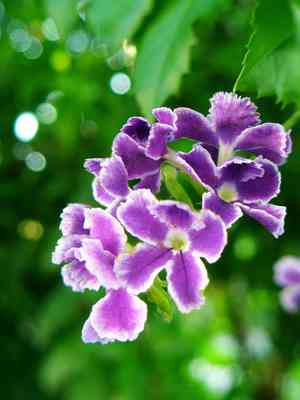
Golden dewdrops (Duranta) (Duranta)
Also known as: Golden Dewdrop, Skyflower, Pigeon Berry
Golden dewdrops (Duranta erecta) are shrubs or small trees frequently grown for their attractive flowers and berries, often used in gardens and as hedges. They spread quickly, aided by birds dispersing their seeds. Their rapid growth and ability to proliferate make them invasive in new regions, where they can outcompete native flora and disrupt local ecosystems.
In This Article
Attributes of Golden dewdrops (Duranta)
Lifespan
Perennial
Plant Height
6 m
Spread
6 m
Leaf Color
Glossy green
Flower Size
1 to 2 centimeters
Flower Color
Blue, lavender, white
Images of Golden dewdrops (Duranta)
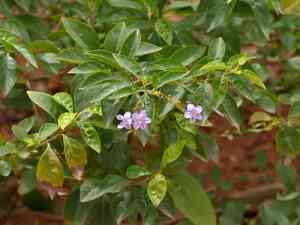
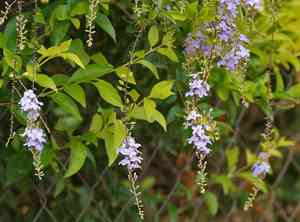
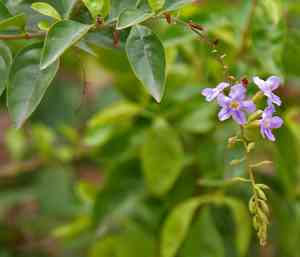
Quickly Identify Golden dewdrops (Duranta)
1
Duranta can be identified by its glossy green leaves, thorny branches, clusters of small blue or lavender flowers, and yellow to orange berry-like fruits.
Scientific Classification of Golden dewdrops (Duranta)
Phylum
Magnoliophyta
Class
Magnoliopsida
Order
Lamiales
Family
Verbenaceae
Genus
Duranta
Planting and Growing of Golden dewdrops (Duranta)
Care Difficulty
Moderate
Watering Schedule
Every 4 days
Sunlight Requirements
Full sun
Sunshine Duration
4-8 hours
Ideal Temperature
65-85℉
Soil Type
Potting Mix, Peat Mix
Soil pH
6-7.5
Fertilizer Type
Balanced
Pruning Season
Spring, Summer
Pruning Area
Branches, Leaves
Pruning Frequency
2 times a year
Repotting Season
Spring
Pot Type
Plastic, Ceramic
 How to Water Golden dewdrops (Duranta)?
Duranta appreciates a generous soaking that moistens the soil thoroughly. When watering, aim for around 500 ml per session, ensuring that the water penetrates deep into the soil. The key principle is to maintain a balance where the soil is neither left too dry nor waterlogged. Check that excess water drains effectively to prevent root rot.
What are the symptoms of an underwatered Golden dewdrops (Duranta)?
›
What should I do if my Golden dewdrops (Duranta) is not getting enough water?
›
What are the symptoms of an overwatered Golden dewdrops (Duranta)?
›
How to save an overwatered Golden dewdrops (Duranta)?
›
 What Are the Sunlight Requirements for Golden dewdrops (Duranta)?
Duranta thrives best in full sun to partial sun conditions, ideally receiving six to eight hours of daily sunlight. Adequate light promotes lush foliage and vibrant blooms.
What is the ideal location for Duranta?
›
How can I ensure Duranta gets enough sunlight indoors?
›
What if my Duranta is not getting enough light?
›
 What Is the Ideal Temperature Range for Golden dewdrops (Duranta)?
The ideal temperature range for Duranta is between 65°F to 85°F. This range allows the plant to thrive, promote lush foliage, and optimal flowering. Maintaining consistent temperatures within this range is especially important during the growing season, as it supports photosynthesis and other critical physiological processes deciding the health of the plant.
 What Soil is Best for Golden dewdrops (Duranta)?
Duranta thrives in soil that efficiently drains excess water. Proper drainage ensures that roots are not sat in waterlogged conditions, which could lead to root rot and other diseases. Well-drained soil promotes a healthy root system, ultimately supporting vibrant growth. Enriched soil is essential for Duranta as it provides the necessary nutrients for growth and flowering. Using compost or other organic material to amend the soil can enhance its nutrient profile, supporting lush foliage and prolific flowering. While good drainage is crucial, the soil should maintain some moisture to support Duranta's water needs. Loamy soil has the perfect balance of moisture retention and drainage, ensuring that the plant remains healthy and hydrated, especially during the hotter months.
 How to Fertilize Golden dewdrops (Duranta)?
For Duranta, applying liquid fertilizer needs precision. Typically, use a balanced water-soluble fertilizer at half the strength recommended on the package to avoid over-fertilization. Apply approximately 100-150 ml per plant each time, ensuring even coverage around the base.
 How to Prune Golden dewdrops (Duranta)?
Begin by removing dead, damaged, or diseased branches with clean, sharp shears. Shape the plant by cutting back overgrown branches to maintain a neat form. For a compact look, trim one-third of the new growth while allowing the central structure to remain dominant. For older or leggy plants, you can perform a more drastic pruning session. Cut back up to one-third of the oldest stems to promote vigorous new growth from the base. This rejuvenation should be done with care to allow the plant to recover and thrive.
 How to Propagate Golden dewdrops (Duranta) plant?
1
For seed propagation, collect seeds from mature Duranta plants. For cuttings, choose healthy stems and cut them at an angle about 4-6 inches long.
2
Use a well-draining soil mix or soilless medium. Sterilize the medium to prevent pathogen transfer, especially crucial for seed propagation.
3
Plant seeds shallowly in the seedling tray or place cuttings into the medium. Ensure consistent moisture without waterlogging the substrate.
 How to Repot Golden dewdrops (Duranta) plant?
1
Duranta needs repotting when you notice roots creeping out through drainage holes, or if the plant's growth has significantly slowed. As it outgrows its pot, Duranta shows signs of being root-bound. Spring and summer are optimal seasons to ensure healthy transfer and growth.
2
Select a pot slightly larger than the current one, ideally 1-2 inches wider. This size encourages balanced growth and stability, while preventing excessive soil retention that could lead to root rot. Ensure the pot has adequate drainage holes to allow for proper moisture management.
3
Opt for a well-draining potting mix for Duranta. The ideal mix should have balanced moisture retention while allowing excess water to escape easily. This prevents waterlogging, ensuring the roots can access air, essential for healthy plant growth.
Toxicity
Ingestion of berries or leaves
WARNING
The judgment on toxicity and danger is for reference only. We DO NOT GUARANTEE any accuracy of such judgment. Therefore, you SHALL NOT rely on such judgment. It is IMPORTANT TO SEEK PROFESSIONAL ADVICE in advance when necessary.
Learn More About Golden dewdrops (Duranta) Diseases
Anthracnose
Bacterial Leaf Spot
Black Spot
Chemical Injury
Crown Gall
Damping-off
Downy Mildew
Drought Stress
Fusarium Wilt
Gray Mold
Leaf Curl
Leaf Spot
Mosaic
Nutrient Deficiency
Nutrient Toxicity
Powdery Mildew
Root Rot
Root-knot Nematode
Rusts
Sooty Mold
Spider Mites
Temperature Stress
Thrips Damage
White Mold

