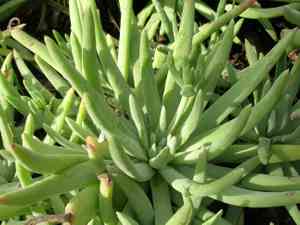
Bright green dudleya (Dudleya virens)
Also known as: Green liveforever, Bright green live forever
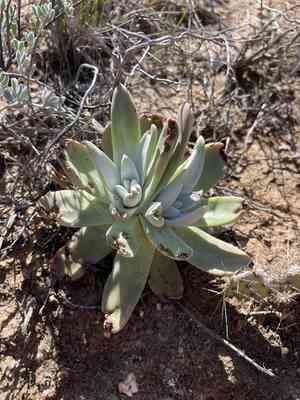
Dudleya virens features succulent, strap-like leaves that measure between 8 to 20 cm in length and 1.5 to 3 cm in width. These green leaves taper either from the base or near the middle and are arranged in a rosette pattern. The plant produces white flowers with five petals, each petal ranging from 7 to 10 mm in length.
In This Article
Attributes of Bright green dudleya
Lifespan
Perennial
Plant Type
Herb
Plant Height
10 cm to 20 cm
Spread
10 cm to 50 cm
Leaf Color
Green
Flower Size
2.5 cm
Flower Color
White Pink
Images of Bright green dudleya
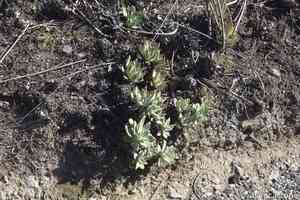
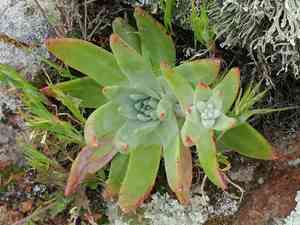
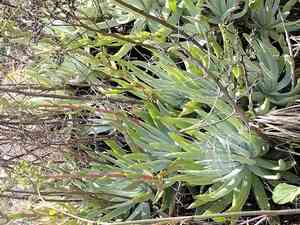
Quickly Identify Bright green dudleya
1
Identifying Dudleya virens involves looking for rosettes of fleshy, green leaves that are sometimes tinged with pink or red. The plant produces tall, thin stalks with yellow to white flowers during its blooming season.
Scientific Classification of Bright green dudleya
Phylum
Vascular plants
Class
Dicotyledons
Order
Saxifragales
Family
Stonecrop
Genus
Liveforevers
Species
Bright green dudleya
Planting and Growing of Bright green dudleya
Care Difficulty
Easy
Watering Schedule
Every 2 days
Sunlight Requirements
Full sun
Sunshine Duration
4-8 hours
Ideal Temperature
50-70℉
Soil Type
Potting Mix, Peat Mix
Soil pH
6.5-7.5
Fertilizer Type
Balanced
Pruning Season
Spring, Summer
Pruning Area
Branches, Leaves
Pruning Frequency
Once a year
Repotting Season
Spring
Pot Type
Plastic, Ceramic
 How to Water Bright green dudleya?
For Dudleya virens, it's crucial to apply water sparingly. Think of natural rainfall in its native habitat, which is minimal and infrequent. Each watering should involve about 50 ml of water, just enough to moisten the soil without soaking it. The key is to emulate the plant's arid native environment, providing just enough moisture to sustain it without triggering root rot.
What are the symptoms of an underwatered Bright green dudleya?
›
What should I do if my Bright green dudleya is not getting enough water?
›
What are the symptoms of an overwatered Bright green dudleya?
›
How to save an overwatered Bright green dudleya?
›
 What Are the Sunlight Requirements for Bright green dudleya?
Ideally, Dudleya virens appreciates four to six hours of full to partial sun. This balance encourages optimal growth, with enough sunlight to facilitate photosynthesis and energy generation, promoting robust and healthy plant development.
More About Sunlight Requirements Techniques→
What is the best environment for Dudleya virens?
›
How to optimize sunlight exposure?
›
What are the benefits of optimal light for Dudleya virens?
›
 What Is the Ideal Temperature Range for Bright green dudleya?
For Dudleya virens, an ideal temperature range lies between 50°F and 70°F. This range ensures optimal growth and maintains the plant's health by providing the perfect balance of warmth and coolness it needs.
 What Soil is Best for Bright green dudleya?
Dudleya virens thrives in well-drained soils that prevent water from pooling around its roots. This mimics its natural cliffside habitats and helps prevent root rot, ensuring healthy growth. While Dudleya virens can tolerate poorer soils, it benefits from substrates enriched with mild organic matter. This gives the plant a nutrient boost, promoting stronger foliage and vibrant colors. The plant requires soils that retain minimal moisture. This preference parallels its native environment, reducing the risk of moisture-induced diseases and increasing its resilience.
 How to Fertilize Bright green dudleya?
For Dudleya virens, it's ideal to apply liquid fertilizers at half-strength to avoid overwhelming the plant with nutrients. A balanced 10-10-10 fertilizer diluted to half its strength is recommended to prevent fertilizer burn and maintain healthy growth.
 How to Prune Bright green dudleya?
Begin by identifying and removing any dead or shriveled leaves from the base of the plant. These can harbor pests and diseases if left unchecked, so it’s crucial to remove them for the overall health of Dudleya virens. When removing dead leaves, cut them as close to the base as possible without damaging the rosette. This ensures that no leftover stubs remain, which can rot and affect the plant negatively. Focus on maintaining the plant's rosette shape by trimming stray or excessively long leaves. This not only keeps the plant aesthetically pleasing but also ensures better growth distribution. After pruning, ensure to clean up all fallen leaves and debris around the base of Dudleya virens. This helps prevent habitat creation for pests and ensures the plant’s environment remains healthy and clean.
More About Pruning Techniques→
 How to Propagate Bright green dudleya plant?
1
For seed propagation, prepare a well-draining soil mix with a combination of sand and potting soil. This mimics the natural habitat of Dudleya virens and provides both support and drainage for the seeds.
2
Scatter the seeds of Dudleya virens over the prepared soil surface. Do not cover them as they need light to germinate. Lightly mist the seeds to keep them moist but not waterlogged.
3
Select a healthy leaf from the Dudleya virens plant for cutting. Use a sterile knife to carefully cut the leaf and allow it to dry for a few days to form a callus before planting.
 How to Repot Bright green dudleya plant?
1
Dudleya virens should be repotted when you notice the roots are growing out of the drainage holes, indicating the plant has outgrown its current container. Another sign is when the soil doesn’t retain moisture well. Spring or early summer is ideal because it allows the plant to recover during its active growth phase.
2
Select a pot that is slightly larger than the current one and has adequate drainage holes. A terracotta pot can be a great choice as it allows the soil to dry out between watering, preventing root rot. Additionally, the weight of a terracotta pot helps stabilize the plant, especially considering Dudleya virens' potential size.
3
Opt for a well-draining cactus or succulent mix. The addition of perlite or coarse sand will help to improve drainage. This type of soil prevents waterlogging and ensures better aeration around the roots, crucial for the health of Dudleya virens, allowing it to thrive in its new environment.



