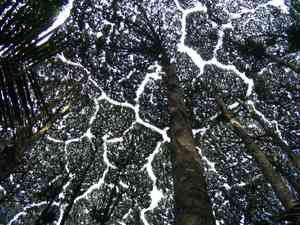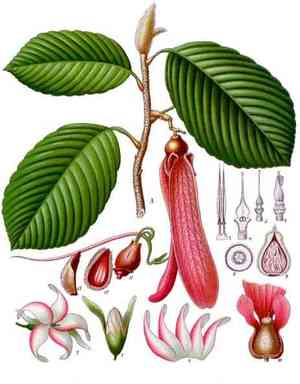
Borneo camphor(Dryobalanops aromatica)

Borneo camphor (Dryobalanops aromatica)

Also known as: Malay camphor

A large emergent tree in mixed dipterocarp forests can reach impressive heights, often between 65 and 75 meters. These towering trees are typically situated in regions with deep, humus-rich yellow sandy soils.

**Characteristics**:
- **Height**: Ranges from 65 to 75 meters.
- **Canopy**: Expansive and elevated, extending above the main canopy layer.
- **Leaves**: Generally large and robust, designed for optimal sunlight absorption.
- **Bark**: Can vary from smooth to deeply fissured, providing protection and support.
- **Roots**: Often feature pronounced buttress roots for stability in less fertile soils.

**Habitat**:
- **Region**: Predominantly found in Southeast Asia's tropical zones.
- **Soil**: Prefer deep, nutrient-rich, yellow sandy soils with high organic content.
- **Climate**: Thrive in consistently warm and humid environments with ample rainfall.

These emergent trees are vital to the ecosystem, offering habitat and nourishment for diverse wildlife and enhancing the forest's structural complexity and biodiversity.

Attributes of Borneo camphor

Lifespan
Perennial
Plant Type
Tree
Plant Height
Up to 70 meters
Spread
Up to 30 meters
Leaf Color
Dark green (upper side), light green (underside)
Flower Size
0.5-1 centimeter
Flower Color
White Green

ForwardPlant - Identify plants with a snap

Identify and diagnose plants, get toxicity alerts, and explore safety guides for all types of fungi.

Try for Free

Images of Borneo camphor

Borneo camphor(Dryobalanops aromatica)

Quickly Identify Borneo camphor

1
Identify Dryobalanops aromatica by its large, leathery leaves which are dark green and glossy on the upper side and lighter below. The bark is dark brown and deeply fissured. The tree produces small, white to pale yellow flowers.

Scientific Classification of Borneo camphor

Phylum
Vascular plants
Class
Dicotyledons
Order
Malvales
Family
Meranti
Genus
Dryobalanops
Species
Borneo camphor

Planting and Growing of Borneo camphor

Care Difficulty
Hard
Watering Schedule
Every 2 days
Sunlight Requirements
Full sun
Sunshine Duration
6-12 hours
Ideal Temperature
77-86℉
Soil Type
Potting Mix, Peat Mix
Soil pH
6.5-7.5
Fertilizer Type
Balanced
Pruning Season
Spring, Summer
Pruning Area
Branches, Leaves
Pruning Frequency
2 times a year
Repotting Season
Spring
Pot Type
Plastic, Ceramic

water icon How to Water Borneo camphor?

When watering Dryobalanops aromatica, ensure each session allows the water to absorb deeply into the soil, reaching the roots. This plant prefers its soil to be moist but not waterlogged, so always check that the top few inches of soil are dry before adding water.
What are the symptoms of an underwatered Borneo camphor?
What should I do if my Borneo camphor is not getting enough water?
What are the symptoms of an overwatered Borneo camphor?
How to save an overwatered Borneo camphor?

sunlight icon What Are the Sunlight Requirements for Borneo camphor?

Sunlight Requirements: Full sun, Partial sun
Duration of light: 6 to 8 hours
Dryobalanops aromatica thrives with full to partial sunlight exposure, benefiting from balanced exposure that fosters healthy growth, increased resilience, and enhanced aromatic properties.
How much sunlight does Dryobalanops aromatica need?
What are the best solutions to achieve ideal sunlight conditions?
How does ideal sunlight benefit Dryobalanops aromatica?

temperature icon What Is the Ideal Temperature Range for Borneo camphor?

Ideal Temperature: 77 ~ 86℉
Dryobalanops aromatica thrives best in warm, tropical climates. The ideal temperature range for this species is between 77°F to 86°F. These temperatures closely mimic the conditions of its native habitat, ensuring optimal growth and health for the plant.

soil icon What Soil is Best for Borneo camphor?

Soil type: Loam, Sandy loam, Peat soil
Soil PH: 6.5 ~ 7.5
Dryobalanops aromatica thrives in soil that retains moisture without becoming waterlogged. This ability helps ensure the roots stay consistently hydrated, promoting healthy growth and stability for the tree. For optimal growth, the tree demands a soil rich in nutrients. This ensures that the plant receives adequate minerals and vitamins essential for its vigorous development and resistance to diseases. While the soil should retain some moisture, good drainage is crucial to prevent root rot. Properly drained soil allows excess water to escape, protecting the roots from suffocation and decay.

fertilize icon How to Fertilize Borneo camphor?

Fertilizer type: Balanced
Dryobalanops aromatica requires a balanced approach to fertilization. For liquid fertilizers, use a balanced 10-10-10 NPK ratio, applying 100-150 ml per plant. Solid fertilizers should be applied at 120-150 grams per application. Always follow the manufacturer's instructions for specific brand/products used.

prune icon How to Prune Borneo camphor?

Pruning Time: Spring, Summer
Examine the plant carefully and identify dead or diseased branches as they should be removed first. Look for branches growing inwards or crossing over others; removing them will help improve air circulation and light penetration. Begin by removing any dead or diseased branches. Next, cut back any overgrown sections to maintain the desired shape. Trim off any branches that are too close to each other to prevent future crowding. Ensure each cut is clean and smooth. After pruning, water the plant adequately and monitor for any signs of stress or disease. Applying a mild fertilizer can help the plant recover and encourage new growth. Mulching around the base can preserve moisture and deter weeds. More About Pruning Techniques

propagate icon How to Propagate Borneo camphor plant?

Propagate Time: Early summer, Late spring
1
Gather mature seeds from a healthy Dryobalanops aromatica plant. Ensure they are fully developed and have a firm outer coating, indicating readiness for sowing.
2
Select healthy and semi-hardwood cuttings from the plant. Each cutting should be approximately 6 inches long, with at least two nodes to encourage rooting.
3
For seeds, sow in a well-draining soil mix and lightly cover. For cuttings, insert into a moist medium like peat or perlite, keeping the base slightly covered.

repot icon How to Repot Borneo camphor plant?

Repotting frequency: Every 2-3 years
1
The best signals for repotting Dryobalanops aromatica include noticeable root-bound conditions, soil depletion, and poor drainage. Additionally, if the plant exhibits slow growth and has roots growing out of the pot, it's a clear indication for repotting. Choose to repot during active growing seasons like spring or summer for the best adaptability.
2
Select a pot that is one size larger than the current one, ensuring it has adequate drainage holes. This promotes healthy root growth and prevents waterlogging. A pot too large might lead to excess water retention, while too small can restrict root expansion, impacting the plant's health.
3
Opt for a well-draining organic soil mix with good aeration properties. Such a mix ensures the roots do not stand in water, reducing the risk of root rot. Superior aeration supports root health and nutrient uptake, vital for the plant's vibrant growth.

ForwardPlant - Identify plants with a snap

Find the best spots for them to optimize their health, simply using your phone.

Try for Free