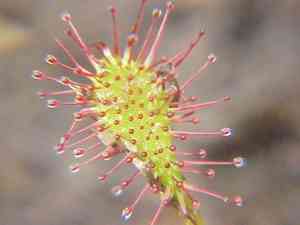
Spoonleaf sundew (Drosera intermedia)
Also known as: Long-leaved sundew
The Spoonleaf sundew (Drosera spatulata) is a carnivorous plant known for its insect-catching abilities. Its leaves are adorned with glandular hairs that exude a sticky, nectar-like substance to lure insects. Once an insect lands, it becomes ensnared by the adhesive hairs. The plant then releases digestive enzymes to break down the prey and assimilate its nutrients. Notably, the Spoonleaf sundew is highly cold-tolerant and is often cultivated as an ornamental plant.
In This Article
Attributes of Spoonleaf sundew
Lifespan
Perennial
Plant Type
Herb
Plant Height
15 cm to 20 cm
Spread
30 cm to 90 cm
Leaf Color
Green Red
Flower Size
8 mm
Flower Color
White Pink
Images of Spoonleaf sundew
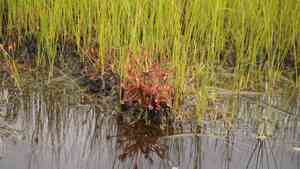
Quickly Identify Spoonleaf sundew
1
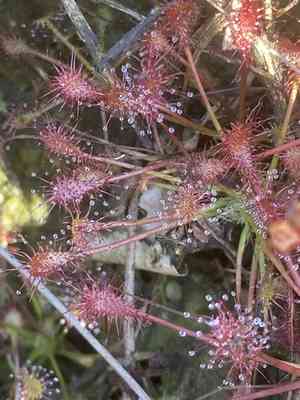
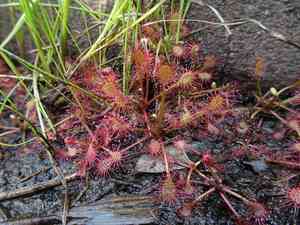
Rosette of spoon-shaped leaves with sticky glandular hairs for trapping insects.
2
White to pale pink flowers in one-sided raceme on slender stalks.
3
Oval-shaped capsule with bumpy reddish-brown seeds and dehiscence mechanism.
4
Bright green paddle-shaped leaves with red sticky hairs on upper surface.
5
Slender, semi-erect stem with reddish to green tint, unbranched and wiry.
Scientific Classification of Spoonleaf sundew
Phylum
Vascular plants
Class
Dicotyledons
Order
Caryophyllales
Family
Sundew
Genus
Sundews
Species
Spoonleaf sundew
Planting and Growing of Spoonleaf sundew
Care Difficulty
Easy
Watering Schedule
Every 16 days
Sunlight Requirements
Full sun
Sunshine Duration
6-10 hours
Ideal Temperature
70-80℉
Soil Type
Potting Mix, Peat Mix
Soil pH
4-6
Fertilizer Type
Balanced
Pruning Season
Spring, Summer
Pruning Area
Branches, Leaves
Pruning Frequency
2 times a year
Repotting Season
Spring
Pot Type
Plastic, Ceramic
 How to Water Spoonleaf sundew?
Drosera intermedia, a type of carnivorous plant, requires a steady supply of water to mimic its natural boggy environment. It's crucial to keep the soil consistently moist, without allowing it to become overly saturated. As a rule of thumb, ensure the soil is damp, resembling a wrung-out sponge.
What are the symptoms of an underwatered Spoonleaf sundew?
›
What should I do if my Spoonleaf sundew is not getting enough water?
›
What are the symptoms of an overwatered Spoonleaf sundew?
›
How to save an overwatered Spoonleaf sundew?
›
 What Are the Sunlight Requirements for Spoonleaf sundew?
Drosera intermedia benefits from full sun to partial sun conditions. Ideal lighting supports robust photosynthesis, vigorous growth, and improved trapping efficiency, contributing to the plant's overall health.
More About Sunlight Requirements Techniques→
What is the best lighting condition for Drosera intermedia?
›
How can you ensure Drosera intermedia receives ideal light exposure?
›
What benefits does Drosera intermedia gain from ideal lighting?
›
 What Is the Ideal Temperature Range for Spoonleaf sundew?
For Drosera intermedia, the ideal temperature range closely mirrors its natural habitat conditions, typically between 70°F to 80°F. Maintaining this range ensures healthy growth, vigor, and optimal functioning of its trapping mechanisms. These temperatures align with temperate climates where this species commonly thrives, allowing natural physiological processes, such as nutrient absorption and photosynthesis, to occur efficiently.
 What Soil is Best for Spoonleaf sundew?
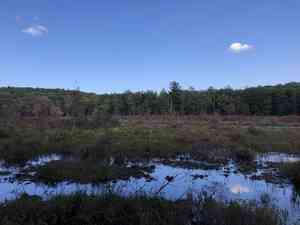
Drosera intermedia thrives in soils that retain moisture well, replicating its natural boggy habitat. Consistent moisture levels support the plant’s ability to trap prey, which provides essential nutrients for its growth. This carnivorous plant prefers nutrient-poor soils since it primarily gains nutrients from captured insects. Excessively rich soil can hinder its trap functionality and overall health. Well-aerated soil is crucial for Drosera intermedia as it prevents root rot and facilitates the absorption of water. Loose, sandy soils with peat allow for sufficient air circulation around the roots.
 How to Fertilize Spoonleaf sundew?
Drosera intermedia, also known as the spoonleaf sundew, prefers nutrient-poor soils. Therefore, fertilization should be minimal. When using a liquid fertilizer, dilute it to one-quarter of the recommended strength for houseplants. Apply only a few drops per month as these carnivorous plants obtain most of their nutrients by trapping insects.
 How to Prune Spoonleaf sundew?
Before pruning, inspect your Drosera intermedia for any dead or brown leaves. These should be removed to prevent any fungal infections from spreading. Hold the leaf near the base and make a precise cut with your scissors, ensuring you do not damage the surrounding healthy leaves or the plant's crown. After pruning, ensure the plant is in a well-lit spot and resumes its regular watering schedule. This will help it recuperate quickly and grow healthily.
More About Pruning Techniques→
 How to Propagate Spoonleaf sundew plant?
1
Before sowing, stratify the seeds by placing them in a refrigerator for four weeks. This simulates winter conditions, breaking seed dormancy and encouraging germination once planted.
2
Scatter the stratified seeds on the surface of a moist, peat-based soil mix without covering them. Drosera seeds require light exposure to germinate successfully, so ensure they are on the soil surface.
3
Place the seed tray in a well-lit area, avoiding direct sunlight. Maintain high humidity by covering the tray, and ensure the soil remains consistently moist but not waterlogged.
 How to Repot Spoonleaf sundew plant?
1
Drosera intermedia shows signs for repotting when the roots start protruding from the drainage holes or when the soil retains excess moisture. Spring is the best time as new growth begins, ensuring the plant adapts well to the new environment.
2
Choose a pot slightly larger than the current one, with good drainage capacity. Opting for a plastic pot can keep the soil consistently moist, which is beneficial for this moisture-loving species.
3
Select a mixture of peat moss and sand, maintaining a slightly acidic and well-draining environment. This mix provides a nutrient-poor medium similar to its natural habitat, which is essential for optimal growth.



