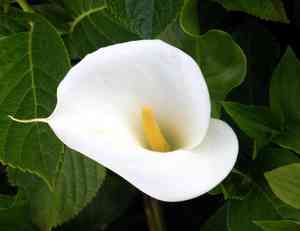
Dragon arum(Dracunculus vulgaris)

Dragon arum (Dracunculus vulgaris)

Also known as: Voodoo lily, Snake lily

Dragon arum (Dracunculus vulgaris), a native plant of the Balkans, goes by various names such as voodoo lily, black arum, stink lily, snake lily, black dragon, black lily, and dragonwort. This aroid species thrives in full sunlight.

Attributes of Dragon arum

Lifespan
Perennial
Plant Type
Herb
Plant Height
61 cm to 91 cm
Spread
1 m
Leaf Color
Green Silver
Flower Size
30 cm
Flower Color
Purple Red Black

PlantJoy - Identify plants with a snap

Identify and diagnose plants, get toxicity alerts, and explore safety guides for all types of fungi.

Try for Free

Images of Dragon arum

Dragon arum(Dracunculus vulgaris)

Quickly Identify Dragon arum

1
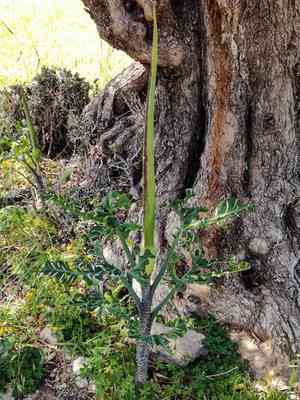
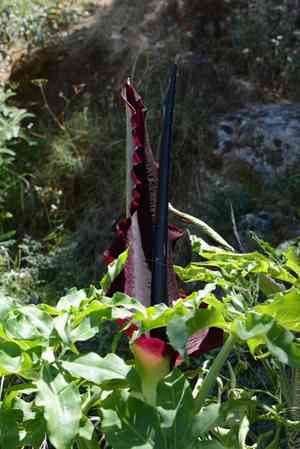
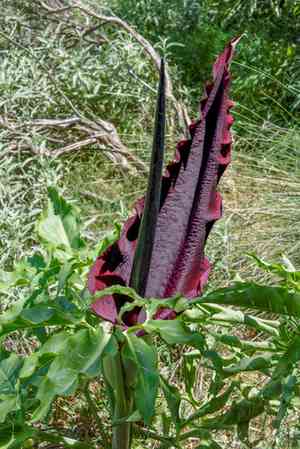
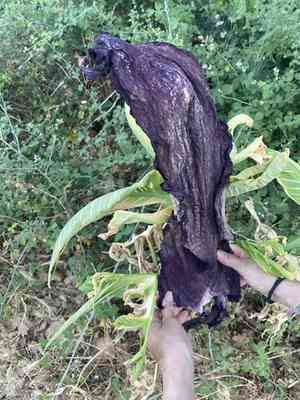
Tall inflorescence reaching up to 4 feet (1.2 meters) with purplish-black spathe and central black spadix.
2
Fan-shaped, palmately divided leaves with 9-15 finger-like lobes and dark green mottled with white.
3
Maroon tubular spadix flower with wavy margined spathe, up to 20 inches (50 cm) tall.
4
Pear-shaped berries changing from green to orange-red, clustered tightly, 0.4 to 0.8 inches (1 to 2 cm).
5
Pale grey-green pseudostem with dark purple-black markings, straight, 1 to 1.5 inches (2.5 to 3.8 cm) thick.

Scientific Classification of Dragon arum

Phylum
Vascular plants
Class
Monocotyledons
Order
Alismatales
Family
Arum
Genus
Dracunculus
Species
Dragon arum

Planting and Growing of Dragon arum

Care Difficulty
Easy
Watering Schedule
Every 2 days
Sunlight Requirements
Partial sun
Sunshine Duration
4-8 hours
Ideal Temperature
60-75℉
Soil Type
Potting Mix, Peat Mix
Soil pH
6.5-7.5
Fertilizer Type
Balanced
Pruning Season
Spring, Summer
Pruning Area
Branches, Leaves
Pruning Frequency
2 times a year
Repotting Season
Spring
Pot Type
Plastic, Ceramic

water icon How to Water Dragon arum?

Dracunculus vulgaris prefers a well-drained soil, which means it benefits from a thorough watering session that soaks the soil but doesn't leave it waterlogged. Approximately 500 ml of water per session should suffice, ensuring the soil remains moist but not soggy.
What are the symptoms of an underwatered Dragon arum?
What should I do if my Dragon arum is not getting enough water?
What are the symptoms of an overwatered Dragon arum?
How to save an overwatered Dragon arum?

sunlight icon What Are the Sunlight Requirements for Dragon arum?

Sunlight Requirements: Partial sun, Full shade
Duration of light: 3 to 6 hours daily
Dracunculus vulgaris ideally thrives in partial sun to full shade, benefiting from an environment that provides filtered sunlight similar to woodland conditions. Proper lighting promotes lush growth and vibrant foliage.
What kind of light does Dracunculus vulgaris need?
How can you ensure Dracunculus vulgaris gets ideal light?
Why is proper lighting important for Dracunculus vulgaris?
More About Sunlight Requirements Techniques

temperature icon What Is the Ideal Temperature Range for Dragon arum?

Ideal Temperature: 60 ~ 75℉
The ideal temperature range for Dracunculus vulgaris is between 60°F and 75°F. Within this range, the plant tends to thrive, optimizing growth, blooming, and overall health. This temperature band provides the quintessential balance for metabolism and nutrient uptake processes.

soil icon What Soil is Best for Dragon arum?

Soil type: Loam, Clay soil, Sandy loam
Soil PH: 6.5 ~ 7.5
Dracunculus vulgaris thrives in well-drained soil, preventing waterlogging, which can cause root rot. Its bulbous roots need space to breathe, promoting healthy growth and vibrancy. This plant requires a nutrient-rich soil to enhance its dramatic foliage and stunning blooms. Organic matter like compost can greatly improve soil fertility for Dracunculus vulgaris. The soil should retain moderate moisture, providing consistent hydration without becoming soggy. This ensures the plant maintains turgor, keeping it lush and healthy.

fertilize icon How to Fertilize Dragon arum?

Fertilizer type: Balanced
For Dracunculus vulgaris, use a balanced, water-soluble fertilizer diluted to half strength for liquid feeding. This means if the label suggests 1 tablespoon per gallon of water, you should use only 0.5 tablespoons. Adjust based on the plant's response; if new growth appears weak or pale, increase the concentration slightly.

prune icon How to Prune Dragon arum?

Pruning Time: Spring, Summer
Start by removing any dead or damaged leaves as these can harbor pests and diseases. Cut at the base of the leaf, ensuring you remove the entire stalk. This not only improves appearance but also encourages vigorous growth. If your Dracunculus vulgaris is getting too large, carefully cut back some of the outer leaves. This will keep the plant from becoming overly crowded, promoting better air circulation and reducing the risk of fungal infections. More About Pruning Techniques

propagate icon How to Propagate Dragon arum plant?

Propagate Time: Spring, Early spring
1
To propagate Dracunculus vulgaris by seeds, sow the seeds in seed trays with a well-draining potting mix. Lightly cover the seeds and keep the trays in a warm location. Ensure consistent moisture, and germination should occur within a few weeks. Patience is required as sometimes germination can take longer, depending on environmental conditions.
2
For division propagation, carefully lift the plant from the ground using a hand trowel. Once removed, gently separate the tubers or bulbs. Ensure each division has a healthy amount of root and shoot. Replant immediately in a suitable location or container with well-draining soil.
3
After planting seeds or divisions, it's crucial to keep the soil consistently moist but not waterlogged. Use a fine mist spray for seeds to prevent disturbance. For divisions, regular watering helps establish the plant more quickly. Adjust frequency based on weather conditions; avoid overwatering which can lead to root rot.
More About Propagating Techniques

repot icon How to Repot Dragon arum plant?

Repotting frequency: Once every two years
1
Dracunculus vulgaris shows it’s time for a new pot when roots overflow the current one or growth stagnates. Spring or Autumn is ideal as the plant is actively growing, reducing transplant shock and promoting root expansion.
2
Select a pot that is 2-3 inches wider than the current one to allow room for root growth. Ensure it has drainage holes to prevent waterlogging, which can lead to root rot. A terracotta pot allows better air circulation compared to plastic.
3
Opt for a rich, well-draining loam that provides nutrients while ensuring excess water doesn't cause stagnant conditions. Adding organic matter, like compost, improves soil fertility and drainage, supporting vigorous growth.

PlantJoy - Identify plants with a snap

Find the best spots for them to optimize their health, simply using your phone.

Try for Free

Toxicity of Dragon arum

Is Dragon arum toxic to humans?

Every single part of the dragon arum plant is filled with calcium oxalate crystals, which, when consumed, can inflict severe damage to the mouth, throat, and digestive tract, leading to intense irritation and swelling. In some cases, the swelling can become severe enough to obstruct breathing. Symptoms typically include extreme mouth pain, nausea, excessive drooling, vomiting, abdominal and intestinal pain, an irritated throat, and diarrhea.

Is Dragon arum toxic to cat?

Dragon arum is regarded as a poisonous plant for cats. Its ingestion, even inadvertently, can result in severe health issues. The whole plant is dangerous, and if cats consume any part of dragon arum, they may display symptoms of physical distress and illness that require urgent medical care. Should dragon arum be ingested, it is crucial to quickly obtain treatment at a veterinary clinic. Although the specific toxic compounds present in dragon arum are not identified, the overall toxicity risks are evident, prompting cat owners to take precautions against accidental consumption.

Is Dragon arum toxic to dog?

The dragon arum is recognized as toxic to dogs. Canines might inadvertently consume various parts of this plant, resulting in poisoning. All portions of the dragon arum, including its leaves, stems, flowers, and roots, contain harmful toxins that can endanger a dog's health. If a dog happens to ingest any part of the dragon arum, it may present symptoms such as vomiting, diarrhea, excessive drooling, oral irritation, and trouble swallowing. Therefore, it is vital for dog owners to remain alert and keep their pets away from dragon arum. Should ingestion be suspected, seeking immediate veterinary assistance is critical to ensure the health and safety of the affected animal.

Identify toxic plants for your safety

Learn which plants are harmful to you and your pets, and make informed choices for a safer home!

Try for Free
WARNING
The judgment on toxicity and danger is for reference only. We DO NOT GUARANTEE any accuracy of such judgment. Therefore, you SHALL NOT rely on such judgment. It is IMPORTANT TO SEEK PROFESSIONAL ADVICE in advance when necessary.
More About Toxic Techniques