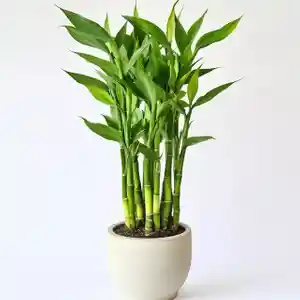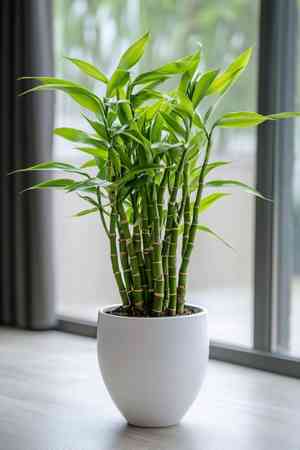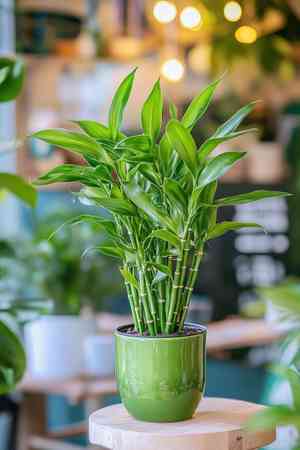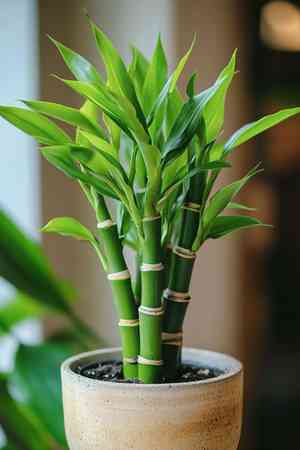
Lucky bamboo(Dracaena sanderiana)

Lucky bamboo (Dracaena sanderiana)

Also known as: Belgian evergreen, Goddess of mercy's plant

Despite its name, lucky bamboo is not a true bamboo plant but a variety of Dracaena, specifically Dracaena sanderiana. In Feng Shui, it is believed to attract good fortune and prosperity. This plant is often utilized to enhance the flow of positive energy, or "chi," within a home or office. Proper placement is key to maximizing its beneficial effects.

Attributes of Lucky bamboo

Lifespan
Perennial
Plant Type
Shrub, Herb
Plant Height
91 cm to 1.5 m
Spread
90 cm to 1.5 m
Leaf Color
Green
Flower Size
2.5 cm
Flower Color
White

PlantJoy - Identify plants with a snap

Identify and diagnose plants, get toxicity alerts, and explore safety guides for all types of fungi.

Try for Free

Images of Lucky bamboo

Lucky bamboo(Dracaena sanderiana)

Quickly Identify Lucky bamboo

1
Segmented stems resembling bamboo, with prominent nodes
2
Lance-shaped leaves, 4-8 inches (10-20 cm) long, glossy green color
3
Delicate white flowers, 0.2 inches (5 mm) in diameter, star-shaped petals
4
Smooth, fleshy stem, 0.5-1 inch (1.3-2.5 cm) diameter, green with nodes
5
Leaves 6-10 inches (15-25 cm) long, 1-1.5 inches (2.5-4 cm) wide, pointed tips

Scientific Classification of Lucky bamboo

Phylum
Vascular plants
Class
Monocotyledons
Order
Asparagus and allies
Family
Asparagus
Genus
Dracaena
Species
Lucky bamboo

Planting and Growing of Lucky bamboo

Care Difficulty
Easy
Watering Schedule
Every 2 days
Sunlight Requirements
Partial sun
Sunshine Duration
4-8 hours
Ideal Temperature
65-80℉
Soil Type
Potting Mix, Peat Mix
Soil pH
6.5-7.5
Fertilizer Type
Balanced
Pruning Season
Spring, Summer
Pruning Area
Branches, Leaves
Pruning Frequency
2 times a year
Repotting Season
Spring
Pot Type
Plastic, Ceramic

water icon How to Water Lucky bamboo?

Dracaena sanderiana, commonly known as Lucky Bamboo, requires moderate watering. Ensure the soil is moist but not waterlogged. A good rule is to water it until about 200ml is absorbed by the plant's potting medium, ensuring moisture reaches the root zone without sitting in excess water, which can lead to root rot.
What are the symptoms of an underwatered Lucky bamboo?
What should I do if my Lucky bamboo is not getting enough water?
What are the symptoms of an overwatered Lucky bamboo?
How to save an overwatered Lucky bamboo?
More About Watering Techniques

sunlight icon What Are the Sunlight Requirements for Lucky bamboo?

Sunlight Requirements: Partial sun, Full shade
Duration of light: 2-6 hours daily
Partial sunlight or full shade is ideal for Dracaena sanderiana. Such an environment ensures strong, lush foliage and healthy plant development. Moderate light levels encourage vibrant leaf color and promote natural growth cycles without extreme stress.
Optimal Light Levels
Light Adjustment Strategies
Benefits of Ideal Lighting
More About Sunlight Requirements Techniques

temperature icon What Is the Ideal Temperature Range for Lucky bamboo?

Ideal Temperature: 65 ~ 80℉
For optimal growth, Dracaena sanderiana thrives best in temperatures ranging from 65°F to 80°F. These conditions mimic its native environment, providing adequate warmth without the risk of overheating. Temperatures in this range facilitate proper metabolic processes and promote healthy leaf development. Consistent exposure to these temperatures can also boost the plant's overall vitality and growth rate.

soil icon What Soil is Best for Lucky bamboo?

Soil type: Loam, Sandy loam
Soil PH: 6.5 ~ 7.5
Dracaena sanderiana thrives in well-drained soil as it prevents water from pooling and causing root rot. This drainage is crucial for healthy root development and helps maintain optimal plant health, promoting lush and vibrant growth. This plant prefers soil that is rich in nutrients to support its growth. Using soil with added organic matter or a balanced potting mix provides essential nutrients, promoting robust leaf and stem development. For Dracaena sanderiana, soil that retains moderate moisture is beneficial. It maintains the right water balance, ensuring the roots are neither too dry nor too wet, hence preventing stress and encouraging steady growth. More About Soil

fertilize icon How to Fertilize Lucky bamboo?

Fertilizer type: Balanced
For Dracaena sanderiana, it's crucial to use a balanced fertilizer in low concentrations. A general recommendation is to dilute the liquid fertilizer to half or even a quarter of the suggested strength. This prevents the roots from getting overwhelmed and damaged. More About Fertilizing Techniques

prune icon How to Prune Lucky bamboo?

Pruning Time: Spring, Summer
When pruning, make your cut just above a node, where a leaf meets the stem. This encourages new growth from that point and helps in developing a lush plant structure. Suckers can appear at the plant's base or along its stem and can sap energy from the main plant. Remove these suckers by cutting them close to their point of origin. More About Pruning Techniques

propagate icon How to Propagate Lucky bamboo plant?

Propagate Time: Early spring, Late spring, Summer
1
Choose a healthy, mature stem from the parent plant. The cutting should be about 4-6 inches long with at least one node present. Make sure to select a non-flowering stem for best results.
2
Trim any leaves from the lower half of the cutting to prevent rot. Dip the cut end into a rooting hormone powder to promote faster root growth before planting it into a well-draining soil mix.
3
Plant the cutting in a small pot filled with a light, moist potting mix. Water the soil lightly to keep it moist but not waterlogged, ensuring proper drainage is maintained to prevent root rot.
More About Propagating Techniques

repot icon How to Repot Lucky bamboo plant?

Repotting frequency: Every 1 to 2 years
1
Repot Dracaena sanderiana when you notice roots starting to circle the bottom of the pot or when growth slows significantly. These are indicators that the plant is root-bound and needs more space to flourish.
2
Select a pot that is 1 to 2 inches wider in diameter than the current one. Ensure it has several drainage holes to prevent water logging, which can lead to root rot. A slightly larger pot provides space for root development without overwhelming the plant.
3
Use a well-draining potting mix composed of equal parts loam, peat moss, and perlite. This mix retains enough moisture to keep the plant hydrated while allowing excess water to escape, preventing waterlogged roots.
More About Repotting Techniques

PlantJoy - Identify plants with a snap

Find the best spots for them to optimize their health, simply using your phone.

Try for Free

Toxicity of Lucky bamboo

Is Lucky bamboo toxic to cat?

Lucky bamboo poses a toxic risk to cats, and they may suffer poisoning if they eat the plant's leaves. After ingestion, a cat may exhibit signs of physical discomfort or health issues, which might include gastrointestinal disturbances or other reactions signaling distress. It is crucial for cat owners to stay alert and deter their pets from consuming lucky bamboo. If there is a suspicion that a cat has ingested lucky bamboo, it is vital to seek immediate veterinary attention to ensure the animal's health and safety.

Is Lucky bamboo toxic to dog?

Lucky bamboo is regarded as poisonous to dogs. If a dog happens to ingest the leaves of lucky bamboo, which are identified as the toxic portion of the plant, it can result in poisoning. Dog owners need to be alert since dogs may unintentionally eat these leaves. In cases where ingestion occurs, symptoms like vomiting, diarrhea, or lethargy may manifest in dogs. It is vital for dog owners to keep a close eye on their pets and restrict their access to lucky bamboo. If a dog shows any indications of poisoning after being in contact with lucky bamboo, it is imperative to obtain immediate veterinary assistance to ensure the best possible recovery for their pet.

Identify toxic plants for your safety

Learn which plants are harmful to you and your pets, and make informed choices for a safer home!

Try for Free
WARNING
The judgment on toxicity and danger is for reference only. We DO NOT GUARANTEE any accuracy of such judgment. Therefore, you SHALL NOT rely on such judgment. It is IMPORTANT TO SEEK PROFESSIONAL ADVICE in advance when necessary.
More About Toxic Techniques