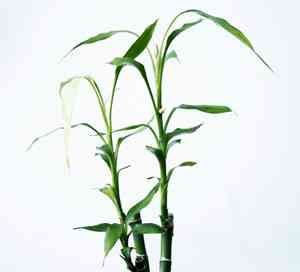
Dracaena braunii (Dracaena braunii)
Also known as: Lucky bamboo, Ribbon Dracaena, Belgian Evergreen, Ribbon Plant
Dracaena braunii refers to a flowering plant species belonging to the Asparagaceae family. The name was chosen in honor of Johannes M. Braun, a German collector from the period 1859–1893. It's important to note that many plants cultivated under the name Dracaena braunii are actually Dracaena sanderiana. The latter is distinguished by it's flowers that are five times longer than D. braunii’s, and by its less crowded leaf base compared to D. braunii.
In This Article
Attributes of Dracaena braunii
Lifespan
Dracaena braunii, also known as lucky bamboo, is a perennial plant.
Plant Height
1-3 feet
Spread
1-2 feet
Leaf Color
Green
Flower Size
Not typically flowered indoors.
Flower Color
Not typically flowered indoors.
Images of Dracaena braunii
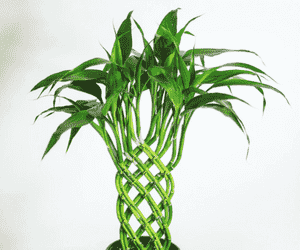
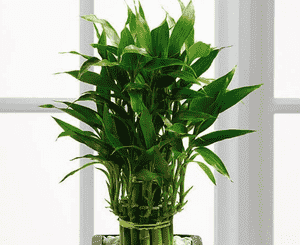
Quickly Identify Dracaena braunii
1
Look for long green stems growing small, lanceolate leaves at the top. It is often twisted or curled into shapes by growers.
Scientific Classification of Dracaena braunii
Phylum
Tracheophyta
Class
Monocotyledonae
Order
Asparagales
Family
Asparagaceae
Genus
Dracaena
Species
D. braunii
Planting and Growing of Dracaena braunii
Care Difficulty
Easy
Watering Schedule
Every 2 days
Sunlight Requirements
Partial sun
Sunshine Duration
6-10 hours
Ideal Temperature
65-80℉
Soil Type
Potting Mix, Peat Mix
Soil pH
6.5-7.5
Fertilizer Type
Balanced
Pruning Season
Spring, Summer
Pruning Area
Branches, Leaves
Pruning Frequency
2 times a year
Repotting Season
Spring
Pot Type
Plastic, Ceramic
 How to Water Dracaena braunii?
For Dracaena braunii, the watering amount should be sufficient to keep the soil moderately moist but not waterlogged. Using approximately 150 milliliters should suffice for a medium-sized pot. The key here is to ensure even moisture distribution without allowing the plant to sit in excess water.
What are the symptoms of an underwatered Dracaena braunii?
›
What should I do if my Dracaena braunii is not getting enough water?
›
What are the symptoms of an overwatered Dracaena braunii?
›
How to save an overwatered Dracaena braunii?
›
 What Are the Sunlight Requirements for Dracaena braunii?
Dracaena braunii ideally thrives in located with partial sun to full shade, ensuring balanced growth and vibrant leaves through controlled light exposure.
What is the ideal light condition for Dracaena braunii?
›
What are the best practices to ensure ideal light?
›
How to modify the environment for optimal light?
›
 What Is the Ideal Temperature Range for Dracaena braunii?
Dracaena braunii thrives best within a temperature range of 65 to 80°F. This range mimics the plant's native tropical and subtropical climate, ensuring optimal physiological processes such as photosynthesis and respiration. The consistency of this temperature range helps the plant maintain healthy growth and vibrant foliage.
 What Soil is Best for Dracaena braunii?
Dracaena braunii thrives in well-draining soil that prevents waterlogging, reducing the risk of root rot. Such conditions allow roots to breathe and absorb nutrients efficiently. While this plant needs soil that drains well, it also requires some moisture retention. Balanced moisture ensures the plant can sustain hydration without being overwhelmed by excess water. Soil enriched with organic matter supports robust growth in Dracaena braunii. Adequate nutrients support lush foliage and maintain plant health over time.
 How to Fertilize Dracaena braunii?
Dracaena braunii, commonly known as lucky bamboo, requires minimal fertilization, as excess nutrients can be detrimental. Use a balanced liquid fertilizer diluted to half strength; approximately 3-4 drops per liter of water is generally adequate. For solid, slow-release fertilizers, use quantities that equate roughly to 10 grams, spread evenly across the soil surface.
 How to Prune Dracaena braunii?
Start by identifying any yellow or brown leaves on your Dracaena braunii. These are the leaves that need to be removed to promote healthy growth. Use sterilized scissors or shears to cut them off at the base, ensuring you don't damage nearby healthy leaves. Check for any branches that have grown too long and disrupt the plant’s shape. Trim these back to maintain a tidy appearance. Make sure to cut just above a node to encourage new growth. This helps keep the plant looking lush and prevents it from becoming too leggy. After removing dead leaves and overgrown branches, focus on shaping the plant. Dracaena braunii can have a full, attractive shape when pruned evenly. Trim around the plant uniformly to maintain an aesthetically pleasing form.
 How to Propagate Dracaena braunii plant?
1
Choose a healthy, mature stem from the mother plant that is at least 4-6 inches long with several leaf nodes. Ensure the stem is disease-free to promote successful rooting.
2
Remove the bottom leaves of the cutting to expose the nodes. Dip the cut end into rooting hormone powder to encourage faster rooting before planting.
3
Insert the prepared cutting into a pot filled with well-draining potting mix. Firm the soil around the cutting to provide stability and water lightly to settle the soil.
 How to Repot Dracaena braunii plant?
1
Dracaena braunii shows signs for repotting when its roots start to outgrow the current pot and emerge through the drainage holes. The plant might also struggle with water retention or display stunted growth. These are the signals indicating it's time to give your plant a new home in a larger pot.
2
Select a pot that is one to two inches larger in diameter than the existing one. It should have sufficient drainage holes to ensure no waterlogging occurs. This allows for healthy growth, preventing root rot while giving the roots more space to spread.
3
Choose a well-draining potting mix, preferably formulated for houseplants. This should contain components like peat, perlite, and vermiculite which facilitate aeration and prevent water from pooling around the roots, promoting healthy root development.
Toxicity
Ingestion
WARNING
The judgment on toxicity and danger is for reference only. We DO NOT GUARANTEE any accuracy of such judgment. Therefore, you SHALL NOT rely on such judgment. It is IMPORTANT TO SEEK PROFESSIONAL ADVICE in advance when necessary.

