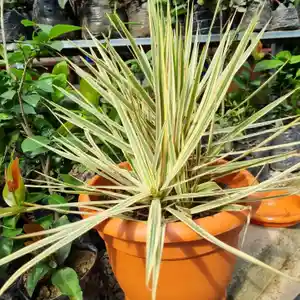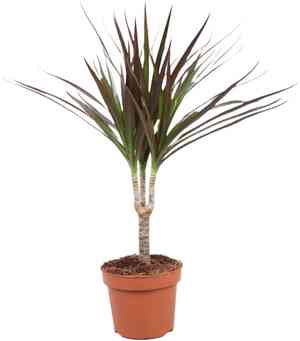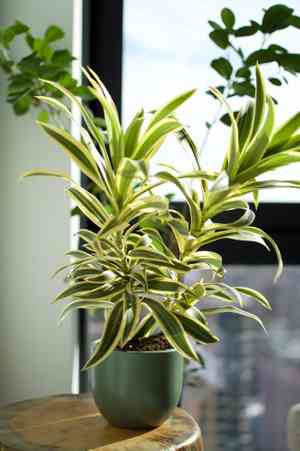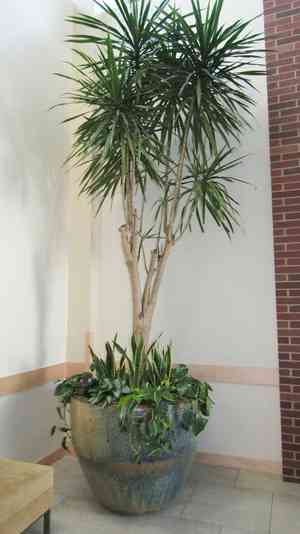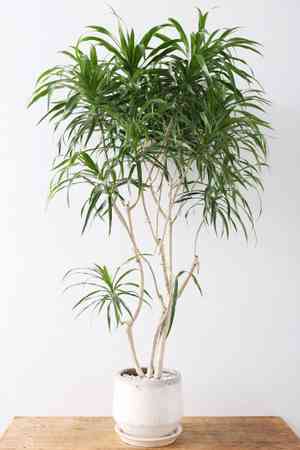
Rainbow tree(Dracaena angustifolia)

Rainbow tree (Dracaena angustifolia)

Also known as: Narrow-leaved Dracaena, Small-leaved Dragon Tree

The rainbow tree (Dracaena angustifolia) is native to Asia and is a member of the asparagus family that grows in the understories of tropical forests. Ornamentally, it can function both as an indoor and outdoor shrub. Substances from the rainbow tree can be used to create green dye.

Attributes of Rainbow tree

Lifespan
Perennial
Plant Type
Shrub
Plant Height
3 m
Spread
1.5 m
Leaf Color
Dark green
Flower Size
2 cm
Flower Color
Yellow Green

ForwardPlant - Identify plants with a snap

Identify and diagnose plants, get toxicity alerts, and explore safety guides for all types of fungi.

Try for Free

Images of Rainbow tree

Rainbow tree(Dracaena angustifolia)

Quickly Identify Rainbow tree

1
To identify Dracaena angustifolia, look for its narrow, elongated leaves that are typically dark green. The leaves are arranged in a spiral pattern around the stem.

Scientific Classification of Rainbow tree

Phylum
Vascular plants
Class
Monocotyledons
Order
Asparagales
Family
Asparagus
Genus
Dracaena
Species
Rainbow tree

Planting and Growing of Rainbow tree

Care Difficulty
Easy
Watering Schedule
Every 3 days
Sunlight Requirements
Partial sun
Sunshine Duration
6-8 hours
Ideal Temperature
65-75℉
Soil Type
Potting Mix, Peat Mix
Soil pH
6.5-7.5
Fertilizer Type
Balanced
Pruning Season
Spring, Summer
Pruning Area
Branches, Leaves
Pruning Frequency
2 times a year
Repotting Season
Spring
Pot Type
Ceramic, Plastic

water icon How to Water Rainbow tree?

Watering for Dracaena angustifolia should ensure that the soil is consistently moist but not waterlogged. Pour 200ml of water each time, allowing it to penetrate the soil evenly so the roots are adequately hydrated without drowning.
What are the symptoms of an underwatered Rainbow tree?
What should I do if my Rainbow tree is not getting enough water?
What are the symptoms of an overwatered Rainbow tree?
How to save an overwatered Rainbow tree?
More About Watering Techniques

sunlight icon What Are the Sunlight Requirements for Rainbow tree?

Sunlight Requirements: Partial sun, Full shade
Duration of light: 2 to 6 hours
Partial sunlight or full shade during most of the day is ideal. This light level supports lush foliage and helps the Dracaena maintain its strong and healthy form.
How much light does Dracaena need?
What solution ensures ideal lighting?
Why is ideal lighting important?
More About Sunlight Requirements Techniques

temperature icon What Is the Ideal Temperature Range for Rainbow tree?

Ideal Temperature: 65 ~ 75℉
The ideal temperature range for Dracaena angustifolia is essential for optimal growth and health. This range, from 65°F to 75°F, allows enzymes and proteins to function efficiently, promoting photosynthesis and cellular growth. In this range, the plant's respiration and transpiration processes balance well, preventing stress and aiding in nutrient absorption.

soil icon What Soil is Best for Rainbow tree?

Soil type: Loam, Sandy loam
Soil PH: 6.5 ~ 7.5
Dracaena angustifolia thrives in soil that provides excellent drainage. This ensures that water doesn't accumulate around the roots, preventing root rot and promoting overall plant health. A nutrient-rich soil is essential for the lush growth of Dracaena angustifolia. It supplies the necessary minerals and elements the plant needs to develop robust foliage and maintain vibrant colors. Incorporating organic matter into the soil benefits Dracaena by improving soil texture and enhancing its water retention capabilities, ensuring the plant has constant access to moisture. More About Soil

fertilize icon How to Fertilize Rainbow tree?

Fertilizer type: Balanced
For Dracaena angustifolia, it's essential to apply fertilizers at the right amount to maintain healthy growth. Typically, use a balanced liquid fertilizer diluted to half the recommended strength to avoid over-fertilization. For slow-release fertilizers, follow the manufacturer's recommendations but generally apply in small amounts, circling the root zone. More About Fertilizing Techniques

prune icon How to Prune Rainbow tree?

Pruning Time: Spring, Summer
Begin by examining your Dracaena angustifolia for any brown or yellowing leaves. These are signs of dead or dying leaves. Pruning these away allows the plant to direct its energy towards healthy growth, ensuring robust and vibrant foliage. When trimming your Dracaena, make cuts approximately half an inch above a leaf node or branch point. This encourages new growth to sprout from these nodes, helping to maintain a full and lush appearance. More About Pruning Techniques

propagate icon How to Propagate Rainbow tree plant?

Propagate Time: Spring, Summer
1
Water the parent plant thoroughly a day before taking cuttings, which ensures that it is well-hydrated and reduces stress during the cutting process.
2
Select a healthy stem and make a clean cut using sharp shears. Each cutting should be about 6 inches long to provide ample opportunity for rooting.
3
Dip the cut end in rooting hormone and plant it in a well-draining potting mix. Ensure the soil is moist, but not waterlogged after planting.
More About Propagating Techniques

repot icon How to Repot Rainbow tree plant?

Repotting frequency: Every 2-3 years
1
Dracaena angustifolia needs repotting when roots begin to emerge from the drainage holes or when growth noticeably slows despite proper care. Early spring is an ideal time as new growth begins, helping the plant quickly adjust to its new home.
2
Select a pot that's 1-2 inches larger in diameter than the current one. Ensure it has sufficient drainage holes to prevent waterlogging, which can lead to root rot. A pot that's too large can retain excess moisture, hindering the plant's growth.
3
Choose a well-draining potting mix rich in organic matter. A balanced mix facilitates good air circulation and prevents water accumulation, essential for healthy root development. Adding perlite or pumice further enhances drainage.

ForwardPlant - Identify plants with a snap

Find the best spots for them to optimize their health, simply using your phone.

Try for Free

Toxicity of Rainbow tree

Is Rainbow tree toxic to humans?

The rainbow tree exhibits a relatively low level of toxicity to humans, primarily resulting from ingestion. Each part of the plant contains saponins, which are the toxic compounds that contribute to its hazardous nature. If any sections of the rainbow tree are unintentionally consumed, the saponins may lead to a variety of symptoms. People might experience nausea, vomiting, and diarrhea, which are typical indicators of mild poisoning. Furthermore, there could be instances of abdominal discomfort or irritation occurring in the mouth and throat as a result of the plant's saponins. Therefore, it is crucial for individuals to exercise caution and prevent accidental consumption of any portion of the rainbow tree, as every part of this plant is deemed toxic.

Is Rainbow tree toxic to cat?

The rainbow tree presents a slight toxicity hazard to cats in the event of accidental consumption. Every part of this plant contains saponins, which may result in symptoms suggesting physical discomfort in felines. A cat that has ingested any portion of the rainbow tree may display a range of illness indicators, including, but not limited to, gastrointestinal distress. It is crucial to respond promptly by bringing the cat to a veterinary facility for necessary treatment and care.

Is Rainbow tree toxic to dog?

The rainbow tree is considered to have low to moderate toxicity for dogs. Pets might accidentally ingest various parts of this plant, which could result in poisoning. Every part of the rainbow tree, such as its leaves, stems, and roots, possesses toxic compounds that can be detrimental when consumed by canines. Signs of poisoning in dogs may manifest as vomiting, diarrhea, excessive drooling, weakness, and reduced appetite. Should a dog consume any portion of the rainbow tree, it is essential for pet owners to seek prompt veterinary assistance to safeguard the health and welfare of their furry friend.

Identify toxic plants for your safety

Learn which plants are harmful to you and your pets, and make informed choices for a safer home!

Try for Free
WARNING
The judgment on toxicity and danger is for reference only. We DO NOT GUARANTEE any accuracy of such judgment. Therefore, you SHALL NOT rely on such judgment. It is IMPORTANT TO SEEK PROFESSIONAL ADVICE in advance when necessary.
More About Toxic Techniques