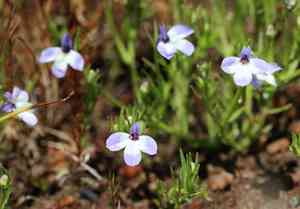
Sierra calicoflower (Downingia montana)
Also known as: Mountain Downingia
The Sierra calicoflower (Downingia montana) thrives in wet meadows and vernal pools, known for its striking blue-violet flowers with a yellow spot. This annual plant adapts to its temporary springtime habitats by completing its life cycle quickly, from germination to seed production, before the area dries out. The seeds lie dormant in the soil during dry periods, ensuring the plant's survival as the habitat transitions from wet to dry.
In This Article
Attributes of Sierra calicoflower
Lifespan
Annual
Plant Type
Herb
Plant Height
Up to 20 cm
Spread
N/A
Leaf Color
Green
Flower Size
2-3 cm
Flower Color
Blue with white and yellow
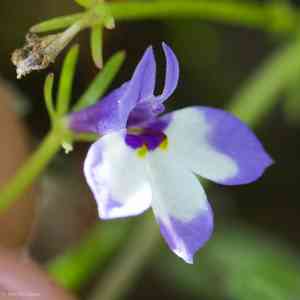
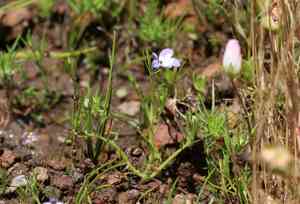
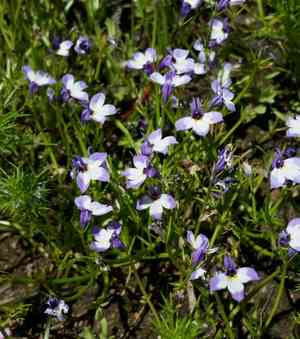
Images of Sierra calicoflower
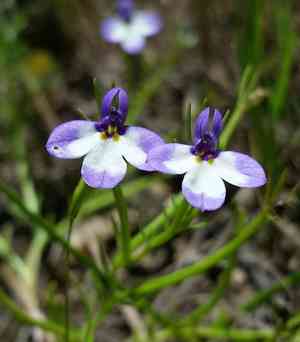
Quickly Identify Sierra calicoflower
1
Identifying Downingia montana involves looking for its unique two-lipped flowers with a combination of white and blue colors, and a distinctive yellow throat. The flowers are often found on short stems in wet areas, particularly in the spring and early summer.
Scientific Classification of Sierra calicoflower
Phylum
Vascular plants
Class
Dicotyledons
Order
Asterales
Family
Bellflower
Genus
Downingia
Species
Sierra calicoflower
Planting and Growing of Sierra calicoflower
Care Difficulty
Moderate
Watering Schedule
Every 3 days
Sunlight Requirements
Partial sun
Sunshine Duration
6-8 hours
Ideal Temperature
60-75℉
Soil Type
Potting Mix, Peat Mix
Soil pH
6.5-7.5
Fertilizer Type
Balanced
Pruning Season
Spring, Summer
Pruning Area
Branches, Leaves
Pruning Frequency
2 times a year
Repotting Season
Spring
Pot Type
Plastic, Terracotta
 How to Water Sierra calicoflower?
Downingia montana requires a careful balance of watering. You should aim for about 250 milliliters per session, ensuring the soil is moist but not waterlogged. Proper drainage is essential, as stagnant water can lead to root rot.
What are the symptoms of an underwatered Sierra calicoflower?
›
What should I do if my Sierra calicoflower is not getting enough water?
›
What are the symptoms of an overwatered Sierra calicoflower?
›
How to save an overwatered Sierra calicoflower?
›
 What Are the Sunlight Requirements for Sierra calicoflower?
Partial sun to full sun is ideal for Downingia montana, facilitating vibrant blooms and healthy foliage. Ensuring adequate light exposure maintains strength and enhances its natural beauty, optimally supporting its life functions.
How much sun does Downingia montana need?
›
What is the best time of day for sunlight?
›
What if natural light conditions are not ideal?
›
 What Is the Ideal Temperature Range for Sierra calicoflower?
The ideal temperature range for growing Downingia montana is between 60°F and 75°F. This range provides the optimal conditions necessary for photosynthesis and cellular respiration, ensuring healthy growth and vibrant blooms.
 What Soil is Best for Sierra calicoflower?
Downingia montana thrives best in well-drained soil, which prevents waterlogging and root rot. This allows for healthy root growth, enhancing nutrient absorption and plant stability. The plant benefits from soil that is rich in organic materials, providing essential nutrients for vibrant blooms and robust growth. Incorporating compost can dramatically improve soil fertility. While Downingia montana prefers not to sit in waterlogged conditions, it does appreciate consistently moist soil. Maintaining moderate moisture levels throughout its growth cycle ensures optimal plant health.
 How to Fertilize Sierra calicoflower?
For Downingia montana, use a balanced liquid fertilizer with a quarter of the recommended dose per application, as they are quite sensitive to nutrient levels. This keeps their delicate root systems from being overwhelmed while ensuring sufficient nourishment. A teaspoon of a general-purpose liquid fertilizer diluted in a gallon of water should suffice, ensuring the vital nutrients are well distributed.
 How to Prune Sierra calicoflower?
Always ensure your tools are sterile to prevent any infections from spreading. When pruning, leave enough foliage to fuel photosynthesis but thin out enough to foster light and air penetration to inner parts of the plant.
More About Pruning Techniques→
 How to Propagate Sierra calicoflower plant?
1
Fill the seed trays with potting soil and gently tamp it down to create a firm surface. Ensure the soil is moist but not waterlogged before sowing the seeds.
2
Scatter the Downingia montana seeds evenly across the prepared soil surface. Cover them lightly with a thin layer of fine soil or sand, as they require light for germination.
3
Place the seed trays in a location with indirect sunlight and maintain a consistent temperature to encourage germination. Regularly mist the soil surface to keep it consistently moist.
 How to Repot Sierra calicoflower plant?
1
Downingia montana needs repotting when you notice roots circling the pot or emerging through drainage holes. If the soil retains excess moisture or the plant appears too cramped, it's time to consider repotting. Avoid disturbing the plant too frequently, as it can stress the plant.
2
Select a pot slightly larger than the current one, with good drainage holes. A pot too large can retain excess water, potentially harming the plant. Conversely, a pot that's too small can restrict root growth and nutrient uptake, hindering the plant's development.
3
Opt for well-draining acidic soil, which provides the necessary aeration and drainage. Such soil prevents waterlogging, reducing the risk of root rot. A mixture of peat, perlite, and a bit of sandy soil works well to facilitate the flow of water and air around the roots.



