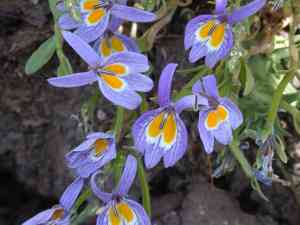
Bach's calicoflower (Downingia bacigalupii)
Also known as: Bacigalupi's Downingia, Dwarf Downingia
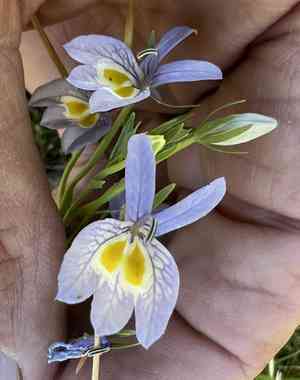
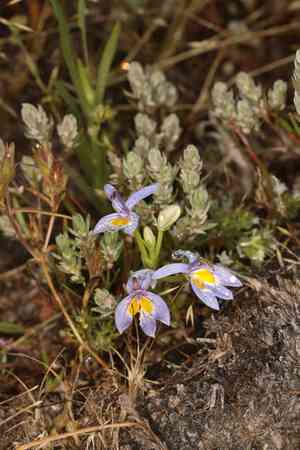
Bach's calicoflower (Downingia bacigalupii) is a charming wildflower recognized for its vibrant blue and white petals with distinctive yellow markings. The flowers exhibit a unique bilaterally symmetrical structure, making them easily distinguishable. This plant is predominantly found in vernal pools and moist meadows, areas that are temporarily flooded in the spring. It has adapted to quickly bloom during this short period of water availability in its native California habitats, which are characterized by wet winters and dry summers.
In This Article
Attributes of Bach's calicoflower
Lifespan
Annual
Plant Type
Herb
Plant Height
5-15 cm
Spread
Not applicable
Leaf Color
Green
Flower Size
1-2 cm
Flower Color
Blue to purple with a white to yellow center
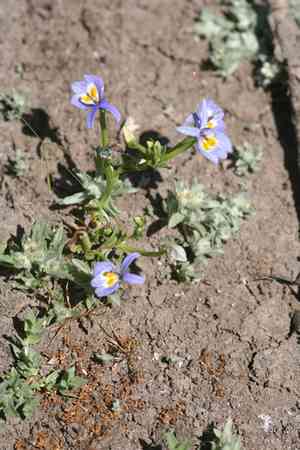
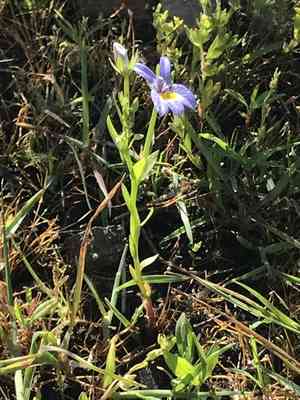
Images of Bach's calicoflower
Quickly Identify Bach's calicoflower
1
Downingia bacigalupii can be identified by its small size and distinctive bright blue to purple flowers with a white to yellow center. The lower lip of the corolla is typically three-lobed.
Scientific Classification of Bach's calicoflower
Phylum
Vascular plants
Class
Dicotyledons
Order
Asterales
Family
Bellflower
Genus
Downingia
Species
Bach's calicoflower
Planting and Growing of Bach's calicoflower
Care Difficulty
Hard
Watering Schedule
Every 3 days
Sunlight Requirements
Full sun
Sunshine Duration
6-10 hours
Ideal Temperature
60-75℉
Soil Type
Potting Mix, Peat Mix
Soil pH
6.5-7.5
Fertilizer Type
Balanced
Pruning Season
Spring, Summer
Pruning Area
Branches, Leaves
Pruning Frequency
2 times a year
Repotting Season
Spring
Pot Type
Plastic, Ceramic
 How to Water Bach's calicoflower?
For Downingia bacigalupii, the watering quantity should be such that the soil remains consistently moist but not soggy. Aim for around 100 milliliters per watering session to achieve this. Ideally, water should be added slowly until it begins to seep through the bottom of the pot, ensuring thorough moisture penetration without waterlogging the roots.
What are the symptoms of an underwatered Bach's calicoflower?
›
What should I do if my Bach's calicoflower is not getting enough water?
›
What are the symptoms of an overwatered Bach's calicoflower?
›
How to save an overwatered Bach's calicoflower?
›
 What Are the Sunlight Requirements for Bach's calicoflower?
For optimal growth, Downingia bacigalupii benefits from full to partial sun exposure; this includes at least six hours of sunlight. Ideal light conditions support its vibrant blooms and vigorous plant health.
What is the ideal lighting for Downingia bacigalupii?
›
What are some solutions to ensure the ideal lighting?
›
What are the benefits of achieving the ideal lighting conditions?
›
 What Is the Ideal Temperature Range for Bach's calicoflower?
For optimal growth, Downingia bacigalupii thrives in environments with temperatures ranging from 60°F to 75°F. This range helps ensure the plant maintains optimal metabolic rates and reduces physiological stress. Keeping within this ideal temperature prevents wilting and promotes vigorous blooming during its flowering phase.
 What Soil is Best for Bach's calicoflower?
Downingia bacigalupii thrives in well-drained soil to avoid waterlogging, which can lead to root rot. Ensuring good drainage helps maintain healthy roots and vibrant plant growth. A nutrient-rich soil provides essential minerals for Downingia bacigalupii, supporting its delicate blooms and lush foliage. Fertile soil is the backbone of robust growth and vivid coloration. While Downingia bacigalupii needs good drainage, the soil should also retain enough moisture to keep the roots hydrated, especially during warm periods. Consistent moisture supports steady growth and bloom production.
 How to Fertilize Bach's calicoflower?
For Downingia bacigalupii, a moderate amount of fertilizer is recommended since it thrives in nutrient-poor environments. Use a diluted solution at half the recommended strength for liquid fertilizers. Solid fertilizers should be used sparingly; a teaspoon of granules per 12-inch pot is usually sufficient.
 How to Prune Bach's calicoflower?
Always prune Downingia bacigalupii during its active growing seasons, primarily in spring and early summer. This timing promotes quick healing and robust regrowth. Be cautious not to remove more than one-third of the plant at a time. Over-pruning can stress the plant and inhibit its ability to recover and thrive. After pruning, monitor the plant for fresh shoots and be sure to adjust your care regimen to support healthy new growth, including adequate watering and nutrition.
More About Pruning Techniques→
 How to Propagate Bach's calicoflower plant?
1
Prepare Downingia bacigalupii seeds by soaking them in water overnight. This helps to soften the seed coat, enhancing germination rates by making it easier for the seeds to absorb water and initiate growth.
2
Sow the prepared seeds evenly over a moist seed tray filled with a fine potting mix. Cover the seeds lightly with a thin layer of the potting mix or vermiculite to protect them and retain moisture.
3
Place the seed tray in a location with bright, indirect light and maintain a temperature of around 15-20°C (59-68°F). Keep the soil consistently moist but not waterlogged to encourage successful germination.
 How to Repot Bach's calicoflower plant?
1
Downingia bacigalupii should be repotted when you notice that the roots are filling the container, or the plant seems stunted in growth. Another clear signal is when you observe the emergence of roots from the drainage holes. Spring and autumn are the best seasons to do this, as these times provide optimal conditions for plant recovery and growth.
2
Select a pot that is at least 2 inches larger in diameter than the current one. Ensure it has adequate drainage holes to prevent water logging, which is crucial for sustaining Downingia bacigalupii due to its preference for well-draining environments. A pot made of porous material like clay can also help improve air circulation, keeping the roots healthy.
3
Opt for a soil mix that is loamy and well-draining to facilitate root aeration and prevent water stagnation, which could lead to root rot. Adding components like perlite or sand can enhance drainage. This type of soil also tends to retain enough moisture, providing a balanced environment for Downingia bacigalupii's growth.
Learn More About Bach's calicoflower Diseases
Anthracnose
Bacterial Leaf Spot
Bacterial Soft Rot
Bacterial Wilt
Black Spot
Chemical Injury
Crown Gall
Cyst Nematode
Damping-off
Downy Mildew
Drought Stress
Fusarium Wilt
Gray Mold
Leaf Curl
Leaf Spot
Mosaic
Nutrient Deficiency
Nutrient Toxicity
Powdery Mildew
Root Rot
Root-knot Nematode
Rusts
Sooty Mold
Spider Mites
Temperature Stress
Thrips Damage
White Mold



