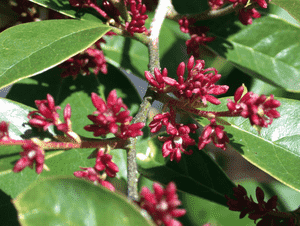
Isu tree (Distylium racemosum)
Also known as: Isu tree, Isunoki
The isu tree (Distylium racemosum) is an evergreen tree native to the Far East. It grows slowly and is known for its clusters of red stamens that appear in spring, as the flowers lack petals. The tree's dense, dark wood is highly prized for carving and crafting musical instruments. Additionally, the ash from this tree can be utilized in porcelain glazing.
In This Article
Attributes of Isu tree
Lifespan
Perennial
Plant Type
Tree, Shrub
Plant Height
3 m to 4.5 m
Spread
3 m
Leaf Color
Green
Flower Size
2.5 cm to 8 cm
Flower Color
Red Purple
Images of Isu tree
Quickly Identify Isu tree
1
Leaves: Glossy dark green, 2-4 inches (5-10 cm) long, with cuneate base and 5-6 prominent veins.
2
Flowers: Petalless with red calyces and purple stamens in racemes, 1-2 inches (2.5-5 cm) long.
3
Fruit: Woody two-beaked capsule covered in brown, star-shaped hairs enclosing oval seeds.
4
Stem: Rigid, dark brown, hairless branches with young branches covered in star-shaped hairs.
5
Trunk & Bark: Robust, medium brown bark with raised ridges and vertical fissures, contrasting with foliage.
Scientific Classification of Isu tree
Phylum
Vascular plants
Class
Dicotyledons
Order
Saxifrages, stonecrops and allies
Family
Witch-hazel
Genus
Winter-hazel
Species
Isu tree
Planting and Growing of Isu tree
Care Difficulty
Easy
Watering Schedule
Every 3 days
Sunlight Requirements
Partial sun
Sunshine Duration
6-10 hours
Ideal Temperature
60-77℉
Soil Type
Potting Mix, Peat Mix
Soil pH
6.5-7.5
Fertilizer Type
Balanced
Pruning Season
Spring, Summer
Pruning Area
Branches, Leaves
Pruning Frequency
2 times a year
Repotting Season
Spring
Pot Type
Plastic, Ceramic
 How to Water Isu tree?
For Distylium racemosum, a good watering session means applying around 500 ml of water each time, ensuring that the soil is thoroughly moist but not waterlogged. The key is to let the water soak in, reaching down to the roots, while preventing excess water from pooling at the base.
What are the symptoms of an underwatered Isu tree?
›
What should I do if my Isu tree is not getting enough water?
›
What are the symptoms of an overwatered Isu tree?
›
How to save an overwatered Isu tree?
›
 What Are the Sunlight Requirements for Isu tree?
Partial sun to full shade provides the best light range for Distylium racemosum. This range ensures a balanced environment, allowing the plant to develop well and maintain a healthy appearance. Optimal light supports photosynthesis, color vibrancy, and resistance to environmental stressors.
More About Sunlight Requirements Techniques→
Preferred Duration of Sunlight
›
Shading Solutions for Optimal Growth
›
Benefits of Ideal Lighting
›
 What Is the Ideal Temperature Range for Isu tree?
The optimal temperature range for the growth of Distylium racemosum is between 60°F and 77°F. Within this range, the plant can perform its physiological functions effectively, including photosynthesis and nutrient absorption. This ideal range supports robust growth and healthy foliage.
 What Soil is Best for Isu tree?
Distylium racemosum thrives in well-drained soil, which helps prevent root rot by ensuring excess water doesn’t accumulate around the roots. This condition allows the plant to absorb nutrients efficiently and supports healthy growth. Incorporating rich organic matter into the soil enhances the nutrient availability for Distylium racemosum. This not only boosts plant health and resilience but also encourages strong and vibrant growth. While well-draining, the soil should retain adequate moisture to keep the plant hydrated, especially during dry spells. This balance is crucial for preventing stress and promoting vigorous foliage development.
 How to Fertilize Isu tree?
Distylium racemosum benefits from a balanced application of fertilizer to ensure lush growth and robust health. Liquid fertilizer should be diluted to half the recommended strength to avoid nutrient burn. Apply around 1-2 liters of diluted liquid fertilizer per plant monthly, ensuring even distribution across the root zone.
 How to Prune Isu tree?
When shaping Distylium racemosum, aim to trim branches just above a leaf node, as this encourages new growth to develop in a desirable direction. Ensure to maintain its natural elegant form while controlling outer dimensions. Over-pruning can stress the plant and affect its ability to photosynthesize efficiently. Limit cutting back to one-third of the plant at a time, allowing the plant to recover and sustain growth.
More About Pruning Techniques→
 How to Propagate Isu tree plant?
1
Seeds should be collected from mature plants during the late summer. Ensure the seeds are fully developed and dry before storage or planting.
2
Choose healthy branches and cut a length of about 4-6 inches. Remove lower leaves to prevent rot when inserted into the growing medium.
3
Use a well-draining soil mix. Sterilize the soil to prevent fungal infections that can affect young plants during propagation.
 How to Repot Isu tree plant?
1
Your Distylium racemosum signals the need for repotting when it becomes root-bound, meaning roots are circling the pot's perimeter. Another sign is sluggish growth or yellowing leaves, which could indicate nutrient deficiency due to soil compaction. Ideally, repot during spring or autumn when the plant's growth is active but not overly stressed by high temperatures.
2
Select a pot that's about 2 inches larger in diameter than the current one and has good drainage holes. This ensures ample room for root expansion without overwhelming the plant with excessive soil, which could lead to moisture retention and root rot problems. A pot with good drainage prevents waterlogging, promoting healthy root development.
3
Use a well-draining, loamy soil mix that maintains moisture without becoming waterlogged. A mix of peat moss, compost, and perlite is ideal as it provides essential nutrients while ensuring aeration. The right soil prevents compaction, allowing roots to breathe and absorb water effectively, reducing the risk of root diseases.



