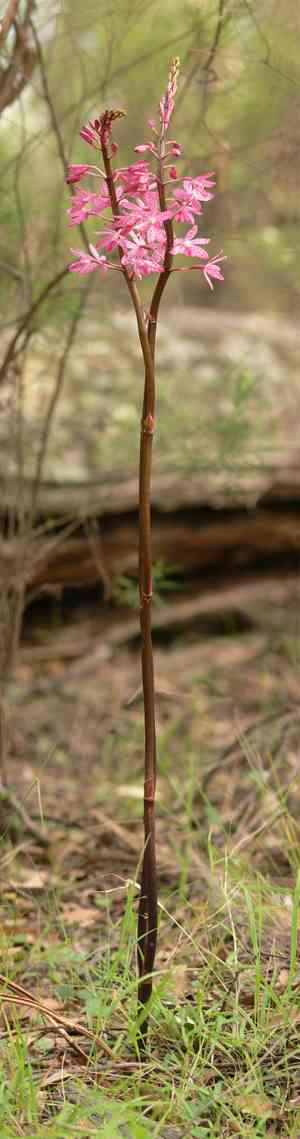
Hyacinth-orchid (Dipodium) (Dipodium)
Also known as: Tree Spider Orchid, Spotted Hyacinth Orchid
Orchids in the genus Hyacinth-orchid, specifically *Dipodium*, are perennial and typically terrestrial herbs. These orchids are often leafless during their blooming phase, showcasing tall spikes adorned with vibrant, spotted flowers in shades of pink or purple. The flowers are arranged in clusters, or racemes, which can vary significantly in number. Each flower spike can bear a few to many flowers. The genus comprises around forty species found in tropical, subtropical, and temperate regions. These orchids produce capsules containing numerous seeds, ranging from 30 to 500 per capsule.
In This Article
Attributes of Hyacinth-orchid (Dipodium)
Lifespan
Perennial
Plant Height
20-70 cm
Spread
Not applicable, leafless stems
Leaf Color
N/A
Flower Size
2-3 cm
Flower Color
Pink, white, spotted
Images of Hyacinth-orchid (Dipodium)
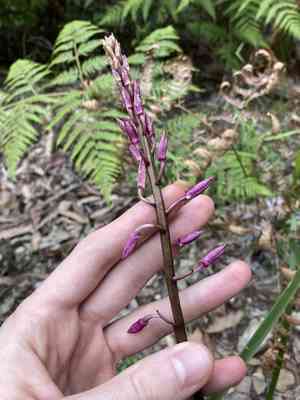

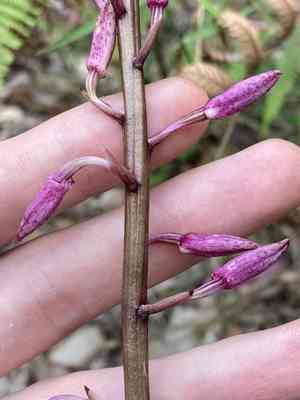
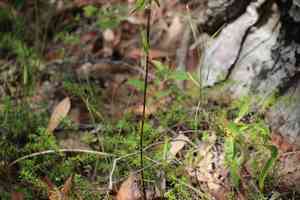
Quickly Identify Hyacinth-orchid (Dipodium)
1
To identify Dipodium, look for its unique features including speckled flowers, leafless green stems, and a preference for shaded woodland environments.
Scientific Classification of Hyacinth-orchid (Dipodium)
Phylum
Angiosperms (Magnoliophyta)
Class
Monocots (Liliopsida)
Order
Asparagales
Family
Orchidaceae
Genus
Dipodium
Planting and Growing of Hyacinth-orchid (Dipodium)
Care Difficulty
Hard
Watering Schedule
Every 2 days
Sunlight Requirements
Partial sun
Sunshine Duration
4-8 hours
Ideal Temperature
65-75℉
Soil Type
Potting Mix, Peat Mix
Soil pH
5.5-7.5
Fertilizer Type
Balanced
Pruning Season
Spring, Summer
Pruning Area
Branches, Leaves
Pruning Frequency
2 times a year
Repotting Season
Spring
Pot Type
Plastic, Ceramic
 How to Water Hyacinth-orchid (Dipodium)?
Dipodium, being an orchid, prefers humid conditions without being waterlogged. Water thoroughly until the potting mix is evenly moist but not soaking. Ensure that excess water drains well to prevent root rot.
What are the symptoms of an underwatered Hyacinth-orchid (Dipodium)?
›
What should I do if my Hyacinth-orchid (Dipodium) is not getting enough water?
›
What are the symptoms of an overwatered Hyacinth-orchid (Dipodium)?
›
How to save an overwatered Hyacinth-orchid (Dipodium)?
›
 What Are the Sunlight Requirements for Hyacinth-orchid (Dipodium)?
Dipodium prefers partial sun to full shade, which mimics understory forest conditions. Ideal lighting promotes vigorous growth, lush foliage, and enhances the likelihood of profuse flowering.
What is the best way to achieve ideal lighting?
›
What specific actions can be taken?
›
What are the benefits of achieving ideal lighting?
›
 What Is the Ideal Temperature Range for Hyacinth-orchid (Dipodium)?
The ideal temperature range for growing Dipodium is between 65°F and 75°F. Maintaining this range will help optimize the plant's growth, as it mimics their natural habitat, which involves consistent warmth and high humidity. This range helps ensure proper photosynthesis and nutrient uptake, contributing to the plant's health and vitality.
 What Soil is Best for Hyacinth-orchid (Dipodium)?
Dipodium thrives in well-drained soil which prevents root rot and provides optimal aeration, crucial for the plant's survival. Ensuring the soil drains well enhances root health and supports the orchid's growth. This orchid benefits from a nutrient-rich growing medium. Adding organic matter like compost can provide essential nutrients, encouraging vigorous growth and flowering. While drainage is important, Dipodium also favors soil with some moisture retention to keep roots hydrated. Using a sandy loam mix helps balance drainage and moisture, crucial for maintaining its health.
 How to Fertilize Hyacinth-orchid (Dipodium)?
For Dipodium orchids, the fertilizer should be applied lightly. A balanced 20-20-20 fertilizer diluted to a quarter of the recommended strength is optimal. Avoid heavy applications to prevent nutrient burn, especially near the roots.
 How to Prune Hyacinth-orchid (Dipodium)?
Before you start with the pruning, it's essential to familiarize yourself with the plant's structure. Dipodium orchids have a unique growth pattern, thriving on symbiotic relationships rather than roots like typical plants. Identify the flowering stems and leaves. Use sterilized sharp pruning shears to avoid transmitting diseases. Focus on removing dead or damaged stems and leaves. Cut at a 45-degree angle to prevent water accumulation on the cuts, which could lead to rot.
 How to Propagate Hyacinth-orchid (Dipodium) plant?
1
Collect mature Dipodium seeds from the plant's pods when they start to dry out. Ensure the seeds are fully matured before collecting as immature seeds may not germinate effectively.
2
Soak the seeds in warm water overnight to help break dormancy and soften the seed coat, encouraging faster germination. This step is crucial as it enhances water uptake by the seed.
3
Sow the seeds on the surface of the growing medium, pressing them in gently. Do not cover them as they need light to germinate. Maintain a consistent temperature around 70°F (21°C) to promote germination.
 How to Repot Hyacinth-orchid (Dipodium) plant?
1
You'll know it's time to repot your Dipodium when you notice the roots pushing out of the pot or the potting mix has degraded, reducing aeration. Typically, this happens after several growing seasons. Spring and summer are ideal for repotting, as the plant is in its active growth phase, recovering more swiftly from the stress of being repotted.
2
Select a pot that offers good drainage, ideally with several holes in the bottom. A material like terracotta can be beneficial as it allows excess moisture to evaporate, protecting delicate orchid roots from rot. Ensure the pot's size supports the plant's root system with room to grow, but not excessively, to prevent waterlogging.
3
Opt for a well-draining orchid mix composed of bark, perlite, and charcoal. This blend provides stability, proper aeration, and moisture retention, crucial for healthy root development. An efficient mix mirrors the plant's natural habitat, ensuring your Dipodium thrives in its new home.
Learn More About Hyacinth-orchid (Dipodium) Diseases
Anthracnose
Bacterial Leaf Spot
Bacterial Soft Rot
Crown Gall
Cyst Nematode
Damping-off
Downy Mildew
Drought Stress
Fusarium Wilt
Gray Mold
Leaf Spot
Mosaic
Nutrient Deficiency
Nutrient Toxicity
Powdery Mildew
Root Rot
Root-knot Nematode
Rusts
Sooty Mold
Spider Mites
Temperature Stress
Thrips Damage
White Mold

