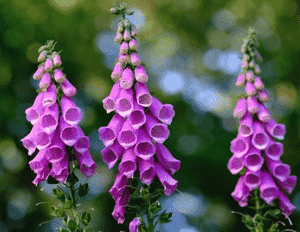
Spanish peaks foxglove (Digitalis thapsi)
Also known as: Spanish digitalis
Spanish peaks foxglove stands out for its luscious-looking, raspberry pink flowers that droop in the shape of bells. This is a reliable early summer perennial bloomer that has been noted as a popular choice for gardens since 1999, when it won an award from the Plant Select Organization. It also does well in gardens because it attracts hummingbirds but is not appealing to deer.
In This Article
Attributes of Spanish peaks foxglove
Lifespan
Perennial
Plant Type
Herb
Plant Height
1.2 m
Spread
50 cm
Leaf Color
Green
Flower Size
2-5 cm
Flower Color
Purple
Images of Spanish peaks foxglove
Quickly Identify Spanish peaks foxglove
1
Digitalis thapsi can be identified by its tall spikes of tubular, bell-shaped flowers that are pink to purple. The leaves are green, lance-shaped, and slightly fuzzy. During blooming season, these characteristics make the plant stand out in gardens and wild habitats.
Scientific Classification of Spanish peaks foxglove
Phylum
Vascular plants
Class
Dicotyledons
Order
Lamiales
Family
Plantain
Genus
Foxgloves
Species
Spanish peaks foxglove
Planting and Growing of Spanish peaks foxglove
Care Difficulty
Easy
Watering Schedule
Every 2 days
Sunlight Requirements
Partial sun
Sunshine Duration
4-8 hours
Ideal Temperature
60-70℉
Soil Type
Potting Mix, Peat Mix
Soil pH
6.5-7.5
Fertilizer Type
Balanced
Pruning Season
Spring, Summer
Pruning Area
Branches, Leaves
Pruning Frequency
2 times a year
Repotting Season
Spring
Pot Type
Plastic, Ceramic
 How to Water Spanish peaks foxglove?
For Digitalis thapsi, ensure that the soil is hydrated without becoming waterlogged. A thorough soak of 250 ml per session lets the roots absorb the necessary moisture while preventing standing water, which could harm the plant.
What are the symptoms of an underwatered Spanish peaks foxglove?
›
What should I do if my Spanish peaks foxglove is not getting enough water?
›
What are the symptoms of an overwatered Spanish peaks foxglove?
›
How to save an overwatered Spanish peaks foxglove?
›
 What Are the Sunlight Requirements for Spanish peaks foxglove?
Digitalis thapsi thrives in partial to full sun; this sunlight range supports lush foliage and abundant flowering while allowing the plant to produce vibrant blossoms and maintain strong growth without stress symptoms.
Optimal Lighting Needs
›
Achieving Ideal Light
›
Benefits of Ideal Lighting
›
 What Is the Ideal Temperature Range for Spanish peaks foxglove?
To ensure optimal growth and blooming, Digitalis thapsi should be kept in an environment where temperatures consistently range between 60°F and 70°F. Within this range, the plant can effectively carry out photosynthesis and develop healthy foliage and flowers. These temperatures mimic the conditions of its native habitat, providing a balanced climate for root and stem growth.
 What Soil is Best for Spanish peaks foxglove?
Digitalis thapsi thrives in well-drained soils which prevent waterlogging. Good drainage is crucial for root health and prevents root rot, ensuring robust plant growth and vibrant blooms. This plant benefits from nutrient-rich soil, which provides the essential minerals and nutrients required for optimal growth. Enriched soil supports lush foliage and enhances the plant's overall vigor. The ideal soil should retain moisture without becoming waterlogged. Sandy loam aids in retaining necessary moisture levels, reducing the need for frequent watering while still providing a suitable environment for root health.
 How to Fertilize Spanish peaks foxglove?
For Digitalis thapsi, it is essential to apply a balanced amount of fertilizer to ensure healthy growth. Liquid fertilizers should be used sparingly, about 10 ml per plant mixed with water once every two weeks. For solid slow-release fertilizers, a small handful, approximately 50 grams, should be spread around the base of each plant three times a year.
 How to Prune Spanish peaks foxglove?
Look for wilted or spent flowers and snip them off just above the first set of healthy leaves to encourage more blooms and maintain a tidy appearance. While Digitalis thapsi doesn't require heavy pruning, you can gently shape the plant by removing overcrowded or crossing stems. Cut these stems at their base or where they meet healthy growth.
More About Pruning Techniques→
 How to Propagate Spanish peaks foxglove plant?
1
Use a well-draining, sterile seed starting mix. This ensures that seedlings have the best possible start without the threat of soil-borne diseases. Mix thoroughly with water until slightly moist.
2
Evenly scatter Digitalis thapsi seeds on the surface of the soil mix. Lightly cover them with a thin layer of soil as they require some light for germination. Ensure consistent moisture by misting gently.
3
Select healthy stems with no flowers and cut a 4-6 inch section. Remove leaves from the lower half and dip the cut end in rooting hormone before planting in a mix of perlite and peat.
 How to Repot Spanish peaks foxglove plant?
1
Repot Digitalis thapsi when you notice roots circling the pot, indicating root-bound conditions. Another signal is reduced flowering or overall poor plant growth. Choose a bright day in spring or autumn for the process, ensuring mild temperatures to reduce stress.
2
Select a pot that is 1-2 inches wider in diameter than the current one, with drainage holes to prevent waterlogging. Ideally, choose terracotta as it allows better air exchange and prevents root rot, promoting healthy root development.
3
Opt for a well-draining, rich soil mix combining equal parts of coarse sand, peat, and loamy garden soil. This blend ensures adequate drainage while providing the necessary nutrients for vibrant growth and robust flowering.
Toxicity
ingestion
WARNING
The judgment on toxicity and danger is for reference only. We DO NOT GUARANTEE any accuracy of such judgment. Therefore, you SHALL NOT rely on such judgment. It is IMPORTANT TO SEEK PROFESSIONAL ADVICE in advance when necessary.
Learn More About Spanish peaks foxglove Diseases
Anthracnose
Bacterial Leaf Spot
Bacterial Soft Rot
Bacterial Wilt
Crown Gall
Cyst Nematode
Damping-off
Downy Mildew
Drought Stress
Fusarium Wilt
Gray Mold
Leaf Spot
Mosaic
Nutrient Deficiency
Nutrient Toxicity
Powdery Mildew
Root Rot
Root-knot Nematode
Rusts
Sooty Mold
Spider Mites
Temperature Stress
Thrips Damage
White Mold



