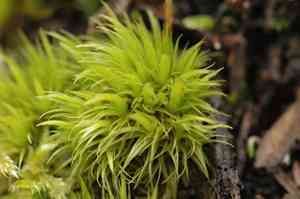
Broom forkmoss (Dicranum scoparium)
Also known as: Windswept broom moss
Haircap moss, scientifically known as Polytrichum commune, is a durable, coarse moss native to North America. It usually forms dense clumps and can be found thriving in forested regions with dry to moist soil conditions.
In This Article
Attributes of Broom forkmoss
Lifespan
Perennial
Plant Type
Moss
Plant Height
2 cm to 8 cm
Spread
8 cm to 10 cm
Leaf Color
Green
Flower Size
N/A
Flower Color
N/A
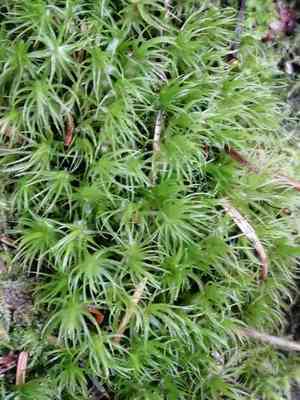
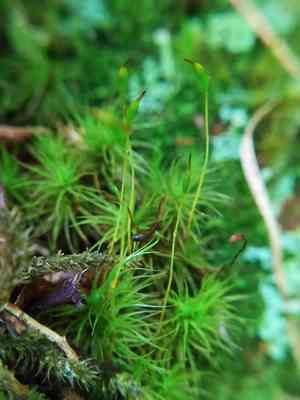
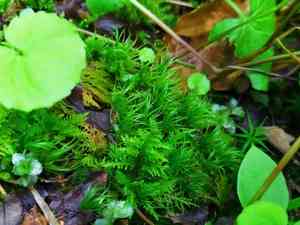
Images of Broom forkmoss
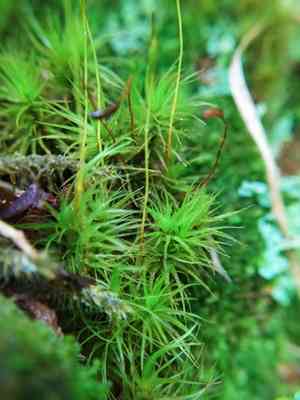
Quickly Identify Broom forkmoss
1
This moss can be identified by its bright green to yellow-green color, densely packed stems, and leaves that are curved or sickle-shaped. It has a unique broom-like appearance when dry.
Scientific Classification of Broom forkmoss
Phylum
Mosses
Class
True mosses
Order
Dicranales
Family
Dicranaceae
Genus
Dicranum
Species
Broom forkmoss
Planting and Growing of Broom forkmoss
Care Difficulty
Easy
Watering Schedule
Every 2 days
Sunlight Requirements
Partial sun
Sunshine Duration
4-8 hours
Ideal Temperature
60-75℉
Soil Type
Potting Mix, Peat Mix
Soil pH
4-6
Fertilizer Type
Balanced
Pruning Season
Spring, Summer
Pruning Area
Branches, Leaves
Pruning Frequency
2 times a year
Repotting Season
Spring
Pot Type
Plastic, Ceramic
 How to Water Broom forkmoss?
Dicranum scoparium, commonly known as broom moss, requires modest watering to maintain its lushness. It's crucial to water until the substrate is evenly moist but not soggy, allowing any excess to drain away. The soil should retain some moisture but not remain over-saturated, mimicking its natural environment of slightly damp forest floors.
What are the symptoms of an underwatered Broom forkmoss?
›
What should I do if my Broom forkmoss is not getting enough water?
›
What are the symptoms of an overwatered Broom forkmoss?
›
How to save an overwatered Broom forkmoss?
›
 What Are the Sunlight Requirements for Broom forkmoss?
Plants like Dicranum scoparium benefit from partial sun to full shade conditions. This ensures balanced photosynthesis without stress. Sticking to this range promotes robust growth, deep green coloration, and diminishes the threat of leaf burn or dehydration.
What light conditions does Dicranum scoparium thrive in?
›
How can you simulate ideal lighting for Dicranum scoparium indoors?
›
What benefits does ideal lighting provide for Dicranum scoparium?
›
 What Is the Ideal Temperature Range for Broom forkmoss?
Dicranum scoparium, commonly known as the broom moss, thrives best in environments where the temperature is consistently between 60°F and 75°F. This range provides optimal conditions for growth and sustenance, allowing the plant to photosynthesize efficiently and maintain its lush appearance. Keeping the temperature within this ideal range ensures the moss remains healthy and vibrant.
 What Soil is Best for Broom forkmoss?
Dicranum scoparium thrives in soil that retains moisture well but ensures proper drainage. Moist soils prevent the plant from drying out while avoiding root rot, providing a stable environment for growth. This plant prefers soils rich in organic matter, which enhances nutrient availability. A nutrient-rich substrate supports healthy growth and produces vibrant, lush foliage. An acidic soil environment is essential for Dicranum scoparium, as it mimics its natural habitat, promoting optimal health and growth. It enhances nutrient absorption and supports overall physiological functions.
 How to Fertilize Broom forkmoss?
Dicranum scoparium, commonly known as broom moss, generally requires minimal fertilization. When applying liquid fertilizer, a diluted solution at one-quarter strength is ideal to prevent nutrient overload. This ensures the plant receives essential nutrients without risking harm to its delicate structure.
 How to Prune Broom forkmoss?
Begin by gathering a small pair of scissors or pruning shears. Ensure they are sharp and clean to prevent damage and the spread of any potential pathogens. Wear gloves to protect your hands from the moisture and to get a better grip on the moss. Closely inspect your Dicranum scoparium for any patches that look overly dense or uneven. These are usually spots where the moss has grown too thick, inhibiting airflow and sunlight penetration. Carefully prune the identified overgrown areas by snipping away excess growth. Aim to maintain a uniform height across the moss, but be sure to leave enough foliage for healthy regrowth. Trim back until the moss appears even and any overly dense patches are thinned out. After pruning, gently mist the moss with water to help it recover from the trimming process. Ensure the moss has adequate indirect light and airflow to prevent any molding or rot due to high moisture concentration.
 How to Propagate Broom forkmoss plant?
1
Start by gathering a healthy clump of Dicranum scoparium. It's essential to ensure the moss is vibrant and moist. Rinse the moss gently to remove any debris or soil particles.
2
Use a sharp knife to divide the moss into smaller sections. Each section should have enough healthy stems and leaves to allow for regeneration. Handle the moss delicately to avoid crushing its structure.
3
Once divided, place each section onto a moist substrate, preferably peat or sphagnum moss. Ensure the sections are spread evenly to encourage even growth. Mist the moss regularly to maintain high humidity.
 How to Repot Broom forkmoss plant?
1
Dicranum scoparium typically needs repotting when its growth becomes stunted or roots begin to outgrow the current pot. This often happens every 2 to 3 years. Also, if the soil appears overly compacted or doesn’t retain moisture, it's time to consider repotting to refresh the nutrient content.
2
Select a pot that is only slightly larger than the current pot to prevent excess water retention, which mosses dislike. The pot needs good drainage holes to ensure proper water flow and to keep the roots from sitting in water. A clay pot can be a great choice as it also absorbs moisture and provides a slight humidity boost from the surrounding air.
3
Use well-drained, loamy soil that mimics the moss's natural habitat. Including some organic matter like peat can help maintain moisture without over-saturation. This kind of soil offers the essential balance needed for mosses to thrive by retaining enough moisture while allowing for adequate drainage.



