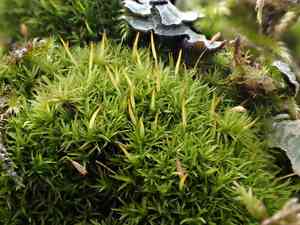
Curly thatch moss (Dicranoweisia cirrata)
Also known as: Common pincushion
Dicranoweisia cirrata is a medium-sized moss known for forming relatively compact, rounded patches. It exhibits a broad habitat range, thriving on decaying wood, both live and dead tree trunks, fences, and rocky surfaces. This moss species is not particularly selective about its environment, as long as it provides adequate moisture and shade.
In This Article
Attributes of Curly thatch moss
Lifespan
Perennial
Plant Type
Moss
Plant Height
5 mm to 4 cm
Spread
Not applicable
Leaf Color
Dark green
Flower Size
Not applicable
Flower Color
Not applicable
Images of Curly thatch moss
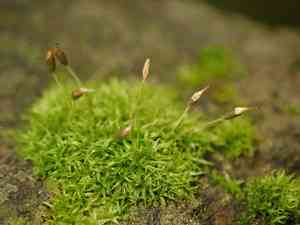
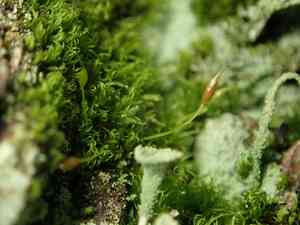
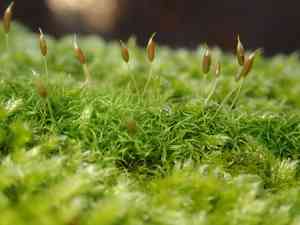
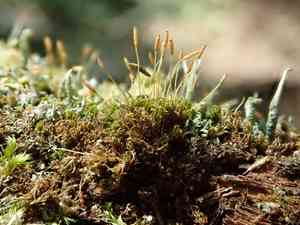
Quickly Identify Curly thatch moss
1
This moss can be recognized by its distinctive curled and contorted leaves, which give it a unique appearance. The leaves are typically dark green and glossy, and the plant forms dense mats.
Scientific Classification of Curly thatch moss
Phylum
Mosses
Class
True mosses
Order
Grimmiales
Family
Dicranaceae
Genus
Dicranoweisia
Species
Curly thatch moss
Planting and Growing of Curly thatch moss
Care Difficulty
Easy
Watering Schedule
Every 2 days
Sunlight Requirements
Partial sun
Sunshine Duration
4-8 hours
Ideal Temperature
50-68℉
Soil Type
Potting Mix, Peat Mix
Soil pH
4.5-7
Fertilizer Type
Balanced
Pruning Season
Spring, Summer
Pruning Area
Branches, Leaves
Pruning Frequency
2 times a year
Repotting Season
Spring
Pot Type
Plastic, Ceramic
 How to Water Curly thatch moss?
Dicranoweisia cirrata thrives in conditions where the soil remains damp but not waterlogged. A good rule of thumb is to give it around 100 ml of water each session to maintain a moist environment. Ensure that the water is evenly distributed across the substrate and that it fully penetrates the moss without leaving pools of water.
What are the symptoms of an underwatered Curly thatch moss?
›
What should I do if my Curly thatch moss is not getting enough water?
›
What are the symptoms of an overwatered Curly thatch moss?
›
How to save an overwatered Curly thatch moss?
›
 What Are the Sunlight Requirements for Curly thatch moss?
The ideal lighting is partial sun to full shade. This light preference helps Dicranoweisia cirrata thrive by providing just enough energy for growth without overwhelming the plant with excess heat or light intensity.
How much light does Dicranoweisia cirrata need?
›
What are the best solutions for providing ideal light?
›
What benefits does ideal lighting bring to the plant?
›
 What Is the Ideal Temperature Range for Curly thatch moss?
Dicranoweisia cirrata thrives in cool to mild temperature environments, typically found in temperate climates. Temperatures between 50°F to 68°F provide optimal conditions for growth and photosynthesis, promoting healthy moss mat development. These conditions replicate those found in its native forest or woodland habitats, ensuring the moss receives adequate moisture and humidity without the stress of extreme temperatures.
 What Soil is Best for Curly thatch moss?
Dicranoweisia cirrata thrives in soils that manage moisture effectively. Ensuring that the soil neither dries out completely nor becomes waterlogged is crucial for this plant's growth, providing it with the balance it needs to sustain itself in various conditions. This moss does not require highly fertile soil and can often thrive on naturally poor soils. Having the right nutrient balance in the soil helps it in sustaining its structure and other biological functions without overwhelming growth inhibitors. The right soil provides excellent support for Dicranoweisia cirrata, helping it to maintain its place and receive adequate sunlight and air exposure. The stability prevents displacement and encourages robust colony formations on surfaces.
 How to Fertilize Curly thatch moss?
Dicranoweisia cirrata, commonly known as a type of moss, typically requires minimal fertilization. When fertilizing, use a diluted liquid fertilizer at one-quarter strength to avoid harming delicate structures.
 How to Prune Curly thatch moss?
First, examine the moss to identify areas of overgrowth or browning. Focus on sections where the moss has become overly dense or where there might be signs of decay. This thoughtful identification ensures precise pruning. Using your clean tools, trim the identified sections gently. Cut away from the edges to shape and thin the moss without cutting too deep. This promotes healthy regrowth and ensures that the moss maintains its natural appearance. After pruning, lightly mist the moss with water to help it recover from the stress of pruning. Monitor the moisture levels and adjust as necessary. This care step is crucial for sustaining vibrancy and avoiding wilting.
 How to Propagate Curly thatch moss plant?
1
Begin by gently removing the plant from its current pot or location. Shake off excess soil or gently rinse the roots to get a clear view of the root system before making any cuts.
2
Using a sharp knife or spade, carefully divide the plant into smaller sections, each with its own set of roots and shoots. Take care not to damage the roots excessively during the division process.
3
Immediately replant each divided section into prepared soil or pots, ensuring that the roots are well-covered and the plant is positioned securely. Water thoroughly after planting.
 How to Repot Curly thatch moss plant?
1
Dicranoweisia cirrata indicates it's time for a new pot when the moss becomes dry and the clump appears too dense. This signifies limited space for growth, urging a move to a bigger space.
2
Select an unglazed clay pot that affords excellent air circulation. Ensure it has adequate drainage holes to prevent waterlogging, thus ensuring the moss remains healthy and vibrant.
3
Opt for a soil that retains moisture yet drains well. A mix designed for mosses, promoting water retention without obstructions, ensures Dicranoweisia cirrata thrives, maintaining its lush appearance.

