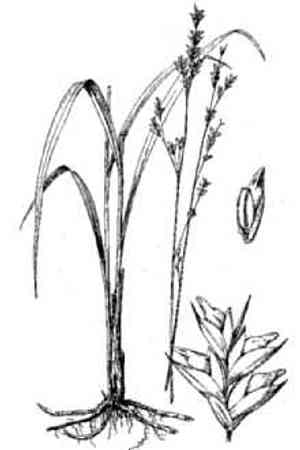
Beakgrains (Diarrhena) (Diarrhena)
Also known as: None
Beakgrains are perennial flowering grasses commonly found in woodlands across temperate regions of Eastern Asia and North America. They are sometimes cultivated for ornamental purposes. The genus name "Diarrhena" is derived from Greek, with "dis" meaning "twice" and "arren" meaning "male," indicating that each flower possesses two stamens.
In This Article
Attributes of Beakgrains (Diarrhena)
Lifespan
Perennial
Plant Height
2 to 4 feet
Spread
1 to 2 feet
Leaf Color
Green
Flower Size
0.1 to 0.2 inches
Flower Color
Greenish
Images of Beakgrains (Diarrhena)
Quickly Identify Beakgrains (Diarrhena)
1
Diarrhena species can be identified by their tall, slender, and arching culms (stems), which form dense clumps. The leaves are lance-shaped and have a smooth texture. Flower spikes are long and slender, with small, inconspicuous flowers that give way to small, round seeds.
Scientific Classification of Beakgrains (Diarrhena)
Phylum
Magnoliophyta
Class
Liliopsida
Order
Poales
Family
Poaceae
Genus
Diarrhena
Planting and Growing of Beakgrains (Diarrhena)
Care Difficulty
Easy
Watering Schedule
Every 2 days
Sunlight Requirements
Partial sun
Sunshine Duration
4-8 hours
Ideal Temperature
60-75℉
Soil Type
Potting Mix, Peat Mix
Soil pH
5.5-7.5
Fertilizer Type
Balanced
Pruning Season
Spring, Summer
Pruning Area
Branches, Leaves
Pruning Frequency
2 times a year
Repotting Season
Spring
Pot Type
Plastic, Ceramic
 How to Water Beakgrains (Diarrhena)?
Diarrhena prefers evenly moist soil but not waterlogged conditions. Adjust the quantity based on the pot size or garden bed; make sure the top 2 inches of soil dry out between waterings. A good rule of thumb is to provide around 500 milliliters of water per session for a medium-sized plant.
What are the symptoms of an underwatered Beakgrains (Diarrhena)?
›
What should I do if my Beakgrains (Diarrhena) is not getting enough water?
›
What are the symptoms of an overwatered Beakgrains (Diarrhena)?
›
How to save an overwatered Beakgrains (Diarrhena)?
›
 What Are the Sunlight Requirements for Beakgrains (Diarrhena)?
Partial sun exposure allows Diarrhena to maintain its lush foliage and healthy growth, benefiting from a balanced sun-to-shade ratio.
What is the ideal light exposure for Diarrhena?
›
How can you ensure your Diarrhena receives the ideal light?
›
What benefits does Diarrhena gain from ideal lighting?
›
 What Is the Ideal Temperature Range for Beakgrains (Diarrhena)?
The ideal temperature for Diarrhena growth is between 60°F and 75°F. This range allows for optimal metabolic processes, ensuring the plant can photosynthesize efficiently and maintain strong growth. A stable temperature within this range helps prevent stress that could lead to reduced growth rates or susceptibility to diseases.
 What Soil is Best for Beakgrains (Diarrhena)?
Diarrhena thrives best in well-drained soil that prevents waterlogging. Well-drained conditions help to ensure the roots have access to oxygen while avoiding rot from excess moisture, promoting healthy and robust growth. This plant benefits greatly from soil that is rich in organic matter. The organic content provides essential nutrients, improves soil structure, and enhances moisture retention, which are critical for sustained growth and vibrancy. Diarrhena requires soil with consistent but moderate moisture levels. A reliable moisture supply supports photosynthetic processes and nutrient uptake, ensuring the plant remains lush and resilient throughout its growth period.
 How to Fertilize Beakgrains (Diarrhena)?
For Diarrhena, a moderate amount of fertilizer is best. Use a balanced 10-10-10 liquid fertilizer, diluted to half strength when watering. Annually, apply 100 grams of slow-release granular fertilizer evenly around the base for sustained growth.
 How to Prune Beakgrains (Diarrhena)?
Begin by removing dead culms at the base to tidy up the plant. Then, assess the plant’s overall shape and remove any crossed or tangled stems, which can hinder air circulation and light penetration. Make clean cuts near the base while avoiding excessive pruning to ensure essential foliage remains. Prune no more than one-third of the plant to avoid stress. After pruning, water the plant well and consider adding mulch to help retain soil moisture and promote recovery. Pruning Diarrhena should preferably be done in early Spring or late Summer. This timing allows the plant to regenerate and prepare for upcoming growth seasons. Optimal pruning involves cutting stems at a 45-degree angle, which promotes quicker healing and reduces water runoff. Be careful to avoid cutting into the main stalks, as this might impede the plant’s growth.
 How to Propagate Beakgrains (Diarrhena) plant?
1
Collect seeds from mature plants in early spring. Clean and dry the seeds thoroughly before planting. Use a seed tray filled with a mix of potting soil and sand to improve drainage.
2
Sow the seeds evenly over the surface and cover lightly with soil. Water the seeds gently and place the tray in a warm, well-lit location. Maintain consistent moisture for successful germination.
3
Select a mature plant in early spring or after flowering. Dig up the plant and separate the roots using a knife. Each section should have roots and shoots to ensure proper growth.
 How to Repot Beakgrains (Diarrhena) plant?
1
Diarrhena shows signs for repotting when you notice roots starting to grow out of the drainage holes, or growth slowing significantly despite regular care. Spring and early summer are ideal times, as the plant is entering its active growth phase, allowing it to establish quickly in the new pot.
2
Select a pot that is one to two sizes larger than the current one, with sufficient drainage holes. Opting for a pot with good drainage prevents waterlogging which can lead to root rot. Material-wise, terracotta pots are recommended for their porous nature which encourages airflow.
3
For Diarrhena, a well-draining loamy soil is optimal. Such soil ensures adequate moisture retention while preventing water from stagnating around the plant roots. This balance helps promote healthy root development and overall plant vigor.

