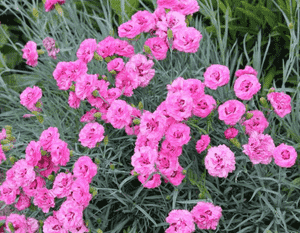
Garden pink(Dianthus plumarius)

Garden pink (Dianthus plumarius)

Also known as: Wild pink, Common pink

### Characteristics of Garden Pink (Dianthus plumarius):
- **Growth**: Compact, evergreen perennial, reaching heights of 6-24 inches (15-61 cm).
- **Flowering**: Blooming in spring, the flowers come in shades of pink, red, or white and are known for their pleasant fragrance.
- **Flower Shape**: The blossoms have a distinct wheel-like appearance.
- **Bloom Duration**: Extended blooming season.
- **Wildlife Attraction**: Attracts pollinators such as bees, butterflies, and hummingbirds.
- **Toxicity**: Seeds are toxic, and the plant can cause skin irritation in humans and pets.

### Care Requirements:
- **Light**: Thrives in full sun.
- **Soil**: Prefers well-drained, slightly alkaline soil.
- **Watering**: Needs moderate watering; soil should dry out between sessions.
- **Fertilization**: Use a balanced fertilizer sparingly in the spring.
- **Maintenance**: Remove spent flowers to promote continued blooming.
- **Pests/Diseases**: Generally resilient but monitor for aphids and root rot in poorly drained areas.
- **Propagation**: Can be propagated through seeds, cuttings, or division during early spring or fall.

Attributes of Garden pink

Lifespan
Perennial, Annual
Plant Type
Herb
Plant Height
30 cm to 60 cm
Spread
40 cm
Leaf Color
Green Gray Silver Blue
Flower Size
2.5 cm to 8 cm
Flower Color
Pink White Red Purple

ForwardPlant - Identify plants with a snap

Identify and diagnose plants, get toxicity alerts, and explore safety guides for all types of fungi.

Try for Free

Images of Garden pink

Garden pink(Dianthus plumarius)

Quickly Identify Garden pink

1
Dense mat ground cover.
2
Fragrant, ruffled blooms.
3
Radially symmetric pink flowers.
4
Dry dehiscent capsule fruit.
5
Smooth, erect glabrous stem.

Scientific Classification of Garden pink

Phylum
Vascular plants
Class
Dicotyledons
Order
Pinks, cacti, and allies
Family
Pink
Genus
Dianthus
Species
Garden pink

Planting and Growing of Garden pink

Care Difficulty
Easy
Watering Schedule
Every 2 days
Sunlight Requirements
Full sun
Sunshine Duration
4-8 hours
Ideal Temperature
60-75℉
Soil Type
Potting Mix, Peat Mix
Soil pH
6.5-7.5
Fertilizer Type
Balanced
Pruning Season
Spring, Summer
Pruning Area
Branches, Leaves
Pruning Frequency
2 times a year
Repotting Season
Spring
Pot Type
Plastic, Ceramic

water icon How to Water Garden pink?

Dianthus plumarius prefers to be watered deeply but infrequently. Ensure that the soil is allowed to dry out between waterings to prevent root rot while still providing adequate moisture. A general guideline is to water with about 200 ml, making sure the water reaches the root zone without leaving the soil soggy.
What are the symptoms of an underwatered Garden pink?
What should I do if my Garden pink is not getting enough water?
What are the symptoms of an overwatered Garden pink?
How to save an overwatered Garden pink?
More About Watering Techniques

sunlight icon What Are the Sunlight Requirements for Garden pink?

Sunlight Requirements: Full sun, Partial sun
Duration of light: 6 to 8 hours daily
Dianthus plumarius prefers full to partial sun, ideally receiving 6-8 hours daily. Adequate sunlight ensures color intensity in flowers and encourages blooming, essential for its aesthetic appeal.
What is the best lighting condition for Dianthus plumarius?
How can I ensure optimal lighting for Dianthus plumarius?
What are the benefits of ideal lighting for Dianthus plumarius?
More About Sunlight Requirements Techniques

temperature icon What Is the Ideal Temperature Range for Garden pink?

Ideal Temperature: 60 ~ 75℉
Dianthus plumarius thrives best in temperatures ranging from 60°F to 75°F. These temperatures align with its natural environment, providing optimal growth conditions. Maintaining this temperature range supports healthy foliage, vibrant blooms, and overall robust plant structure, replicating the stable and mild conditions of its native habitat.

soil icon What Soil is Best for Garden pink?

Soil type: Loam, Sandy loam, Calcareous soil
Soil PH: 6.5 ~ 7.5
Dianthus plumarius thrives in well-draining soil. This type of soil prevents waterlogging, which can lead to root rot, ensuring the roots have easy access to oxygen and nutrients essential for healthy growth. Nutrient-rich soil provides a steady supply of essential minerals like nitrogen, phosphorus, and potassium. These nutrients boost the plant's vigor, flowering capacity, and overall resilience to pests and diseases. While well-draining, the soil should retain some moisture without becoming soggy. This balance helps maintain the plant's hydration levels, crucial for photosynthesis and nutrient transport. More About Soil

fertilize icon How to Fertilize Garden pink?

Fertilizer type: Balanced
For Dianthus plumarius, a balanced fertilizer with an NPK ratio of 10-10-10 is ideal. Apply about 100 grams per square meter when using solid fertilizers. For liquid fertilizers, dilute as per the manufacturer's instructions, usually around 20 ml per 5 liters of water. More About Fertilizing Techniques

prune icon How to Prune Garden pink?

Pruning Time: Spring, Summer, Autumn
Begin by removing spent flowers to encourage further blooms. Cut back to just above the first set of healthy leaves beneath the flower. This not only tidies the plant but redirects energy into producing new flowers. Cut away any dead, damaged, or diseased stems. When shaping the plant for aesthetics, focus on maintaining a neat and compact form. Make your cuts just above a leaf node, as this encourages new growth from the node. Prune to improve airflow within the plant by removing any crowded stems. This reduces the risk of fungal disease development. Aim to open up the center of the plant for better light penetration. More About Pruning Techniques

propagate icon How to Propagate Garden pink plant?

Propagate Time: Spring,Early spring,Late spring
1
Collect seeds from mature Dianthus plumarius plants after the flowers have bloomed and dried. Ensure the seeds are harvested before dispersion to maximize viability. Store them in a dry place until sowing.
2
Choose healthy, non-flowering stems for cuttings. Cut a 4-6 inch stem below a node. Remove the lower leaves, keeping only a few at the top. Dip the cut end in rooting hormone to enhance root growth.
3
Carefully dig around the plant to expose the roots without damage. Divide the clump into smaller sections, ensuring each section has roots and shoots. Replant immediately for best results.
More About Propagating Techniques

repot icon How to Repot Garden pink plant?

Repotting frequency: Every 2-3 years
1
Signs that your Dianthus plumarius needs repotting include roots growing out of the drainage holes, slow growth, or water sitting on the soil surface. The best time to repot is early spring or autumn, when the plant is not in active bloom, allowing it to recover from the shock with minimal stress.
2
Select a pot that is only slightly larger than the current one, ideally 1-2 inches wider in diameter. This prevents excess soil from retaining water and causing root rot. Make sure the pot has good drainage holes; this ensures that excess moisture does not build up, providing a healthy environment for the roots.
3
Opt for a well-draining soil mixed with sand or perlite to enhance aeration and prevent waterlogging. Such soil mimics the natural rocky terrain of Dianthus plumarius, promoting robust root growth and preventing diseases associated with wet soil.

ForwardPlant - Identify plants with a snap

Find the best spots for them to optimize their health, simply using your phone.

Try for Free

Toxicity of Garden pink

Is Garden pink toxic to cat?

Garden pink displays a mild level of toxicity for cats. Cats are at risk of poisoning primarily when they consume large amounts of any part of the garden pink plant. If substantial quantities are ingested, affected felines may show signs of physical discomfort or illness, suggesting potential internal distress. In the event of such occurrences, it is crucial to take the cat to a veterinary clinic without delay for essential care and medical attention regarding the poisoning.

Is Garden pink toxic to dog?

The garden pink plant species is regarded as mildly toxic to dogs. High consumption of garden pink can result in poisoning if ingested by dogs. All parts of the garden pink are potentially poisonous and can lead to symptoms of toxicity if eaten by a dog. Possible reactions from a dog consuming garden pink may include gastrointestinal distress, manifesting as vomiting or diarrhea, as well as potentially more serious effects depending on the amount consumed. It is vital for dog owners to supervise their pets and restrict access to plants recognized as toxic. Should a dog consume garden pink, seeking immediate veterinary assistance is critical to ensure the animal's health and safety.

Identify toxic plants for your safety

Learn which plants are harmful to you and your pets, and make informed choices for a safer home!

Try for Free
WARNING
The judgment on toxicity and danger is for reference only. We DO NOT GUARANTEE any accuracy of such judgment. Therefore, you SHALL NOT rely on such judgment. It is IMPORTANT TO SEEK PROFESSIONAL ADVICE in advance when necessary.
More About Toxic Techniques

