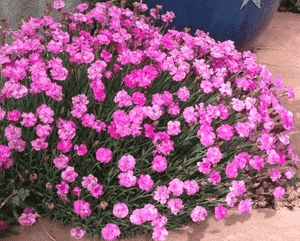
Cheddar pink (Dianthus gratianopolitanus)
Also known as: Cheddar Pink, Clove Pink
Consider the Lantana (Lantana camara) for your garden. This low-growing perennial is both deer resistant and highly attractive to butterflies. Lantana thrives in part sun to full sun and can withstand high humidity as well as periods of drought. Its vibrant blooms make it a stunning addition to flowerbeds or container gardens, and it requires only moderate watering to flourish.
Attributes of Cheddar pink
Images of Cheddar pink
Quickly Identify Cheddar pink
Scientific Classification of Cheddar pink
Planting and Growing of Cheddar pink
 How to Water Cheddar pink?
 What Are the Sunlight Requirements for Cheddar pink?
 What Is the Ideal Temperature Range for Cheddar pink?
 What Soil is Best for Cheddar pink?
 How to Fertilize Cheddar pink?
 How to Prune Cheddar pink?
 How to Propagate Cheddar pink plant?
 How to Repot Cheddar pink plant?
Toxicity of Cheddar pink
Is Cheddar pink toxic to humans?
The carnation, or *Dianthus*, possesses certain toxic characteristics when ingested or handled. The repercussions of contact with or consumption of the plant are relatively minor. Although the flowers are safe to touch, the leaves harbor toxic saponins that may irritate humans. Contact with the leaves can lead to dermatitis and skin irritation; ingestion can result in stomach discomfort and vomiting. These plants are commonly used as decorative species and are relatively easy for children to access, who may be particularly susceptible to the adverse effects if they touch or consume the foliage.
Is Cheddar pink toxic to cat?
Cheddar pink presents a low-level toxicity hazard for cats. If a cat consumes a substantial portion of the plant, especially any segment of it, there is a risk of poisoning. Pet owners should be alert to the possibility of symptoms that indicate physical distress if their cat interacts with or ingests cheddar pink. Although the exact toxic agents have not been specified, it is essential for pet owners to keep their cats away from the plant to prevent adverse effects. If a cat shows any signs of health issues following exposure to cheddar pink, seeking veterinary assistance promptly is vital to guarantee appropriate care and recovery.
Is Cheddar pink toxic to dog?
Cheddar pink presents a mild toxicity risk to dogs. Although the plant is not predominantly toxic, consuming it in significant amounts can result in poisoning. Every part of cheddar pink is deemed potentially harmful if ingested by a dog. Symptoms of toxicity may include gastrointestinal disturbances, such as vomiting or diarrhea, and in certain cases, more severe reactions may occur based on the quantity ingested and the individual dog's sensitivity. It is essential for dog owners to keep a watchful eye on their pets and to prevent them from consuming cheddar pink. Should a dog be suspected of having ingested any portion of cheddar pink, it is imperative to seek prompt veterinary attention to ensure adequate treatment and management of any symptoms.



