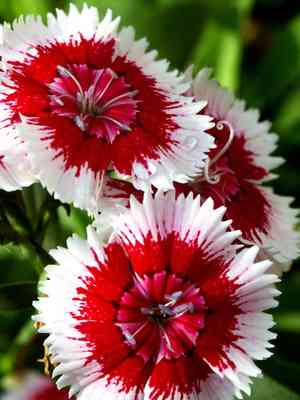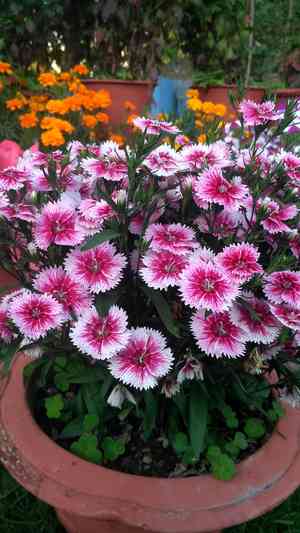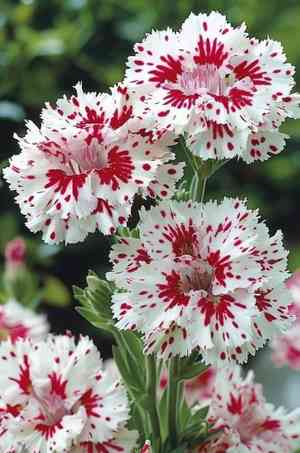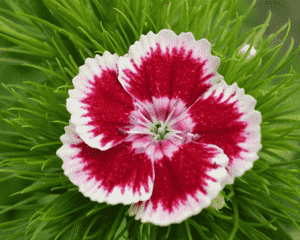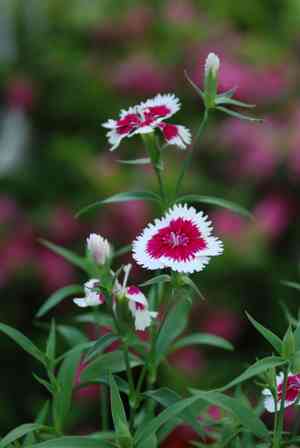
Chinese pink(Dianthus chinensis)

Chinese pink (Dianthus chinensis)

Also known as: Rainbow pink, Indian pink

Creeping Jenny (Lysimachia nummularia) is a perennial flowering herb native to China, Russia, and Mongolia. In its natural habitat, it thrives in damp, forested areas. When cultivated, it is a popular ornamental plant often used in hanging baskets and planters for its attractive trailing foliage and bright yellow blooms.

Attributes of Chinese pink

Lifespan
Perennial, Annual, Biennial
Plant Type
Herb
Plant Height
30 cm to 50 cm
Spread
15 cm to 30 cm
Leaf Color
Green Blue Silver
Flower Size
3 cm to 4 cm
Flower Color
White Red Pink

PlantJoy - Identify plants with a snap

Identify and diagnose plants, get toxicity alerts, and explore safety guides for all types of fungi.

Try for Free

Images of Chinese pink

Chinese pink(Dianthus chinensis)

Quickly Identify Chinese pink

1
Frilled petals in pink-lilac or white, 1-2 inches (2.5-5 cm) wide.
2
Narrow, gray-green leaves, 1-2 inches (2.5-5 cm) long, acuminate apex.
3
Cylindrical fruit with black flattened globe seeds, enclosed by persistent sepals.
4
Erect stem with distal branching, green, 0.1-0.2 inches (2.5-5 mm) thick.
5
Striking flat flowers with richly fringed petals & darker eye at center.

Scientific Classification of Chinese pink

Phylum
Vascular plants
Class
Dicotyledons
Order
Pinks, cacti, and allies
Family
Pink
Genus
Dianthus
Species
Chinese pink

Planting and Growing of Chinese pink

Care Difficulty
Easy
Watering Schedule
Every 8 days
Sunlight Requirements
Full sun
Sunshine Duration
4-8 hours
Ideal Temperature
60-75℉
Soil Type
Potting Mix, Peat Mix
Soil pH
6-7.5
Fertilizer Type
Balanced
Pruning Season
Spring, Summer
Pruning Area
Branches, Leaves
Pruning Frequency
2 times a year
Repotting Season
Spring
Pot Type
Plastic, Terracotta

water icon How to Water Chinese pink?

For Dianthus chinensis, ensuring the right watering amount is crucial. The soil should be moist but not waterlogged, and generally, 250 ml per session is adequate. It is best to water deeply, reaching about 6 inches into the soil, allowing the roots to access moisture efficiently. This approach helps in establishing a robust root system and prevents surface root growth.
What are the symptoms of an underwatered Chinese pink?
What should I do if my Chinese pink is not getting enough water?
What are the symptoms of an overwatered Chinese pink?
How to save an overwatered Chinese pink?
More About Watering Techniques

sunlight icon What Are the Sunlight Requirements for Chinese pink?

Sunlight Requirements: Full sun, Partial sun
Duration of light: 4-6 hours of sunlight
Dianthus chinensis flourishes in full to partial sun environments. Ideal light conditions ensure maximum flowering, healthier leaves, and a sturdier plant structure.
What is the ideal environment?
How to achieve ideal lighting?
Benefits of ideal lighting?
More About Sunlight Requirements Techniques

temperature icon What Is the Ideal Temperature Range for Chinese pink?

Ideal Temperature: 60 ~ 75℉
The ideal temperature range for Dianthus chinensis is between 60°F and 75°F. This range provides the optimal growing conditions, allowing the plant to thrive and produce vibrant blooms. Maintaining consistent temperatures within this range helps to ensure healthy development and minimizes stress for the plant.

soil icon What Soil is Best for Chinese pink?

Soil type: Loam, Sandy loam
Soil PH: 6 ~ 7.5
Dianthus chinensis thrives in well-drained soil which prevents waterlogging that could lead to root rot. Ensuring proper drainage enhances aeration around the roots, promoting healthy growth and better blooming. A soil rich in essential nutrients supports the vibrant color and abundant flowering of Dianthus chinensis. Adding organic matter, like compost, can provide the necessary nutrients and improve soil structure. This plant responds well to moderately fertile soils, as excessive fertility can lead to lush foliage with fewer flowers. Balanced fertilization keeps the plant healthy and encourages prolific blooming. More About Soil

fertilize icon How to Fertilize Chinese pink?

Fertilizer type: Balanced
For Dianthus chinensis, use a balanced fertilizer such as 10-10-10 to provide the essential nutrients. When applying liquid fertilizer, mix at half the recommended concentration to avoid burning the roots. Use roughly one tablespoon per gallon of water. More About Fertilizing Techniques

prune icon How to Prune Chinese pink?

Pruning Time: Spring, Summer, Autumn
Start by removing all dead or wilted flowers from the plant, cutting the stems just above a set of healthy leaves. This is known as deadheading and will foster more blooms. Once you have completed this, inspect the plant for any dead, damaged, or diseased stems, and cut these away to keep the plant healthy. Lastly, trim back any overly long or unruly stems to maintain a compact and attractive shape. Prune during the cool parts of the day to avoid stressing the plant with sudden exposure to heat. Furthermore, make sure that the plant is not too wet, as wet conditions can make the plant susceptible to diseases when pruned. More About Pruning Techniques

propagate icon How to Propagate Chinese pink plant?

Propagate Time: Early spring, Spring, Late spring
1
Select a well-draining potting mix which should be slightly acidic to neutral in pH. It's crucial to ensure the soil is loose and not compacted, as Dianthus chinensis prefers aeration around its roots.
2
Scatter the seeds thinly over the prepared soil. Cover them with a very fine layer of soil, as they need some light to germinate. Keep the soil consistently moist but not waterlogged until germination.
3
Take cuttings from healthy Dianthus plants, ensuring to choose non-flowering stems. Dip the cut end in rooting hormone and plant it in a well-draining medium. Keep the cuttings in a lightly shaded location and mist regularly.
More About Propagating Techniques

repot icon How to Repot Chinese pink plant?

Repotting frequency: Every 1-2 years
1
Repot Dianthus chinensis when you notice that the roots are starting to circle the pot's base or the soil has become compacted, which affects its drainage. These signs usually indicate that the plant has outgrown its current home, typically occurring every one to two years.
2
Choose a pot that is one size larger than the current one and ensure it has drainage holes. A pot that allows for proper airflow and drainage will prevent root rot and promote healthy growth by allowing excess water to escape and air to circulate around the roots.
3
Opt for a well-draining potting mix that can hold enough moisture without becoming waterlogged. This balance is crucial for Dianthus chinensis, as it prevents root rot by ensuring the roots are neither too dry nor too soggy, supporting vibrant blooms and healthy foliage.
More About Repotting Techniques

PlantJoy - Identify plants with a snap

Find the best spots for them to optimize their health, simply using your phone.

Try for Free

Toxicity of Chinese pink

Is Chinese pink toxic to cat?

Chinese pink is recognized as toxic to cats. If they accidentally ingest the leaves of this plant, it may lead to poisoning. Following ingestion, a cat might display signs of physical discomfort or illness that should be closely observed. To protect the well-being of a cat that has been exposed to chinese pink, it is essential to seek immediate professional veterinary assistance. A prompt reaction to such situations can be vital for the recovery and overall health of the pet.

Is Chinese pink toxic to dog?

Chinese pink is regarded as toxic to dogs. If they accidentally consume this plant, particularly its leaves, canines may experience poisoning due to the presence of harmful compounds. Symptoms following the ingestion of chinese pink may include vomiting, diarrhea, drooling excessively, as well as more serious indications such as lethargy and abdominal discomfort. Therefore, it is essential for dog owners to vigilantly supervise their pets and restrict their access to chinese pink to prevent any inadvertent consumption. In the event a dog ingests chinese pink, it is critical to seek prompt veterinary assistance to ensure the best possible outcome for the animal.

Identify toxic plants for your safety

Learn which plants are harmful to you and your pets, and make informed choices for a safer home!

Try for Free
WARNING
The judgment on toxicity and danger is for reference only. We DO NOT GUARANTEE any accuracy of such judgment. Therefore, you SHALL NOT rely on such judgment. It is IMPORTANT TO SEEK PROFESSIONAL ADVICE in advance when necessary.
More About Toxic Techniques