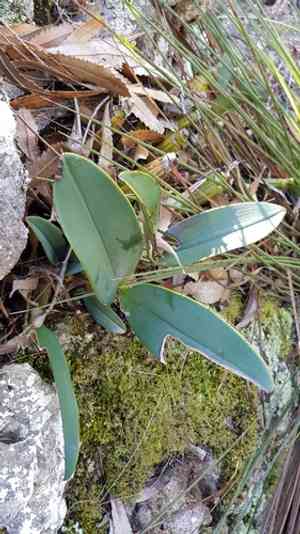
Rock orchid (Dendrobium speciosum)
Also known as: Rock lily
Rock orchid (Dendrobium speciosum) is a plant species native to the east coast of Australia. Rock orchid species are also known as ock orchids or cane orchids. This species is popular among orchid cultivators. Rock orchid attracts the stingless bee Tetragonula carbonaria. This orchid can be grown outdoors in mild climates and requires full sunlight for optimal growth.
In This Article
Attributes of Rock orchid
Lifespan
Perennial
Plant Type
Herb
Plant Height
5 cm to 1.8 m
Spread
50 cm
Leaf Color
Green
Flower Size
2 cm to 8 cm
Flower Color
White Yellow Cream
Images of Rock orchid
Quickly Identify Rock orchid
1
To identify Dendrobium speciosum, look for its thick, cane-like pseudobulbs and long, leathery leaves. The flower clusters are large and fragrant, ranging from white to cream or yellow in color. The plant typically grows on rocks or in trees.
Scientific Classification of Rock orchid
Phylum
Vascular plants
Class
Monocotyledons
Order
Asparagales
Family
Orchidaceae
Genus
Dendrobium
Species
Rock orchid
Planting and Growing of Rock orchid
Care Difficulty
Moderate
Watering Schedule
Every 4 days
Sunlight Requirements
Full sun
Sunshine Duration
4-8 hours
Ideal Temperature
65-75℉
Soil Type
Potting Mix, Peat Mix
Soil pH
6.5-7.5
Fertilizer Type
Balanced
Pruning Season
Spring, Summer
Pruning Area
Branches, Leaves
Pruning Frequency
2 times a year
Repotting Season
Spring
Pot Type
Plastic, Ceramic
 How to Water Rock orchid?
When watering Dendrobium speciosum, ensure that the potting medium is thoroughly drenched without waterlogging the plant. The goal is to reach the roots, encouraging growth without suffocating them. Typically, 250 milliliters per watering session is sufficient, increasing slightly if the plant is in a larger pot.
More About Watering Techniques→
What are the symptoms of an underwatered Rock orchid?
›
What should I do if my Rock orchid is not getting enough water?
›
What are the symptoms of an overwatered Rock orchid?
›
How to save an overwatered Rock orchid?
›
 What Are the Sunlight Requirements for Rock orchid?
Ideally, Dendrobium speciosum benefits from a range that includes partial to full sun exposure. Sufficient light ensures energy production for growth and flower development, optimizing its health and display.
More About Sunlight Requirements Techniques→
What is the best location for Dendrobium speciosum?
›
How can I ensure consistent lighting for this orchid?
›
What are the benefits of optimal lighting for Dendrobium speciosum?
›
 What Is the Ideal Temperature Range for Rock orchid?
Dendrobium speciosum thrives best in an environment where the temperatures remain between 65°F and 75°F. These temperatures mimic its natural subtropical habitat, offering optimal conditions for photosynthesis and growth. Maintaining a stable temperature within this range helps promote healthy flowering and development.
 What Soil is Best for Rock orchid?
Dendrobium speciosum thrives in well-drained soil, which helps prevent root rot and ensures that excess water doesn't lead to waterlogging. A properly drained soil maintains healthy roots, allowing the plant to absorb nutrients efficiently. These orchids prefer soil with good aeration to allow the roots to breathe. Loamy or sandy soils provide the ideal structure, ensuring oxygen reaches the roots and promoting vigorous growth and flowering. While not overly demanding, Dendrobium speciosum benefits from a soil rich in organic matter. The presence of natural nutrients supports healthy foliage development and vibrant blooms, thus maintaining the plant's robust health.
More About Soil→
 How to Fertilize Rock orchid?
When fertilizing Dendrobium speciosum, use a balanced orchid fertilizer. For liquid fertilizer, dilute it to half strength before application to avoid root burn. Typically, use 1/2 teaspoon per gallon of water. For slow-release fertilizers, use about 1/4 to 1/2 teaspoon sprinkled around the base, being careful not to over-concentrate the fertilizer in one spot.
More About Fertilizing Techniques→
 How to Prune Rock orchid?
Begin by visually inspecting your Dendrobium speciosum for dead or yellowing leaves and stems. Dead growth should be removed gently by cutting it at the base to encourage healthy new growth. Hold the stem firmly and use sterile scissors to make a clean cut at a 45-degree angle. This prevents water from collecting on the cut surface, which can lead to rotting or fungal infections. After pruning, ensure the plant receives adequate sunlight and water. Avoid excessive moisture on cut areas, and consider applying a mild fungicide to prevent infection at the site of the cut.
More About Pruning Techniques→
 How to Propagate Rock orchid plant?
1
Choose a healthy and mature Dendrobium speciosum for propagation as it ensures the propagules have a higher chance of survival and establishment.
2
For all methods, ensure the growing medium is well-draining and moist, typically a mixture designed for orchids works best to support root development.
3
Keep temperature around 25°C and humidity high, especially during early growth stages to mimic the plant’s natural tropical environment.
 How to Repot Rock orchid plant?
1
Repotting Dendrobium speciosum is best done when the plant shows signs of overcrowded roots or diminished growth. If roots start creeping out of the pot or water retention becomes inconsistent, it’s time to act. The ideal time is usually right after blooming to give the plant plenty of time to establish itself before the next season.
2
Opt for a pot that is slightly larger than the previous one, with ample drainage holes. A snug fit promotes a healthy root system while preventing root rot. Clay pots work well as they allow for better breathability and can help simulate the natural rocky habitat these orchids typically enjoy.
3
Select a well-draining orchid mix, typically composed of bark, perlite, and charcoal. This kind of mix mimics the natural environment of Dendrobium speciosum, enhancing root aeration while retaining minimal moisture, crucial for maintaining plant health and preventing root issues.



