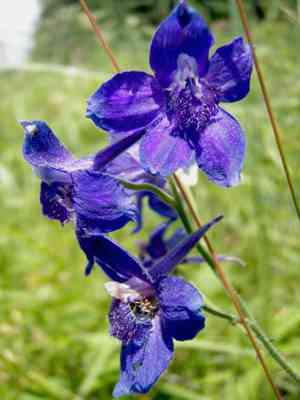
Menzies's larkspur (Delphinium menziesii)
Also known as: Field larkspur
Menzies' larkspur (Delphinium menziesii) is a beautiful perennial wildflower known for its tall, elegant spikes of blue to purple blossoms, often featuring a striking white center. This plant thrives in moist meadows and woodlands, displaying its vibrant flowers from late spring to early summer. Its slender stems and deeply lobed leaves are well-suited to open, sunny areas. Menzies' larkspur not only adds a touch of elegance to the landscape but also attracts important pollinators like bees and butterflies, contributing to the health of the ecosystem.
In This Article
Attributes of Menzies's larkspur
Lifespan
Perennial
Plant Type
Herb
Plant Height
20 cm to 51 cm
Spread
Not typically measured; individual stems are spaced apart
Leaf Color
Green
Flower Size
2-4 cm
Flower Color
Blue to purple
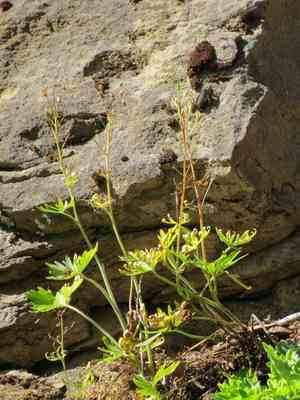
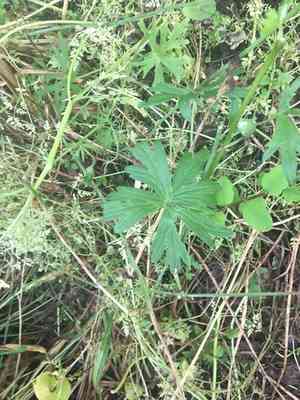
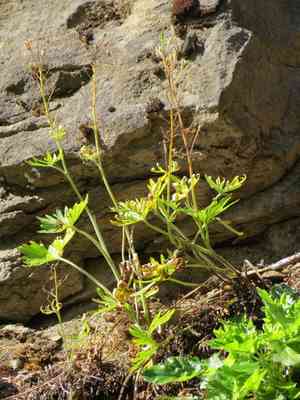
Images of Menzies's larkspur
Quickly Identify Menzies's larkspur
1
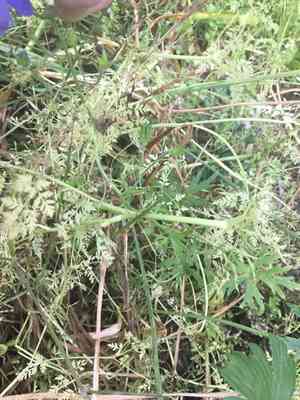
Delphinium menziesii can be identified by its tall, erect stems that bear deeply lobed leaves and vibrant blue to purple flowers, which are often arranged in a spike-like inflorescence.
Scientific Classification of Menzies's larkspur
Phylum
Vascular plants
Class
Dicotyledons
Order
Ranunculales
Family
Buttercup
Genus
Larkspurs
Species
Menzies's larkspur
Planting and Growing of Menzies's larkspur
Care Difficulty
Moderate
Watering Schedule
Every 4 days
Sunlight Requirements
Full sun
Sunshine Duration
4-8 hours
Ideal Temperature
60-75℉
Soil Type
Potting Mix, Peat Mix
Soil pH
6.5-7.5
Fertilizer Type
Balanced
Pruning Season
Spring, Summer
Pruning Area
Branches, Leaves
Pruning Frequency
2 times a year
Repotting Season
Spring
Pot Type
Plastic, Ceramic
 How to Water Menzies's larkspur?
For Delphinium menziesii, the watering principle involves ensuring the soil is adequately moist but not waterlogged. Aim for around 500 ml per session, ensuring the water reaches the roots and allows excess water to drain away to avoid stagnation.
What are the symptoms of an underwatered Menzies's larkspur?
›
What should I do if my Menzies's larkspur is not getting enough water?
›
What are the symptoms of an overwatered Menzies's larkspur?
›
How to save an overwatered Menzies's larkspur?
›
 What Are the Sunlight Requirements for Menzies's larkspur?
The ideal light range for Delphinium menziesii is partial to full sun exposure. Providing such conditions ensures maximum photosynthesis, resulting in lush growth and abundant flowering.
What is the best lighting condition for Delphinium menziesii?
›
How can you ensure Delphinium menziesii gets ideal lighting?
›
What are the benefits of optimal lighting for Delphinium menziesii?
›
 What Is the Ideal Temperature Range for Menzies's larkspur?
Delphinium menziesii thrives best in a temperature range of 60 to 75 degrees Fahrenheit. This range supports healthy photosynthesis and metabolism, boosting the plant's growth and bloom potential. Maintaining these temperatures encourages robust root development and foliage strength, weathering minor climate fluctuations with ease.
 What Soil is Best for Menzies's larkspur?
Delphinium menziesii thrives in well-drained soil, which prevents waterlogging and root rot. This characteristic is vital for ensuring that the roots can breathe and access nutrients efficiently. This species prefers moderately fertile soils, which provide sufficient nutrients while reducing the risk of excessive growth that can cause weak stems. Balancing fertility is essential for maintaining strong and healthy plant structure. While Delphinium menziesii enjoys moisture, the soil must not be excessively wet. The right level of moisture will support vibrant blooms and sustained plant health. Regular watering, without leaving the soil soggy, is recommended.
 How to Fertilize Menzies's larkspur?
For Delphinium menziesii, it's important to provide a moderate amount of fertilizer. Liquid fertilizers should be diluted to half strength to avoid over-fertilizing. Use approximately one tablespoon of a balanced 10-10-10 NPK liquid fertilizer for every gallon of water.
 How to Prune Menzies's larkspur?
When pruning Delphinium menziesii, aim to cut just above a leaf node to encourage new growth. Start from the bottom of the plant and sweep upwards, removing any old or weak-looking reductions. This helps in directing energy towards the more robust parts of the plant, promoting a fuller, more vibrant appearance. Post-blooming, trim back the flower stalks to about a third of their height to encourage a second bloom. Remove any faded flowers timely to conserve the plant's energy, ensuring that more blossoms can develop during the next cycle. Consistent deadheading can lead to prolonged and improved flowering periods. For a polished appearance, shape the plant by trimming errant or overly long stems. This not only makes the plant look more attractive but also allows light and air to penetrate the central parts, further boosting its health and bloom quality.
More About Pruning Techniques→
 How to Propagate Menzies's larkspur plant?
1
After the flowering period, collect seeds from healthy plants. Allow seed pods to dry on the plant before harvesting to ensure maturity and viability.
2
Select healthy, non-flowering shoots for cuttings. Choose stems that are neither too soft nor too woody for better success rates in rooting.
3
Plant seeds in a seed starting tray filled with high-quality seed-starting mix. Cover lightly with soil, as some light is required for germination.
 How to Repot Menzies's larkspur plant?
1
Delphinium menziesii should be repotted when you notice roots coming out of drainage holes, indicating the plant is becoming root-bound. Additionally, if the plant's growth appears stunted or it dries out quickly after watering, these are key signals that it’s time for a more spacious pot. These changes usually occur every two years.
2
Select a pot that is 1-2 inches larger in diameter than the current one, equipped with sufficient drainage holes. A terracotta pot is ideal as it provides good breathability and prevents waterlogging, which is essential for maintaining the health of Delphinium menziesii. The additional space allows the roots to expand comfortably, promoting vigorous growth.
3
Opt for a well-draining loam mix which provides a balanced environment of moisture retention while preventing waterlogging. Ensure the soil is rich in organic matter, offering essential nutrients that support healthy plant growth and vibrant blooms. This type of soil mix helps to mimic the plant's natural habitat, aiding in its overall wellbeing.
Toxicity
Ingestion
WARNING
The judgment on toxicity and danger is for reference only. We DO NOT GUARANTEE any accuracy of such judgment. Therefore, you SHALL NOT rely on such judgment. It is IMPORTANT TO SEEK PROFESSIONAL ADVICE in advance when necessary.
Learn More About Menzies's larkspur Diseases
Anthracnose
Bacterial Leaf Spot
Bacterial Soft Rot
Bacterial Wilt
Black Spot
Chemical Injury
Crown Gall
Cyst Nematode
Damping-off
Downy Mildew
Drought Stress
Fusarium Wilt
Gray Mold
Leaf Curl
Leaf Spot
Mosaic
Nutrient Deficiency
Nutrient Toxicity
Powdery Mildew
Root Rot
Root-knot Nematode
Rusts
Sooty Mold
Spider Mites
Temperature Stress
Thrips Damage
White Mold



