
Royal poinciana (Delonix regia)
Also known as: Flame tree, Flame of the forest, Red tree
The **Royal Poinciana** (*Delonix regia*), commonly known as the "Flamboyant Tree" or "Peacock Tree," hails from Madagascar. It is celebrated for its vibrant crimson or red-yellow blossoms and exhibits rapid growth, quickly attaining a height of about 12 meters.
Attributes of Royal poinciana
Images of Royal poinciana
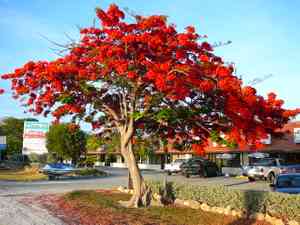
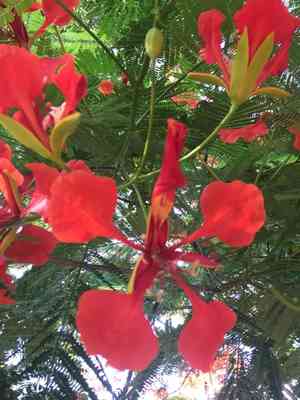


Quickly Identify Royal poinciana
Scientific Classification of Royal poinciana
Planting and Growing of Royal poinciana
 How to Water Royal poinciana?
 What Are the Sunlight Requirements for Royal poinciana?
 What Is the Ideal Temperature Range for Royal poinciana?
 What Soil is Best for Royal poinciana?
 How to Fertilize Royal poinciana?
 How to Prune Royal poinciana?
 How to Propagate Royal poinciana plant?
 How to Repot Royal poinciana plant?
Toxicity of Royal poinciana
Is Royal poinciana toxic to humans?
The royal poinciana should be kept out of reach of young children. Its bark, flowers, leaves, seed pods, and particularly its seeds harbor toxic glycopeptides. Ingesting a substantial amount can lead to nausea, stomach pain, vomiting, and diarrhea. A very high dose may result in a rapid heartbeat and loss of consciousness. It is essential to regularly clean up around a royal poinciana tree, particularly when small children are present.
Is Royal poinciana toxic to cat?
The royal poinciana exhibits a moderate degree of toxicity to felines. Cats may experience poisoning if they consume seeds from this plant in significant quantities. Should poisoning occur, affected cats could display typical signs of physical distress. Pet owners who observe their cats ingesting royal poinciana seeds should swiftly obtain veterinary assistance to alleviate any potential harmful effects and protect their pet's health.
Is Royal poinciana toxic to dog?
The Royal Poinciana carries a mild risk of toxicity for dogs, especially if they ingest a significant quantity of its seeds. Dog owners need to be alert since dogs may find these seeds appealing and may consume them, which could lead to possible poisoning. After ingestion, symptoms may include gastrointestinal disturbances, such as vomiting or diarrhea. It is vital for dog owners to keep a close eye on their pets for any indications of distress and to obtain prompt veterinary assistance if poisoning is feared. Immediate treatment at a veterinary clinic is crucial for the health of the affected dog.



