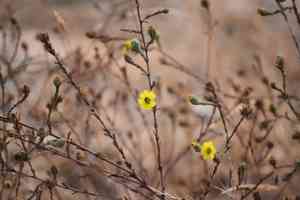
San diego tarweed (Deinandra paniculata)
Also known as: Clustered Tarweed
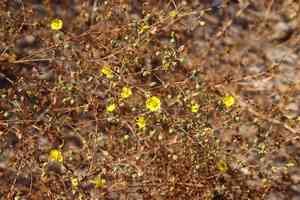
San Diego tarweed (Deinandra conjugens) is a resilient perennial herb characterized by its slender, branching stems topped with clusters of small, yellow, aster-like flowers. The plant's narrow, alternately arranged leaves are designed to minimize water loss, a crucial adaptation for survival in arid settings. Additionally, its extensive root system penetrates deeply into the soil, enabling the plant to access underground moisture and exhibit significant drought tolerance. These features allow San Diego tarweed to flourish in the coastal scrub and chaparral regions of California.
In This Article
Attributes of San diego tarweed
Lifespan
Annual
Plant Height
30-100 cm
Spread
N/A
Leaf Color
Green
Flower Size
1-2 cm
Flower Color
Yellow
Images of San diego tarweed
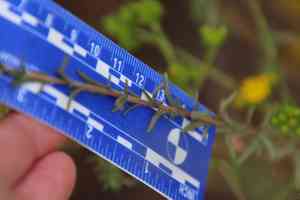
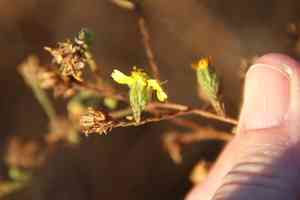
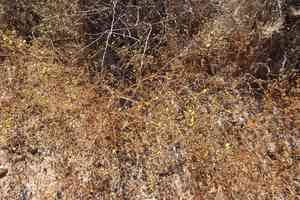
Quickly Identify San diego tarweed
1
Deinandra paniculata can be identified by its sticky, glandular hairs on the stem and leaves, and its small, clustered yellow flowers. The leaves are narrow and lance-shaped, and the plant emits a distinct tar-like odor.
Scientific Classification of San diego tarweed
Phylum
Vascular plants
Class
Dicotyledons
Order
Asterales
Family
Daisy
Genus
Otay tarplant
Species
San diego tarweed
Planting and Growing of San diego tarweed
Care Difficulty
Moderate
Watering Schedule
Every 2 days
Sunlight Requirements
Full sun
Sunshine Duration
6-10 hours
Ideal Temperature
68-77℉
Soil Type
Potting Mix, Peat Mix
Soil pH
6.5-7.5
Fertilizer Type
Balanced
Pruning Season
Spring, Summer
Pruning Area
Branches, Leaves
Pruning Frequency
Once a year
Repotting Season
Spring
Pot Type
Plastic, Ceramic
 How to Water San diego tarweed?
Deinandra paniculata prefers well-drained soil but requires moderate watering. A good rule of thumb is to water until you see it draining from the bottom of the pot, ensuring the soil is moist but not waterlogged. This equates to approximately 250 milliliters of water per session, depending on the pot size and soil composition.
What are the symptoms of an underwatered San diego tarweed?
›
What should I do if my San diego tarweed is not getting enough water?
›
What are the symptoms of an overwatered San diego tarweed?
›
How to save an overwatered San diego tarweed?
›
 What Are the Sunlight Requirements for San diego tarweed?
Half to full day of sunlight is ideal. Proper lighting promotes vibrant flowering and foliage development, ensuring Deinandra paniculata remains healthy and resilient.
How much sunlight does Deinandra paniculata ideally need?
›
What are solutions for achieving ideal sunlight?
›
What are the benefits of ideal sunlight for this plant?
›
 What Is the Ideal Temperature Range for San diego tarweed?
For optimal growth, Deinandra paniculata thrives in a temperature range of 68°F to 77°F. This range ensures the plant can efficiently conduct photosynthesis and maintain healthy metabolic processes, contributing to vibrant growth and blooming.
 What Soil is Best for San diego tarweed?
Deinandra paniculata thrives in well-drained soils, which prevent waterlogging and reduce root rot risks, helping the plant establish strong, healthy roots and enhancing overall growth. This plant benefits from soils with a balanced nutrient profile, ensuring that essential macro and micronutrients are available to fuel its vibrant foliage and flowering, thereby promoting a lush appearance. Although tolerant of dry conditions, Deinandra paniculata performs best with moderate moisture. This ensures sustained growth and bloom production without the hazards associated with over-saturation.
 How to Fertilize San diego tarweed?
The recommended amount of fertilizer for Deinandra paniculata is crucial for its optimal growth. For liquid fertilizers, use a balanced mix, such as 10-10-10, at half strength. Apply about 50-100 ml per plant, depending on its size and health. Solid fertilizers should be applied more conservatively, ensuring that the soil receives nutrients without overwhelming the plant, typically around 150 grams per application.
 How to Prune San diego tarweed?
Begin by using clean, sharp pruning shears to trim back any dead, damaged, or diseased stems. This not only improves the plant's appearance but also its overall health. Focus on maintaining the natural shape of Deinandra paniculata by selectively cutting back branches to a node or a branch junction. Make sure not to remove more than one-third of the plant at a time, as excessive pruning can stress the plant.
More About Pruning Techniques→
 How to Propagate San diego tarweed plant?
1
Begin by filling the seed starting tray with a moist, well-draining potting mix. Ensure that the soil is loosely packed to allow for root growth and adequate air circulation to promote healthy seedling development.
2
Deinandra paniculata seeds should be sown on the surface of the soil and lightly pressed down. They require light for germination, so avoid covering them with soil. Space the seeds evenly to prevent overcrowding as they grow.
3
Place the seed starting tray in a warm location with indirect sunlight. Use the clear cover to create a humid environment, and ensure the temperature remains around 70°F (21°C) to encourage germination. Keep the soil consistently moist using the spray bottle.
 How to Repot San diego tarweed plant?
1
Repot Deinandra paniculata when you notice roots coming out of the drainage holes, the plant's growth has slowed, or the soil becomes compacted. Early spring is ideal for repotting, allowing the plant to establish in the new soil before its active growing season starts.
2
Choose a pot that's one or two sizes larger than the current one, ensuring it has adequate drainage holes. A pot made from terracotta or other breathable materials is beneficial, as it helps prevent waterlogging and provides ventilation to the root system, promoting healthy growth.
3
Opt for a well-draining, sandy loam soil to prevent root rot and ensure good air circulation. The right soil mix supports healthy root development by allowing excess water to drain efficiently and providing adequate nutrients.
Learn More About San diego tarweed Diseases
Anthracnose
Bacterial Leaf Spot
Bacterial Soft Rot
Bacterial Wilt
Black Spot
Chemical Injury
Crown Gall
Cyst Nematode
Damping-off
Downy Mildew
Drought Stress
Fusarium Wilt
Gray Mold
Leaf Curl
Leaf Spot
Mosaic
Nutrient Deficiency
Nutrient Toxicity
Powdery Mildew
Root Rot
Root-knot Nematode
Rusts
Sooty Mold
Spider Mites
Temperature Stress
Thrips Damage
White Mold



