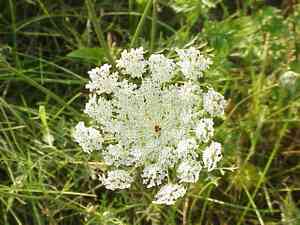
Daucus (Daucus) (Daucus)
Also known as: Wild Carrot, Bird's Nest, Bishop's Lace, Queen Anne's Lace
The well-known orange vegetable that people frequently use in cooking is the carrot, scientifically named *Daucus carota*. This vegetable belongs to the daucus genus, which includes other species like the wild carrot. While some wild varieties are edible, they often have a woody texture and are not typically consumed by humans.
In This Article
Attributes of Daucus (Daucus)
Lifespan
Biennial
Plant Height
30 to 90 centimeters (1 to 3 feet)
Spread
20 to 30 centimeters (8 to 12 inches)
Leaf Color
Green
Flower Size
10 to 20 centimeters (4 to 8 inches)
Flower Color
White, sometimes with a central purple flower
Images of Daucus (Daucus)
Quickly Identify Daucus (Daucus)
1
Wild carrots can be identified by their finely divided, fern-like leaves and a characteristic white taproot. The flowers form a flat-topped cluster, often with a single red or purple flower in the center.
Scientific Classification of Daucus (Daucus)
Phylum
Tracheophyta
Class
Magnoliopsida
Order
Apiales
Family
Apiaceae
Genus
Daucus
Planting and Growing of Daucus (Daucus)
Care Difficulty
Moderate
Watering Schedule
Every 12 days
Sunlight Requirements
Full sun
Sunshine Duration
6-10 hours
Ideal Temperature
60-65℉
Soil Type
Potting Mix, Peat Mix
Soil pH
6.5-7.5
Fertilizer Type
Balanced
Pruning Season
Spring, Summer
Pruning Area
Branches, Leaves
Pruning Frequency
2 times a year
Repotting Season
Spring
Pot Type
Plastic, Ceramic
 How to Water Daucus (Daucus)?
The plant prefers a balance where the soil is consistently moist but not soggy. When watering, aim to evenly saturate the soil by providing about 250 milliliters of water and ensure it reaches the root zone. Allow excess water to drain away to avoid waterlogging.
What are the symptoms of an underwatered Daucus (Daucus)?
›
What should I do if my Daucus (Daucus) is not getting enough water?
›
What are the symptoms of an overwatered Daucus (Daucus)?
›
How to save an overwatered Daucus (Daucus)?
›
 What Are the Sunlight Requirements for Daucus (Daucus)?
Daucus plants ideally thrive in full sun to partial sun conditions, with at least six to eight hours of luminous exposure daily. This lighting ensures optimal growth, promoting vibrant foliage and healthy flower production.
What is the best light condition for Daucus?
›
How to provide ideal light conditions for Daucus?
›
Why is proper light important for Daucus?
›
 What Is the Ideal Temperature Range for Daucus (Daucus)?
Daucus thrives best in a temperature range of 60°F to 65°F. This range ensures optimal growth and development, making it conducive for healthy foliage and root formation. Within this ideal range, the plant can efficiently perform photosynthesis and various metabolic activities, ensuring vigorous growth. Consistency in maintaining this temperature range is crucial for achieving maximum yield and quality.
 What Soil is Best for Daucus (Daucus)?
Daucus thrives in well-drained soil that prevents waterlogging, which can lead to root rot. This type of soil ensures adequate air circulation around the roots, promoting healthy growth. Having a nutrient-rich environment is essential for Daucus. A soil enriched with organic matter like compost or well-rotted manure ensures that the plant receives necessary nutrients for optimal growth. Daucus prefers soil that retains moisture but does not remain soggy. Moderately moist conditions help maintain the necessary hydration without drowning the delicate root system.
 How to Fertilize Daucus (Daucus)?
For Daucus, the ideal fertilizer amount should be carefully balanced to ensure healthy growth without overwhelming the plant. Liquid fertilizers can be applied at a rate of 1 teaspoon per gallon of water, ensuring an even distribution. Slow-release fertilizers, on the other hand, should be used sparingly, with around half a cup sprinkled over the soil surface per application. This provides a steady nutrient supply without risking nutrient burn.
 How to Prune Daucus (Daucus)?
Begin by sterilizing your cutting tools to prevent disease transmission. Identify and remove yellowed or damaged foliage at the base. Trim back any unruly growth to maintain the desired shape and size, always cutting back to a main stem or node to promote new branching.
 How to Propagate Daucus (Daucus) plant?
1
Begin by filling the seed trays with sterile potting mix, making sure to firm down the soil gently. This ensures that the seeds have good contact with the soil and helps prevent them from washing away during watering.
2
Place Daucus seeds evenly on the soil surface and lightly cover them with a thin layer of potting mix. The seeds require light for germination, so avoid burying them too deep. Lightly mist the surface to anchor the seeds.
3
Keep the trays in a warm, bright area with indirect light. Ensure the soil remains consistently moist but not waterlogged. This can be achieved by regular misting or using a humidity dome to create a mini greenhouse effect.
 How to Repot Daucus (Daucus) plant?
1
Daucus typically requires repotting when its roots start showing at the bottom of the pot, or if growth appears stunted. Spring or early summer is ideal as the plant can recover during its active growing phase. A visual check of dense roots or reduced vitality are key indicators.
2
Opt for a pot that is slightly larger than the current one to allow root expansion but not so large that excessive soil retains water and increases rot risk. Ensure that the pot has excellent drainage holes, to maintain a balanced moisture level.
3
Select a well-draining loam soil that offers balanced nutrients and prevents waterlogging. This soil ensures that Daucus roots get enough oxygen while avoiding common issues such as root rot, enabling healthy growth and flowering.
Toxicity
Ingestion
WARNING
The judgment on toxicity and danger is for reference only. We DO NOT GUARANTEE any accuracy of such judgment. Therefore, you SHALL NOT rely on such judgment. It is IMPORTANT TO SEEK PROFESSIONAL ADVICE in advance when necessary.
Learn More About Daucus (Daucus) Diseases
Anthracnose
Bacterial Leaf Spot
Bacterial Soft Rot
Bacterial Wilt
Chemical Injury
Cyst Nematode
Damping-off
Downy Mildew
Drought Stress
Fusarium Wilt
Gray Mold
Leaf Spot
Mosaic
Nutrient Deficiency
Nutrient Toxicity
Powdery Mildew
Root Rot
Root-knot Nematode
Rusts
Sooty Mold
Spider Mites
Temperature Stress
Thrips Damage
White Mold

