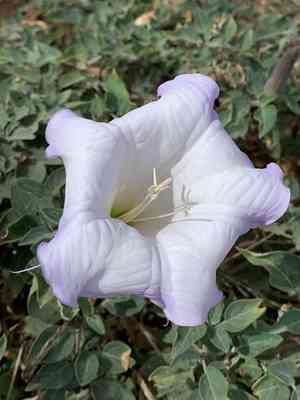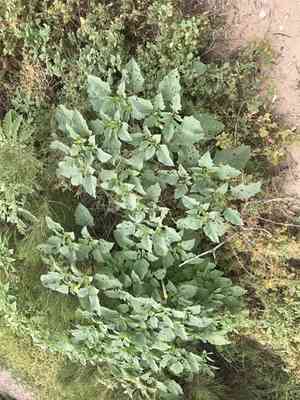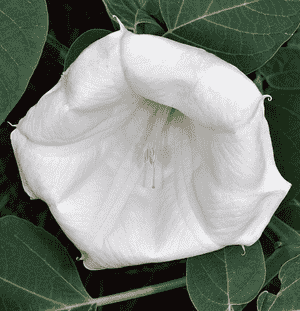
Western jimson weed(Datura wrightii)

Western jimson weed (Datura wrightii)

Also known as: Manit, Indian whiskey

Western jimson weed (Datura wrightii) is a perennial herbaceous plant belonging to the nightshade family. Known for its drought tolerance, it is often grown as an ornamental plant. The species is recognizable by its large, white, trumpet-shaped flowers that bloom at night and its distinctively toothed leaves.

Highly toxic to both humans and animals, ingestion of the plant can result in severe symptoms such as convulsions, hallucinations, and even coma. Despite its toxicity, various Native American tribes historically utilized Datura wrightii in their cultural rituals, including rites of passage, due to its potent psychoactive effects.

Attributes of Western jimson weed

Lifespan
Perennial, Annual
Plant Type
Herb
Plant Height
30 cm to 1.5 m
Spread
30 cm to 1.5 m
Leaf Color
Green
Flower Size
10 cm
Flower Color
White Purple

PlantJoy - Identify plants with a snap

Identify and diagnose plants, get toxicity alerts, and explore safety guides for all types of fungi.

Try for Free

Images of Western jimson weed

Western jimson weed(Datura wrightii)

Quickly Identify Western jimson weed

1
Trumpet-shaped flowers, 4-8 inches (10-20 cm) long, varying from white to soft violet, emitting sweet fragrance.
2
Spiny fruit resembling a spiked capsule, 1-2 inches (2.5-5 cm) in diameter, transitioning from green to brown.
3
Large, dark green leaves, 6-8 inches (15-20 cm) long, emitting a foul smell, with wavy margins.
4
Gray-green stem with fine hairs, 0.2 inches (0.5 cm) thick, displaying sympodial branching pattern.
5
Fragrant trumpet flowers, up to 6 inches (15 cm) long, with symmetrical arrangement of fused petals.

Scientific Classification of Western jimson weed

Phylum
Vascular plants
Class
Dicotyledons
Order
Solanales
Family
Nightshade
Genus
Thornapples
Species
Western jimson weed

Planting and Growing of Western jimson weed

Care Difficulty
Moderate
Watering Schedule
Every 2 days
Sunlight Requirements
Full sun
Sunshine Duration
4-8 hours
Ideal Temperature
68-86℉
Soil Type
Potting Mix, Peat Mix
Soil pH
6.5-7.5
Fertilizer Type
Balanced
Pruning Season
Spring, Summer
Pruning Area
Branches, Leaves
Pruning Frequency
2 times a year
Repotting Season
Spring
Pot Type
Plastic, Ceramic

water icon How to Water Western jimson weed?

Datura wrightii requires around 500ml of water per watering session. The soil should be kept moderately moist, not soggy. Ensure the water penetrates deeply into the soil so that it reaches the root system effectively.
What are the symptoms of an underwatered Western jimson weed?
What should I do if my Western jimson weed is not getting enough water?
What are the symptoms of an overwatered Western jimson weed?
How to save an overwatered Western jimson weed?

sunlight icon What Are the Sunlight Requirements for Western jimson weed?

Sunlight Requirements: Full sun, Partial sun
Duration of light: 6 to 8 hours
Datura wrightii ideally requires full to partial sunlight. Ideal lighting promotes robust growth and vibrant blooms, enhancing aesthetic and ecological functional roles.
What is the best lighting for Datura wrightii?
How can I optimize sunlight for Datura wrightii?
What benefits does ideal lighting offer for Datura wrightii?

temperature icon What Is the Ideal Temperature Range for Western jimson weed?

Ideal Temperature: 68 ~ 86℉
The ideal temperature for cultivating Datura wrightii ranges from 68°F to 86°F. This range promotes optimal growth and flowering. Within these temperatures, the plant can photosynthesize efficiently, ensuring robust health and lush foliage. Maintaining a stable temperature within this range helps prevent undue stress on the plant, resulting in consistent growth.

soil icon What Soil is Best for Western jimson weed?

Soil type: Sandy soil, Loam, Sandy loam
Soil PH: 6.5 ~ 7.5
Datura wrightii thrives in well-draining soil that prevents waterlogging. This helps avoid root rot, ensuring the plant remains healthy by allowing proper aeration and nutrient uptake. The plant performs best in moderately fertile soils. Providing balanced nutrients supports robust growth and flowering without the risk of nutrient burn. While well-drained, the soil should retain enough moisture to support the plant’s needs. This balance helps sustain steady plant development and prevents drought stress.

fertilize icon How to Fertilize Western jimson weed?

Fertilizer type: Balanced
For Datura wrightii, the recommended fertilizer amount should be moderate. Use about half the strength of a balanced liquid fertilizer, applying approximately 10ml per gallon of water every month. For slow-release options, use a formulation that can provide nutrients gradually over time without overwhelming the plant.

prune icon How to Prune Western jimson weed?

Pruning Time: Spring, Summer, Autumn
Since Datura wrightii is toxic, wearing gloves and long sleeves will prevent skin contact with the plant's sap. This precaution will help avoid any potential irritation. Regular monitoring of the plant's health can help identify which branches require removal. Look for signs of disease or pest damage, tackling these areas first during pruning. Pruning during dry weather helps reduce the risk of disease entering through fresh cuts. Avoid pruning during rain to ensure the plant remains healthy.

propagate icon How to Propagate Western jimson weed plant?

Propagate Time: Early spring, Late spring, Early summer
1
Gather mature seed capsules from Datura wrightii plants at the end of the growing season. Allow them to dry and open naturally to harvest the seeds.
2
Select healthy stems of about 6-8 inches long without flowers or buds. Make a clean cut with sterilized secateurs just below a leaf node.
3
For seeds, plant them in the seed tray filled with a well-draining potting mix. For cuttings, insert them into the soil, ensuring at least one node is below the surface to promote rooting.

repot icon How to Repot Western jimson weed plant?

Repotting frequency: Every 2-3 years
1
Datura wrightii should be repotted when you notice roots coming out from the drainage holes or when the plant has visibly outgrown its current pot. Early spring or summer is ideal because the plant is in its active growth phase and can better adjust to the new environment.
2
Select a new pot that is 2-3 inches larger in diameter than the current one. It should have good drainage holes to prevent waterlogging, which can cause root rot. Clay pots are excellent as they allow better air circulation to the root zone compared to plastic pots.
3
Opt for a well-drained loamy soil mix, enriched with organic matter. This provides a balance between water retention and drainage, crucial for avoiding overly wet conditions that can lead to root diseases and wilting.

PlantJoy - Identify plants with a snap

Find the best spots for them to optimize their health, simply using your phone.

Try for Free

Toxicity of Western jimson weed

Is Western jimson weed toxic to humans?

Accidental ingestion is the most common cause of poisoning from western jimson weed. Every part of this plant, such as the bark, flowers, fruit, stem, seeds, and roots, is toxic to humans. Consuming western jimson weed can result in severe health complications. Signs of poisoning may encompass hot, dry, and flushed skin; hallucinations; dilated pupils; headache; delirium; a rapid and weak pulse; convulsions; and coma. This plant is frequently found in disturbed areas or along roadsides with sandy soil.

Is Western jimson weed toxic to cat?

The western jimson weed is known to be harmful to cats. If a cat consumes any section of the plant, which encompasses leaves, flowers, seeds, and stems, it could result in toxicity due to its harmful characteristics. Common scenarios where cats may become poisoned include inadvertently ingesting parts of western jimson weed. Following ingestion, cats may exhibit various distress signals such as vomiting, diarrhea, increased activity levels, or fatigue. Symptoms like rapid breathing, dilated pupils, and excessive thirst may also manifest. Identifying these signs is vital, and if a cat displays any indications of poisoning, it is essential to seek prompt veterinary attention for appropriate and timely treatment.

Is Western jimson weed toxic to dog?

Western jimson weed is a highly toxic plant that presents considerable danger to dogs. If dogs inadvertently consume any part of this plant, they face the risk of poisoning due to its inherent toxicity. The symptoms that may arise following ingestion encompass, but are not limited to, vomiting, diarrhea, lethargy, irregular heart rate, and potentially seizures. Given the seriousness of these symptoms, it is essential for dog owners to restrict access to western jimson weed and to keep a close watch on their pets when in areas where the plant is found. If there is a suspicion that a dog has ingested western jimson weed, seeking immediate veterinary attention is critical, as urgent treatment can be life-saving.

Identify toxic plants for your safety

Learn which plants are harmful to you and your pets, and make informed choices for a safer home!

Try for Free
WARNING
The judgment on toxicity and danger is for reference only. We DO NOT GUARANTEE any accuracy of such judgment. Therefore, you SHALL NOT rely on such judgment. It is IMPORTANT TO SEEK PROFESSIONAL ADVICE in advance when necessary.
More About Toxic Techniques