
Indicus (Damnacanthus indicus)
Also known as: Indian Thorn
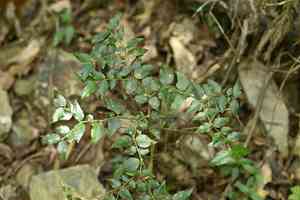
The plant reaches a height of 30 to 60 cm. Its main stem grows upright, while lateral branches spread out and are well-branched. Leaves are positioned opposite each other, oval-shaped, and measure 1 to 2.5 cm in length. They have a hard, glossy surface. Leaf buds feature a pair of elongated spines, each 1 to 2 cm long. Leaves extend horizontally from the branches, while the spines point vertically. Typically, two small white flowers, each about 1 cm in length, bloom at the leaf buds. The plant produces berries that are 5 to 6 mm in diameter, turning red in the winter, and retain a small spear-like tip.
In This Article
Attributes of Indicus
Lifespan
Perennial
Plant Type
Shrub
Plant Height
30 cm to 1.5 m
Spread
0.5 to 1 meter
Leaf Color
Dark green
Flower Size
1 to 2 cm
Flower Color
White
Images of Indicus



Quickly Identify Indicus
1
Damnacanthus indicus can be identified by its sharp thorns, opposite leaves that are oblong and leathery, and small white flowers during the blooming season. The presence of red fruits also aids in identification.
Scientific Classification of Indicus
Phylum
Vascular plants
Class
Dicotyledons
Order
Gentians, dogbanes, madders, and allies
Family
Madder
Genus
Damnacanthus
Species
Indicus
Planting and Growing of Indicus
Care Difficulty
Easy
Watering Schedule
Every 3 days
Sunlight Requirements
Partial sun
Sunshine Duration
4-8 hours
Ideal Temperature
60-75℉
Soil Type
Potting Mix, Peat Mix
Soil pH
6.5-7.5
Fertilizer Type
Balanced
Pruning Season
Spring, Summer
Pruning Area
Branches, Leaves
Pruning Frequency
2 times a year
Repotting Season
Spring
Pot Type
Plastic, Ceramic
 How to Water Indicus?
Damnacanthus indicus thrives in moderately moist soil. When watering, aim for approximately 200 ml per session to thoroughly moisten the soil without saturating it. Ensure excess water drains to prevent waterlogging.
What are the symptoms of an underwatered Indicus?
›
What should I do if my Indicus is not getting enough water?
›
What are the symptoms of an overwatered Indicus?
›
How to save an overwatered Indicus?
›
 What Are the Sunlight Requirements for Indicus?
Partial sunlight benefits Damnacanthus indicus by promoting healthy growth and vibrant foliage. This range prevents sunburn while ensuring enough light for photosynthesis, improving overall plant vitality.
What type of lighting does Damnacanthus indicus prefer?
›
How to provide Damnacanthus indicus with its ideal lighting?
›
What benefits does Damnacanthus indicus gain from ideal lighting?
›
 What Is the Ideal Temperature Range for Indicus?
Damnacanthus indicus thrives best in a temperature range of 60 to 75 degrees Fahrenheit. Maintaining this temperature range ensures optimal growth, health, and vigor. Such conditions mimic the plant's natural habitat, thereby promoting the best possible results in terms of leaf coloration and bloom frequency.
 What Soil is Best for Indicus?
Damnacanthus indicus thrives in soil that offers excellent drainage. This requirement prevents root rot and maintains optimal moisture levels, facilitating healthy growth and vibrant foliage. This plant prefers soil rich in organic matter, enhancing nutrient availability and supporting robust growth. Nutrient-rich soil contributes to the plant's health and resilience. The soil should retain moderate moisture to ensure a consistent water supply, crucial for sustaining the plant during dry periods without risk of waterlogging.
 How to Fertilize Indicus?
For Damnacanthus indicus, it's crucial to apply fertilizer carefully to avoid root burn. Use a balanced liquid fertilizer diluted to half the recommended strength for houseplants. For solid or slow-release granules, apply according to the package instructions, typically a small handful per plant. Always adjust the amount based on the plant's size and maturity, ensuring the roots are not overwhelmed.
 How to Prune Indicus?
Start by removing any dead or damaged branches to encourage healthy growth. Use sharp, clean pruning shears to avoid causing any unnecessary damage. Trim back overgrown branches to maintain the desired shape and size of the plant. Focus on evenly distributing the foliage to ensure good airflow and sunlight penetration. Pruning should aim at enhancing the aesthetic look while maintaining the plant's natural form.
More About Pruning Techniques→
 How to Propagate Indicus plant?
1
Start by preparing a well-draining soil mix, which usually consists of a balance of peat, perlite, and sand. This ensures the root system of the propagated plant will grow robustly without waterlogging issues.
2
Sow seeds in prepared trays, ensuring they are evenly spaced. Lightly cover them with soil, then water gently to avoid washing away the seeds. Keep the soil moist but not drenched to encourage germination.
3
Select healthy branches and cut 4-6 inch sections with a clean cut. Remove the lower leaves to prevent rot and dip the cut end in rooting hormone to encourage faster root formation.
 How to Repot Indicus plant?
1
Damnacanthus indicus shows signs of needing repotting when its roots begin to outgrow the current container or when soil drainage becomes inadequate. These factors typically occur every couple of years, specifically in early spring or during the cooler months of autumn to minimize stress.
2
Select a pot that is one or two sizes larger than the current one, and ensure it has adequate drainage holes. This not only allows room for root expansion but also prevents waterlogging, which can harm this plant's roots.
3
Opt for a well-draining cactus mix to repot Damnacanthus indicus. This type of soil prevents moisture retention, reducing the risk of root rot, and it provides the necessary aeration for a healthy root system.
Learn More About Indicus Diseases
Anthracnose
Bacterial Leaf Spot
Bacterial Soft Rot
Bacterial Wilt
Black Spot
Chemical Injury
Crown Gall
Cyst Nematode
Damping-off
Drought Stress
Fusarium Wilt
Gray Mold
Leaf Curl
Leaf Spot
Mosaic
Nutrient Deficiency
Nutrient Toxicity
Powdery Mildew
Root Rot
Root-knot Nematode
Rusts
Sooty Mold
Spider Mites
Temperature Stress
Thrips Damage
White Mold



